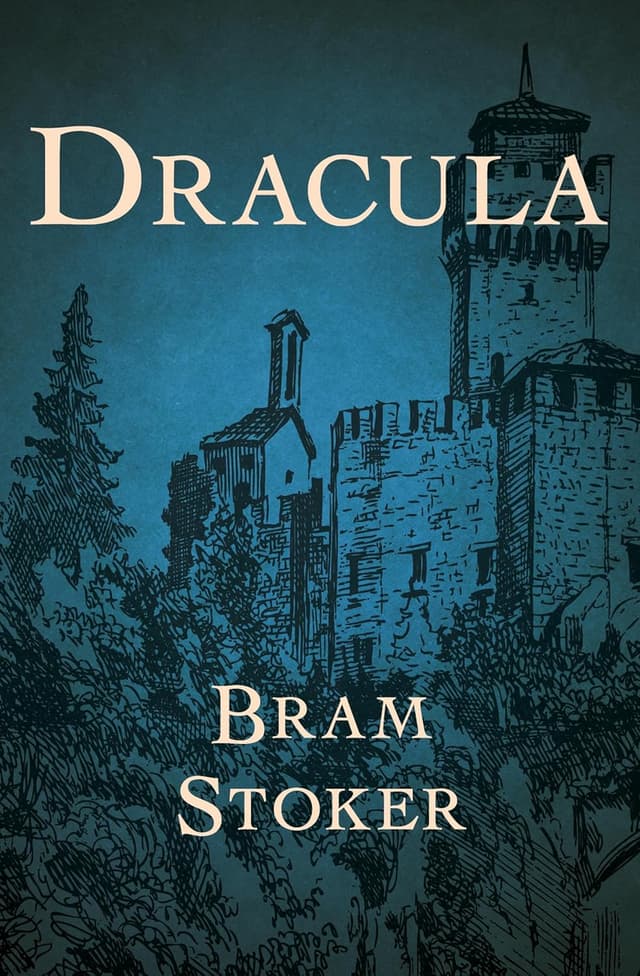
Dracula (Full Version) audiobook cover - When solicitor Jonathan Harker travels into the Carpathians to meet a mysterious nobleman, folklore turns frighteningly real—pulling him, and those he loves in England, into a shadowed battle of desire, faith, and survival against an ancient evil.

Dracula (Full Version)

When solicitor Jonathan Harker travels into the Carpathians to meet a mysterious nobleman, folklore turns frighteningly real—pulling him, and those he loves in England, into a shadowed battle of desire, faith, and survival against an ancient evil.

Bram Stoker

4.7 / 5(4428 ratings)
Categories:

Listen to Dracula (Full Version)

Loading player...

Historical Background

Bram Stoker penned *Dracula* in the late nineteenth century, primarily writing in London and the English coastal town of Whitby before the novel's publication in 1897. The work emerged during the twilight of the Victorian era, a period defined by immense industrial progress yet plagued by deep-seated *fin de siècle* (end-of-the-century) anxieties. At the height of the British Empire, society harbored growing fears of "reverse colonization"—the terrifying prospect that foreign, primitive forces could infiltrate and corrupt the imperial homeland. Furthermore, the era was characterized by cultural unease surrounding changing gender dynamics, specifically the emergence of the independent "New Woman," and the lingering tension between modern scientific rationalism and ancient, irrational superstitions.

Upon its release, *Dracula* was both significant and controversial due to its bold exploration of these cultural taboos. Stoker veiled profound Victorian anxieties about female sexuality, venereal disease, and moral decay beneath the guise of a Gothic thriller. The vampiric bite served as a thinly veiled metaphor for sexual transgression, deeply unsettling a conservative readership still reeling from the gruesome, highly publicized Jack the Ripper murders just a decade prior. Furthermore, the novel's epistolary format—utilizing modern technologies like typewriters, telegrams, and phonograph recordings—lent a chilling documentary realism to the supernatural horror, making the threat feel uncomfortably immediate.

Ultimately, *Dracula* left an indelible mark on literature and global culture. While not the first vampire narrative, Stoker’s masterpiece codified the modern vampire archetype, transforming the mindless folkloric ghoul into an aristocratic, seductive predator. Its legacy extends far beyond its initial Gothic roots, having spawned countless cinematic adaptations, literary spin-offs, and academic interpretations. Today, it remains a seminal text in horror fiction, continuously shaping how modern society conceptualizes the eternal battle between reason and primal instinct, and the alluring danger of the monstrous "other."

Study Questions

  1. Bram Stoker's 'Dracula' is often interpreted as a clash between Eastern European antiquity and Western modernity. How do characters like Abraham Van Helsing bridge this gap, and what is the novel ultimately suggesting about the limitations of Victorian science and reason when confronted with ancient, supernatural forces?

  2. Consider the contrasting characterizations and ultimate fates of Mina Harker and Lucy Westenra. How does Stoker use these two figures to explore late-Victorian anxieties surrounding female sexuality, motherhood, and the emerging societal concept of the 'New Woman'?

  3. The novel is constructed entirely through an epistolary format, utilizing journal entries, letters, newspaper clippings, and phonograph diaries. How does this fragmented narrative structure affect the reader's sense of suspense and reliability, and what does the characters' collective piecing together of these documents suggest about the power of shared knowledge?

What Critics and Readers Say

Dracula is widely regarded as a foundational masterpiece of Gothic horror and the most influential vampire novel ever written, first published in 1897. While early critical reception was sometimes described as “mixed,” exhaustive research into period reviews has shown that many contemporary reviewers praised Stoker’s work as a powerful and imaginative story that stood out amongst other Gothic tales of its time, and compared favourably to works by earlier authors like Mary Shelley and Ann Radcliffe. 

Scholars note that Dracula reflects complex Victorian anxieties about science versus superstition, foreignness, sexuality, and social change, presenting a layered narrative that goes beyond pure horror to explore psychological and cultural fears at the fin de siècle. The epistolary format — told through diaries and letters — contributes to a sense of immediacy and psychological depth as characters struggle against the vampire’s influence. 

Readers and critics alike acknowledge that Dracula established many genre conventions now associated with vampire fiction, turning Count Dracula into a cultural icon. On community review platforms many readers praise the novel’s atmospheric tension, memorable characters, and enduring impact on horror and supernatural literature, though some also note that its pacing and Victorian prose can feel challenging to modern readers. 

The novel’s lasting legacy is reflected in its continuous publication, rich academic commentary, and vast adaptation history — from films and theatre to modern reinterpretations — underscoring Dracula’s influence not just on vampire fiction but on wider popular culture. 

Sources:

• Wikipedia – critical reception and early reviews of Dracula: https://en.wikipedia.org/wiki/Dracula

• “The Myth of Dracula’s Critical Reception” – scholarly analysis dispelling the mixed-reviews misconception: https://www.scribd.com/document/242662740/Introduction-The-Myth-of-Dracula-s-Critical-Reception-uncorrected-proof

• Reddit & community impressions – modern reader perspectives: https://www.reddit.com/r/Fantasy/comments/sa1br5/review_discussion_dracula_by_bram_stoker/

• Review – Dracula retains impact as a genre classic: https://devontrevarrowflaherty.com/2023/10/12/book-review-dracula/

Dracula (Full Version) Chapter Overview

About Dracula (Full Version)

First published in 1897, Bram Stoker’s Dracula is the definitive Victorian vampire novel: a breathless collision of modern life—typewriters, trains, telegrams—and primal dread drawn from superstition, blood, and the night. Told through journals, letters, and reports, the story builds an uncanny immediacy as ordinary people piece together an extraordinary threat.

Beyond its chills, the novel probes enduring anxieties about sexuality, contagion, foreignness, and the fragility of identity in an age of scientific confidence. Stoker’s masterstroke is not only the Count—hypnotic, aristocratic, predatory—but the sense of invasion: of bodies, homes, and even language, as testimony accumulates into terror.

By shaping many of the vampire conventions that followed—seduction, staking, the thin border between desire and death—Dracula remains a landmark of Gothic literature and a riveting meditation on what civilization fears it cannot control.

Who Should Listen to Dracula (Full Version)

  • Listeners who want the original, atmospheric Gothic thriller that defined modern vampire lore.
  • Fans of epistolary storytelling who enjoy mysteries assembled through diaries, letters, and shifting points of view.
  • Readers interested in Victorian-era anxieties—science versus superstition, sexuality, and the fear of invasion—embedded in a page-turning narrative.

About Bram Stoker

Bram Stoker (1847–1912) was an Irish novelist and theatre manager, best known for Dracula, the enduring masterpiece that helped shape modern horror. Born in Dublin, he worked as a civil servant while writing and later became manager of actor Henry Irving’s Lyceum Theatre in London, a post that immersed him in performance, spectacle, and Victorian celebrity. Stoker wrote several novels and stories, including The Lady of the Shroud and The Jewel of Seven Stars, but Dracula remains his defining achievement—an inventive fusion of Gothic tradition with contemporary technology and anxieties.