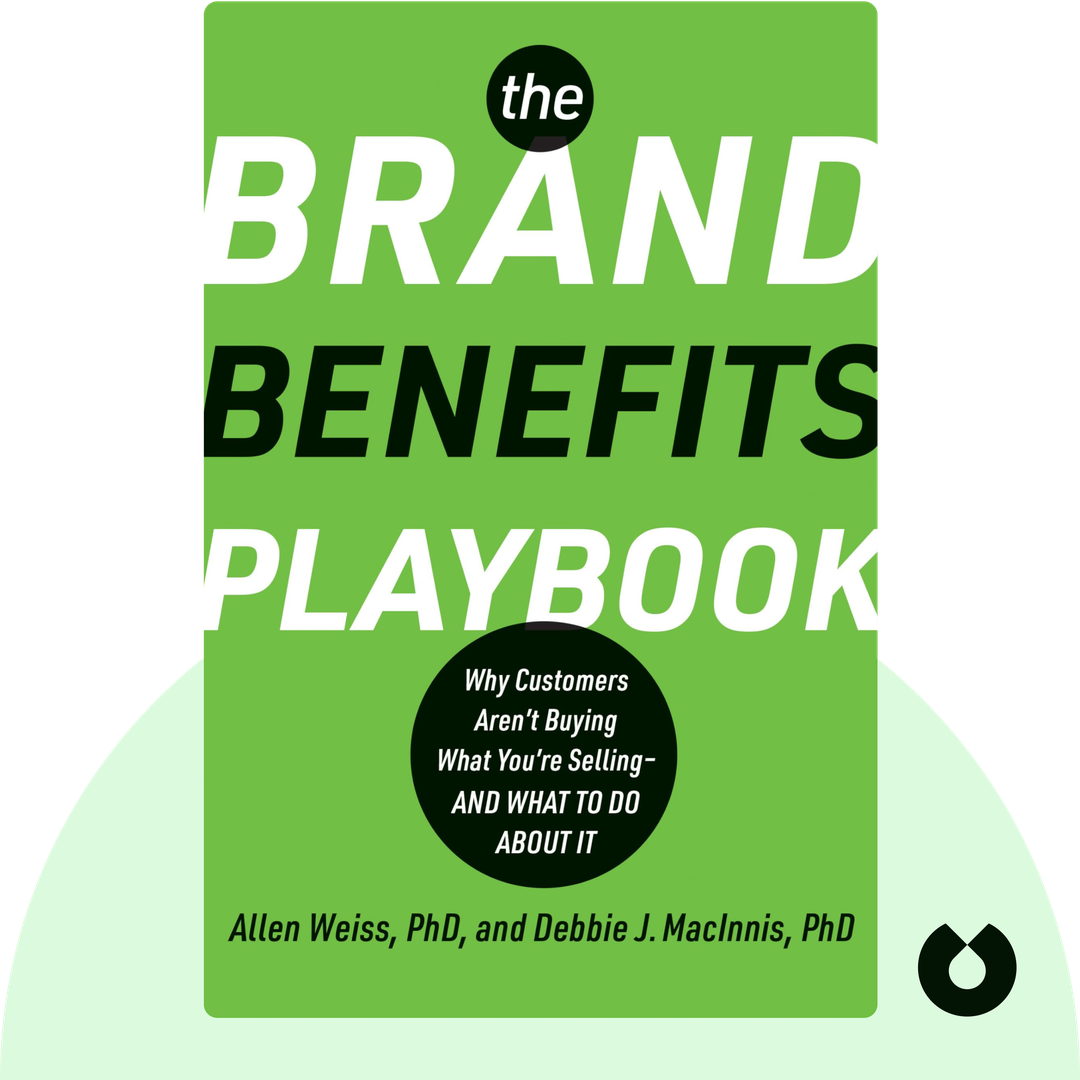
The Brand Benefits Playbook
Start ListeningDownload Try free on iPhoneScan to start in 5 seconds
Categories:
If You're Curious About These Questions...
You should listen to this audiobook
- Have you ever wondered why some brands command fierce customer loyalty while others, with similar products, struggle to stay afloat?
- What if you could look beyond your product’s features to discover the hidden benefits that truly drive your customers' purchasing decisions?
- Are you curious about the specific strategic shift that allows world-class brands to consistently outmaneuver their competition?
Listen to The Brand Benefits Playbook — Free Audiobook
Loading player...
Key Takeaways from The Brand Benefits Playbook
- Understand why modern marketing requires shifting your focus from a product's technical features to the transformative benefits it offers consumers.
- Discover the three main types of brand benefits—functional, experiential, and symbolic—and learn how they align with customer goals to drive purchasing decisions.
- Learn how to actively shape your brand's associations to correct customer misconceptions and establish a distinct identity that competitors cannot replicate.
- Master the interview technique of 'laddering' to uncover the specific product attributes your customers value most and link them directly to their buying motivations.
- Find out how to use perceptual maps to visualize your competitive landscape, identify untapped market gaps, and guide your brand toward its ideal 'nirvana point.'
Learning Tools
Reinforce what you learned from The Brand Benefits Playbook
Mind Map
The Brand Benefits Playbook
Benefits-Centered Approach+
Three Forms of Benefits+
Managing Brand Perception+
Perceptual Maps+
Unlocking New Markets+
Embedding Innovations+
Quiz — Test Your Understanding
Question 1 of 7
What is the fundamental shift in marketing strategy advocated by 'The Brand Benefits Playbook'?
Question 2 of 7
According to the text, the Harley Owners Group (HOG) is primarily an example of which type of brand benefit?
Question 3 of 7
What is the purpose of the 'laddering' method when creating a perceptual map?
Question 4 of 7
In the context of perceptual maps, what does the 'nirvana point' represent?
Question 5 of 7
What strategic lesson can be learned from the trajectory of Google Glass as described in the text?
Question 6 of 7
When introducing a 'new to the world' product, marketers often face 'status quo bias.' What does this term refer to?
Question 7 of 7
According to Everett Rogers' framework, offering a free version with ample storage space (like Dropbox) primarily leverages which attribute to accelerate product adoption?
The Brand Benefits Playbook — Full Chapter Overview
- 1Recommendation
- 2Emphasize the benefits
- 3Brand perceptions shape buying choices
- 4Leverage perceptual maps to grasp your customers
- 5Open new markets by prioritizing customer needs
- 6Integrating new products
The Brand Benefits Playbook Summary & Overview
The Brand Benefits Playbook (2024) is a strategic guide tailor-made for organizations looking to harness brand benefits for a competitive edge in the marketplace. It emphasizes the crucial role of recognizing and clearly expressing both the tangible and intangible benefits a brand provides. Focusing on these benefits can greatly boost customer loyalty and strengthen brand positioning.
Who Should Listen to The Brand Benefits Playbook?
- Marketing professionals seeking strategic branding insights
- Business leaders aiming for competitive market positioning
- Entrepreneurs interested in brand-driven growth strategies
Books Similar to The Brand Benefits Playbook
Readers who enjoyed this also liked these titles.