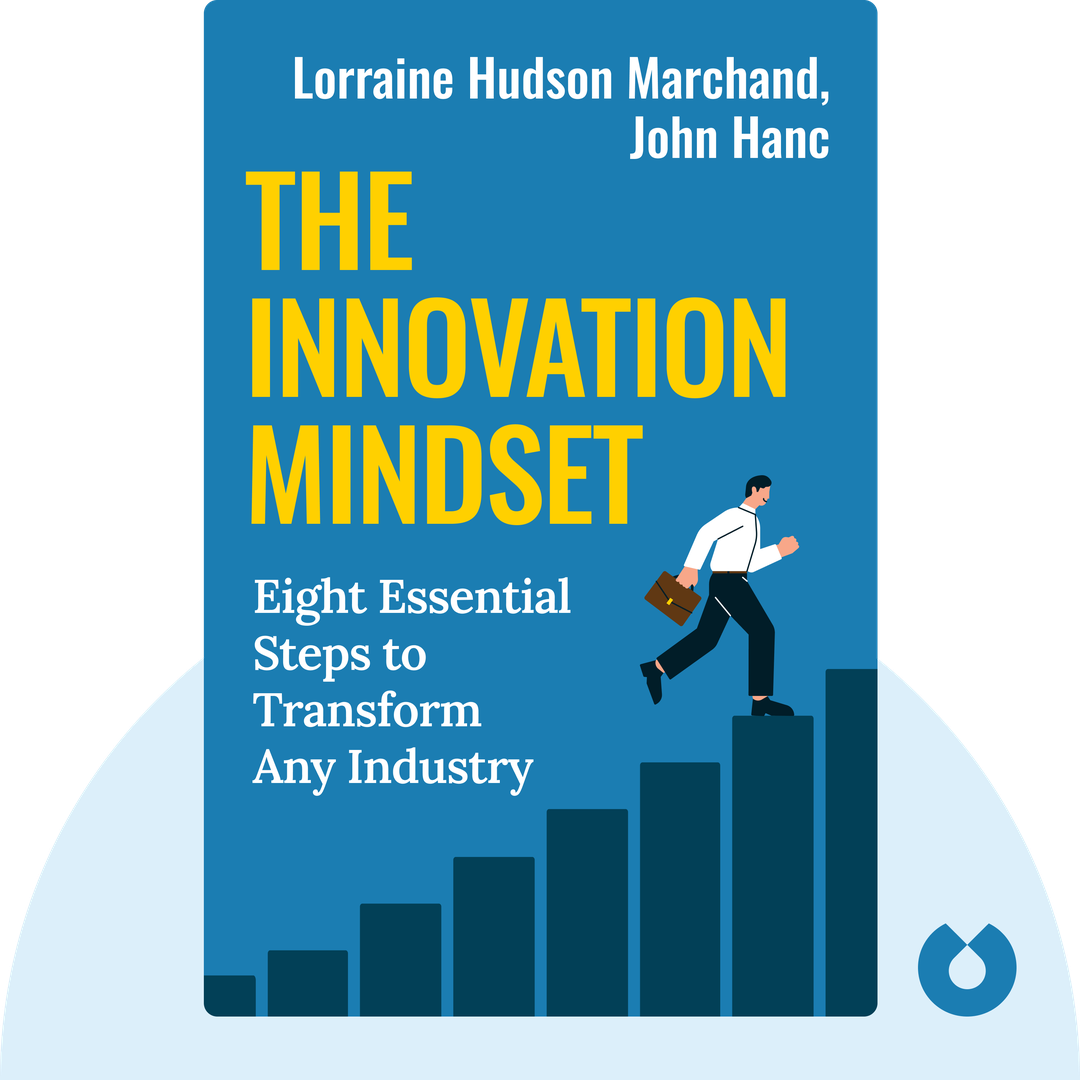
The Innovation Mindset
Start ListeningDownload Try free on iPhoneScan to start in 5 seconds
Categories:
If You're Curious About These Questions...
You should listen to this audiobook
- Did you know that having a groundbreaking idea is actually the easiest part of innovation, and that most failures happen because of what comes next?
- Have you ever wondered why some organizations consistently turn creative sparks into market leaders while others let great ideas wither away?
- What if you could follow a practical, step-by-step roadmap designed to navigate the complex journey from a simple concept to a commercial breakthrough?
Listen to The Innovation Mindset — Cinematic Audio Edition
Loading player...
Key Takeaways from The Innovation Mindset
- Master the art of deconstructing complex issues using 'first principles thinking' to ensure you are solving a real, significant problem before rushing to solutions.
- Discover how to generate high volumes of creative ideas by suspending judgment and utilizing visual methods like storyboards and Big Idea Vignettes.
- Learn how to build a Minimum Viable Product (MVP) using low-cost methods like the 'Wizard of Oz' technique to quickly test assumptions and gather real-world feedback.
- Understand why interviewing at least 100 potential customers is crucial for gaining diverse perspectives, validating your idea, and uncovering hidden pain points.
- Cultivate a problem-solving mindset that empowers you to transform everyday inefficiencies into marketable, high-impact products.
Learning Tools
Reinforce what you learned from The Innovation Mindset
Mind Map
The Innovation Mindset
Law 1: Solve the Right Problem+
Law 2: Explore All Solutions+
Law 3: Go Minimal+
Law 4: Listen to Your Customers+
Law 5: Pivot at Any Point+
Law 6: Have a Plan+
Law 7: Manage the Risks+
Law 8: Pitch Perfectly+
Quiz — Test Your Understanding
Question 1 of 10
What does Elon Musk's concept of 'first principles thinking' involve when trying to solve a problem?
Question 2 of 10
According to the Second Law of Innovation, what is a key rule for effective idea generation during a brainstorming session?
Question 3 of 10
What is the primary goal of creating a Minimum Viable Product (MVP)?
Question 4 of 10
How did Zappos founder Nick Swinmurn utilize the 'Wizard of Oz' method for his MVP?
Question 5 of 10
Why does the Fourth Law of Innovation recommend talking to at least 100 potential customers before launching a product?
Question 6 of 10
How should a company view the act of 'pivoting' their business strategy?
Question 7 of 10
Which of the following is identified as a common trap entrepreneurs fall into when creating a business plan?
Question 8 of 10
How does the book distinguish between 'risk' and 'uncertainty'?
Question 9 of 10
According to the Seventh Law of Innovation, risks related to public disrespect, dishonesty, or incompetence are classified as:
Question 10 of 10
What are the recommended parameters for an optimal pitch deck to potential investors?
The Innovation Mindset — Full Chapter Overview
- 1Recommendation
- 2Law 1 — Solve the right problem
- 3Law 2 — Explore all solutions
- 4Law 3 — Go minimal
- 5Law 4 — Listen to your customers
- 6Law 5 — Pivot at any point
- 7Law 6 — Have a plan
- 8Law 7 — Manage the risks
- 9Law 8 — Pitch perfectly
The Innovation Mindset Summary & Overview
The Innovation Mindset (2022) provides a strategic framework for transforming creative sparks into market-ready products – challenging the notion that groundbreaking ideas alone guarantee success. Exploring the critical elements of innovation, from cultivating a problem-solving culture to supporting diverse voices in entrepreneurship, it offers a practical roadmap for navigating the complex journey from concept to market breakthrough.
Who Should Listen to The Innovation Mindset?
- Entrepreneurs and start-up founders looking to turn their ideas into successful products
- Product developers and designers seeking a structured approach to innovation
- Business students wanting to understand the realities of bringing new ideas to market
Books Similar to The Innovation Mindset
Readers who enjoyed this also liked these titles.