If You're Curious About These Questions...
You should listen to this audiobook
- What if you could scale individual productivity across your entire organization to create a team that functions with the same effortless flow as a single mind?
- Have you ever wondered why some teams constantly struggle with burnout and friction while others achieve massive results with significantly less stress?
- What’s the secret to eliminating the 'collaboration tax' that slows down most groups, and how can you turn your team into a high-performing engine of focused action?
Listen to Team — Free Audiobook
Loading player...
Key Takeaways from Team
- Understand why simply working harder fails to solve modern workplace burnout, and learn how to shift your team from reactive struggles to consistent, proactive delivery.
- Discover how defining specific roles and responsibilities eliminates workflow overlap, allowing team members to confidently focus on their individual strengths.
- Learn how to establish simple but clear working agreements—such as expected email response times and collaboration tool protocols—to drastically improve team efficiency and satisfaction.
- Master the art of building a dependable team rhythm by implementing foundational elements, like designated facilitators and timekeepers, to help your team's natural strengths shine.
- Find out why pairing a clear organizational structure with a compelling shared purpose transforms everyday tasks into highly motivated, meaningful achievements.
Learning Tools
Reinforce what you learned from Team
Mind Map
Team
Modern Team Challenges+
The Power of Clarity+
Purpose and Standards+
Vision and Goals+
Creating Space to Thrive+
Quiz — Test Your Understanding
Question 1 of 6
What is identified as a primary reason why simply working longer hours fails to solve modern team inefficiency?
Question 2 of 6
According to the text, what happens when a team attempts to solve problems without clearly defined roles or structured processes?
Question 3 of 6
How did the major financial institution successfully fix its frustrating, six-level sales approval process?
Question 4 of 6
What analogy is used to describe the relationship between a team's vision and its goals?
Question 5 of 6
What counterintuitive step did a senior executive at a financial firm take that resulted in a 40 percent rise in team motivation?
Question 6 of 6
What is 'co-designed delegation' as described in the book?
Team — Full Chapter Overview
- 1Recommendation
- 2The obstacles that hinder teams
- 3The strength of clarity
- 4When purpose meets structure, success follows
- 5From goal-setting to success
- 6Giving your team room to truly thrive
Team Summary & Overview
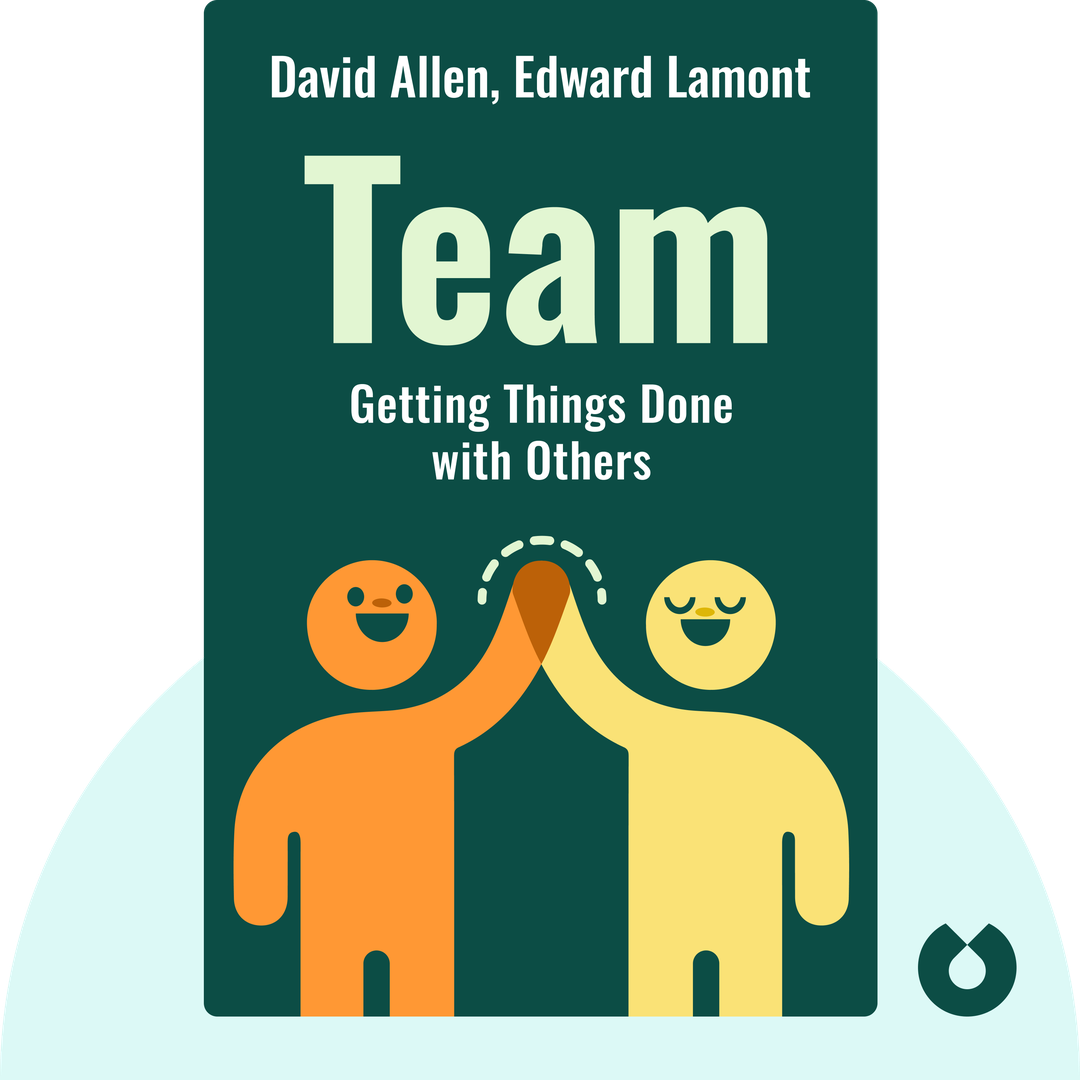
Team (2024) reveals how to elevate group productivity, streamline collaboration, and reduce stress for everyone involved. Packed with real-world insights from top-performing companies, it equips you with the tools to build a focused, cohesive, and high-performing team. Perfect for today’s evolving workplace, it’s your essential guide to achieving more together.
Who Should Listen to Team?
- Teams seeking better collaboration and productivity gains
- Managers looking to reduce workplace stress and improve efficiency
- Professionals interested in effective, actionable organizational strategies
Books Similar to Team
Readers who enjoyed this also liked these titles.