Theme Song
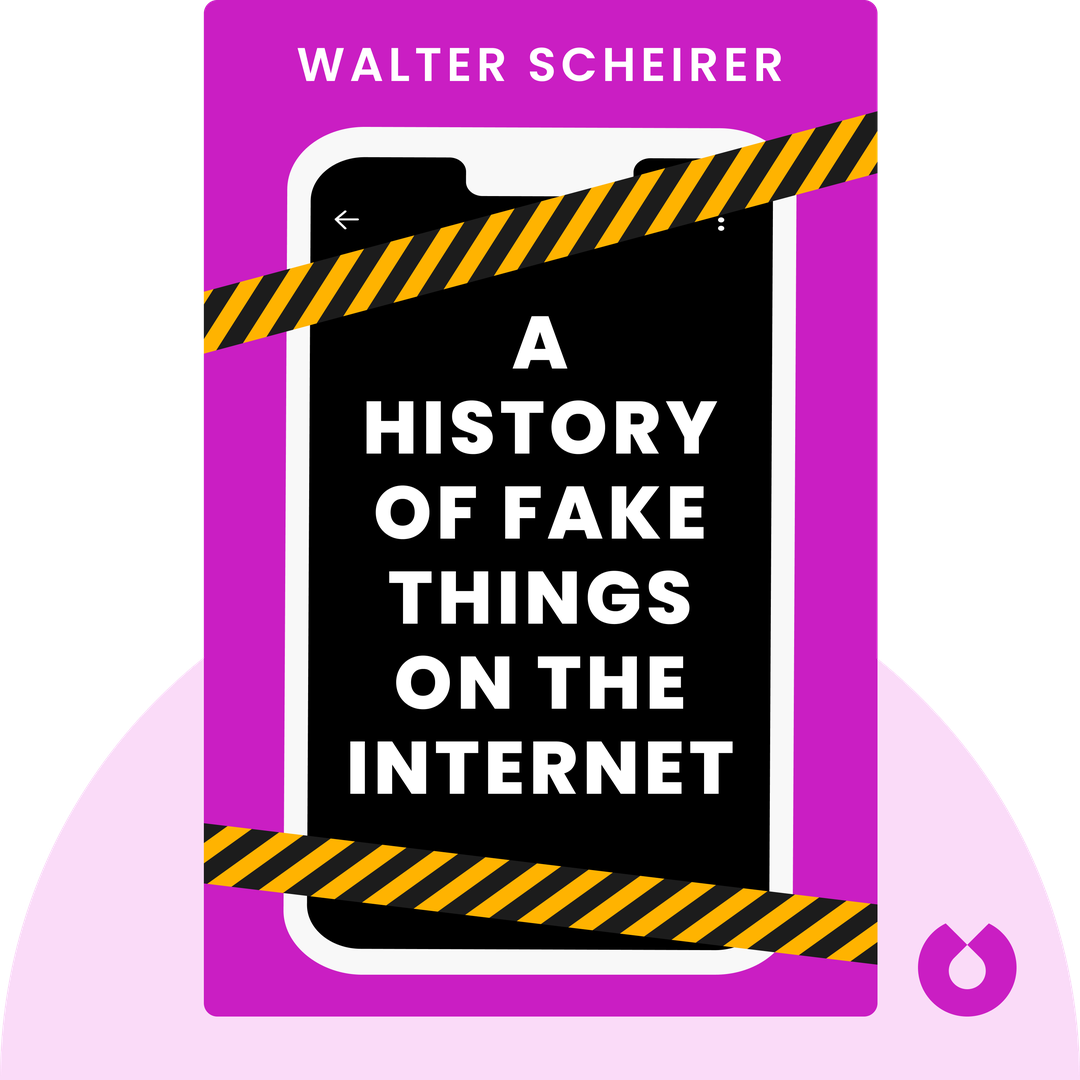
A History of Fake Things on the Internet
Start ListeningDownload Try free on iPhoneScan to start in 5 seconds
Categories:
If You're Curious About These Questions...
You should listen to this audiobook
- Did you know that the digital deceptions we face today actually share a surprising lineage with historical photo manipulation techniques used long before the birth of the internet?
- Have you ever wondered why the problem of fake content might have more to do with the fundamental human drive for creativity and destruction than the technology itself?
- Are you curious about how the rapid evolution from simple photo doctoring to sophisticated AI deepfakes is fundamentally changing our understanding of truth in the digital age?
Listen to A History of Fake Things on the Internet — Cinematic Audio Edition
Loading player...
Key Takeaways from A History of Fake Things on the Internet
- Discover why the internet is merely a medium for fake news rather than its root cause by tracing the origins of meme-making back to ancient Greek pottery.
- Understand how humanity has historically relied on myths and manipulated narratives as essential coping mechanisms to make sense of a chaotic reality.
- Learn how the 1980s hacker culture, driven by a desire to outmaneuver traditional gatekeepers, set the stage for the modern manipulation of news media.
- Explore the extensive history of photo manipulation, from 1800s political portraits to Chinese propaganda, and see how altering visuals is used to rewrite history.
- Find out how artificial intelligence and engagement-driven algorithms are inadvertently amplifying divisive content, pushing society further into distorted alternative realities.
Learning Tools
Reinforce what you learned from A History of Fake Things on the Internet
Mind Map
A History of Fake Things on the Internet
Myths and Memes+
The Rise of Fake News+
History of Photo Manipulation+
Forensics & Self-Fulfilling Prophecies+
The Horror of the Internet+
Fear, Hope, and Imagination+
Quiz — Test Your Understanding
Question 1 of 6
According to the text, what is the primary historical role of myths and early memes?
Question 2 of 6
Why did hacker groups in the 1980s, such as the 'Legion of Doom,' target news media outlets?
Question 3 of 6
The author argues that the historical practice of photo manipulation is ultimately driven by what underlying factor?
Question 4 of 6
What ironic consequence resulted from the early warnings and advancements made by media forensics experts?
Question 5 of 6
How does the text apply Marshall McLuhan's media theory to the rise of internet shock content?
Question 6 of 6
What is the book's concluding perspective on the future of the internet and digital fakery?
A History of Fake Things on the Internet — Full Chapter Overview
- 1Recommendation
- 2The story of myths and meme-making
- 3The emergence of fake news
- 4A brief history of photo manipulation
- 5How we create what we fear
- 6The internet’s darker side
- 7Whether we should fear or hope
- 8Final summary
A History of Fake Things on the Internet Summary & Overview
A History of Fake Things on the Internet (2023) explores the origins and evolution of digitally fabricated content, from early photo manipulation to today’s AI-generated deep fakes, analyzing key technological advances that made new forms of deception possible, and tracing their real-world impact back to fundamental aspects of human behavior. It argues that problems stemming from fake online content relate more to creativity and destruction inherent in human nature, rather than the nature of the faked content itself.
Who Should Listen to A History of Fake Things on the Internet?
- Technology historians
- Media literacy advocates
- Anyone interested in information security
Books Similar to A History of Fake Things on the Internet
Readers who enjoyed this also liked these titles.