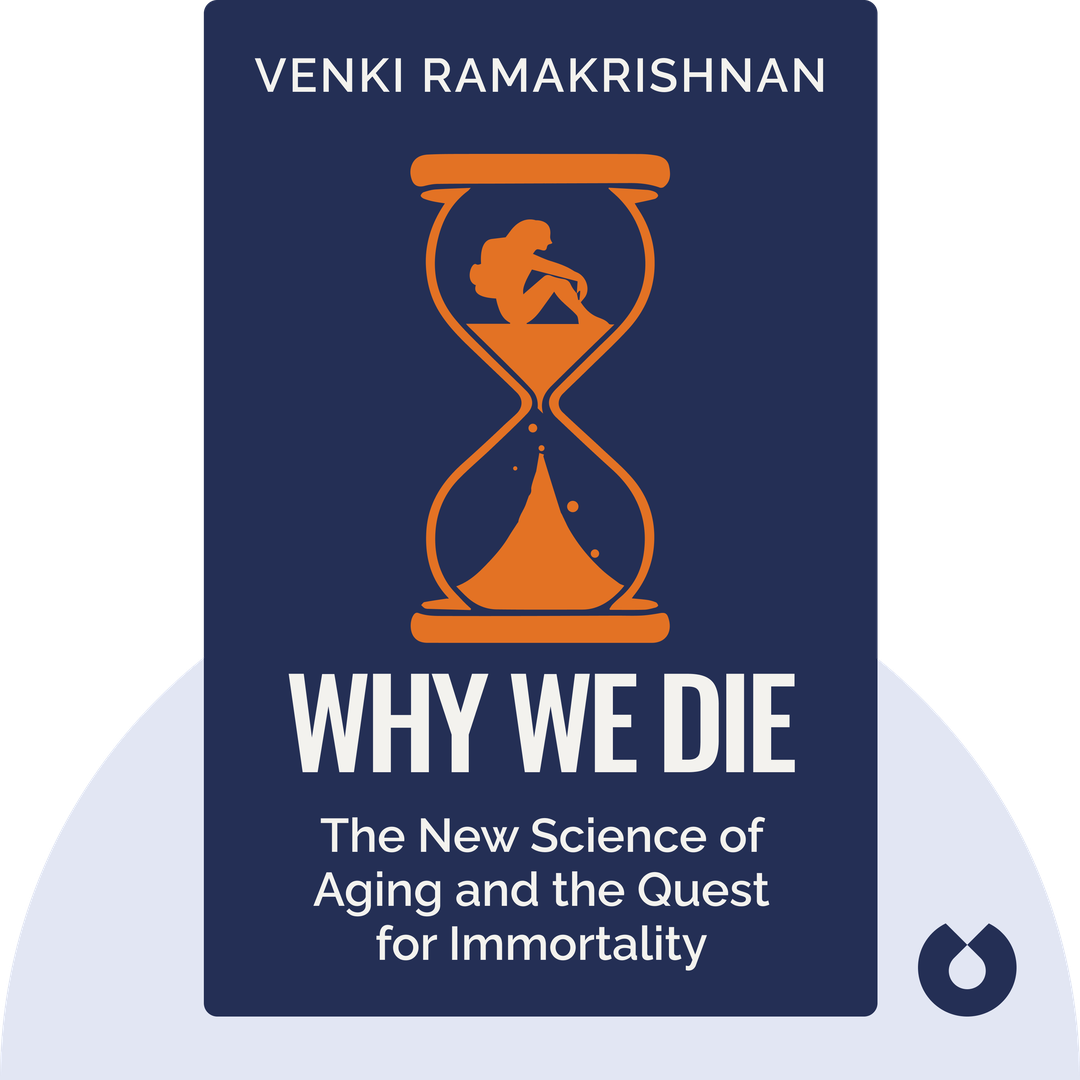
If You're Curious About These Questions...
You should listen to this audiobook
- Have you ever wondered why our bodies are biologically programmed to eventually fail, and if death is actually a necessary part of our evolution?
- What if the multi-billion dollar anti-aging industry is selling us a dream that contradicts the fundamental science of our DNA?
- Are you curious about whether we could truly extend the human lifespan indefinitely—and if society could even survive the consequences of immortality?
Listen to Why We Die — Free Audiobook
Loading player...
Key Takeaways from Why We Die
- Understand how our genes essentially cheat death by using germ-line cells to reset the biological aging clock during reproduction.
- Discover the biological paradox of aging, where the body's natural response to everyday DNA damage often accelerates the aging process more than the initial damage itself.
- Learn why surpassing the maximum recorded human lifespan of 122 years remains highly unlikely without unprecedented and complex biomedical breakthroughs.
- Realize the fatal flaw in cryonics, as preserving a frozen body cannot preserve or restore the incredibly complex neuronal connections required to revive the human brain.
- Uncover the truth behind the booming longevity industry, where billions are invested based on unfounded claims of immortality rather than concrete biological science.
Why We Die — Full Chapter Overview
Chapter 1: Recommendation
Chapter 2: Defining mortality
Chapter 3: The limits of the human lifespan
Chapter 4: Dreaming of immortality
Chapter 5: The trouble with living longer
Why We Die Summary & Overview
Why We Die (2024) explores the science of longevity, as well as some ethical implications. Is it possible to extend our life spans – or even live forever? And if we could, are we really sure we’d want to?
Who Should Listen to Why We Die?
- Those interested in the science of longevity
- People who are skeptical about the anti-aging industry
- Anyone currently contemplating their mortality
Books Similar to Why We Die
Readers who enjoyed this also liked these titles.
The Longevity Paradox
★ 4.5 / 5 • 324 ratingsHow to Die Young at a Ripe Old Age
Being Mortal
★ 4.5 / 5 • 168 ratingsIllness, Medicine and What Matters in the End
Outlive
★ 4.3 / 5 • 1243 ratingsThe Science and Art of Longevity
The Longevity Imperative
★ 0.0 / 5 • 0 ratingsBuilding a Healthier, Productive Society to Support Longer Lives