If You're Curious About These Questions...
You should listen to this audiobook
- The book notes a dramatic shift from 1945, when most people died at home, to the 1980s, when the vast majority died in hospitals. How has moving the end of life behind 'institutional walls' changed our relationship with death and our understanding of what dying patients truly need?
- When discussing terminal diagnoses, the author introduces the concept of 'first-order' versus 'second-order' desires. What is the crucial difference between these two, and why is it so dangerous when modern medicine focuses only on the first?
- Gawande suggests that facing mortality requires two distinct types of courage: the courage to face reality, and the courage to act upon it. Why does the author argue that the clarity of knowing the truth can sometimes be more paralyzing than uncertainty, and how can we use this courage to make better end-of-life choices?
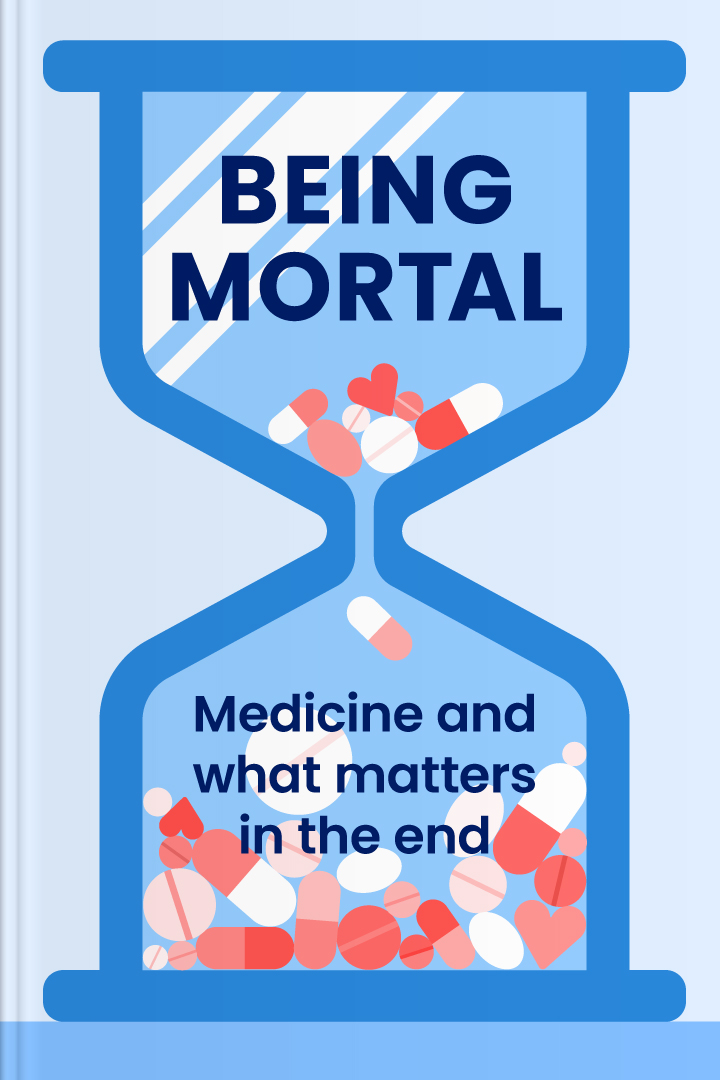
Listen to Being Mortal — Free Audiobook
Key Takeaways from Being Mortal
- Learn how to initiate conversations about aging and death sooner so you can shape the final chapters of life with courage, connection, and dignity.
- Understand why modern medical training treats mortality as an opponent to be defeated, often leaving patients feeling isolated when they most need companionship.
- Discover how the shift from dying at home to passing away in hospitals replaced familiar comfort with institutional walls, and why acknowledging mortality is the first step to reducing fear.
- Explore how economic and healthcare advancements have reshaped the aging experience, allowing older adults to maintain their independence and live for themselves longer.
- Find out how to reframe fading health by viewing autonomy not as a permanent possession, but as a shifting relationship where the right support preserves human dignity.
Learning Tools
Reinforce what you learned from Being Mortal
Mind Map
Quiz — Test Your Understanding
Being Mortal — Full Chapter Overview
- 1Recommendation
- 2Old age and illness lead to a loss of independence, increasing reliance on family, medicine, and social programs.
- 3Aging and dying increasingly happen in hospitals and other medical institutions.
- 4Even when we’re old and ill, we still want some control over our lives.
- 5Medical institutions and doctors often fail the elderly and dying, taking away their independence.
- 6We often choose treatments that extend life, even when they make our remaining time miserable.
- 7Society must handle aging and death in ways that preserve independence and meaning.
- 8Doctors need to offer better guidance to people facing death.
- 9Families need to talk realistically about age, illness, and death before it’s too late.
- 10Final summary
Being Mortal Summary & Overview
This narration explores how the modern world has reshaped the final chapters of human life. As medicine has grown more powerful, death has moved from homes into institutions, and the questions people face near the end have become more complicated—less about simply surviving, and more about how to live well while time narrows.
Across these chapters, the story considers independence, the inevitability of decline, and the difficult decisions that arrive with serious illness. It gently argues that healthcare is not only about fighting disease, but also about supporting a person’s deepest priorities—comfort, relationships, autonomy, and a sense of purpose—right to the end.
Who Should Listen to Being Mortal?
- Listeners supporting aging parents, partners, or friends, and wanting language for compassionate conversations about care, safety, and independence.
- Anyone who feels uneasy about mortality and wants a calmer, more realistic way to think about aging, decline, and what “a good end” might mean.
- Healthcare or caregiving-minded listeners who want to reflect on how medical choices can better align with a person’s values, not only their diagnosis.
Books Similar to Being Mortal
Readers who enjoyed this also liked these titles.