If You're Curious About These Questions...
You should listen to this audiobook
- Did you know that some of history’s most iconic inventions were built long before the scientific principles behind them were even understood?
- What is the secret universal method that bridges the gap between a creative spark and a functional masterpiece?
- Have you ever wondered how the same mindset used to construct ancient marvels could help you solve the complex problems in your own life?
Listen to The Things We Make — Free Audiobook
Loading player...
Key Takeaways from The Things We Make
- Discover how ancient craftsmen built architectural marvels without modern data by relying on the engineering method—a pragmatic approach you can apply to your own life's challenges.
- Learn how to leverage simple rules of thumb, practical experience, and intuition to solve complex problems when faced with uncertainty and limited resources.
- Understand why recognizing inherent biases in data—such as gender, culture, and physical ability—is crucial for moving beyond the flawed concept of the 'average person' to engineer truly inclusive solutions.
- Find out how historical problem-solvers turned logistical nightmares into successful ventures by creatively adapting to extreme physical constraints and uncertainties.
- Master the engineering mindset to transform how you view the world, turning seemingly ordinary objects and processes into inspiring lessons in creative problem-solving.
Learning Tools
Reinforce what you learned from The Things We Make
Mind Map
The Things We Make
The Engineering Method+
Defining the 'Best' Solution+
Navigating Limits and Uncertainty+
Science's Role in Engineering+
The Myth of the Lone Inventor+
The Complexity of Innovation+
Quiz — Test Your Understanding
Question 1 of 7
What defines the 'engineering method' as practiced by historical master masons building European cathedrals?
Question 2 of 7
What is a key lesson from Henry Dreyfuss's designs and Georgena Terry's bicycles regarding the concept of the 'best' engineering solution?
Question 3 of 7
How does the design of the modern soda can illustrate the engineering principle of trade-offs?
Question 4 of 7
According to the book, what role did scientific knowledge play in Charles Parsons's invention of the steam turbine?
Question 5 of 7
Why does the text argue that there is 'no such thing as a lone inventor' using the example of the electric light bulb?
Question 6 of 7
What does the history of the microwave oven reveal about the complexity of innovation?
Question 7 of 7
How did the seventeenth-century BCE wine traders solve the problem of safely transporting their goods from Carchemish to Mari?
The Things We Make — Full Chapter Overview
- 1Recommendation
- 2Grasping the Engineering Method
- 3How Engineers Choose What Works Best
- 4How Engineers Handle Limited Resources and Uncertainty
- 5The Role Science Plays in Engineering
- 6Why There’s No Such Thing as a Lone Inventor
- 7The Complexity Behind Innovation
- 8Final Summary
The Things We Make Summary & Overview
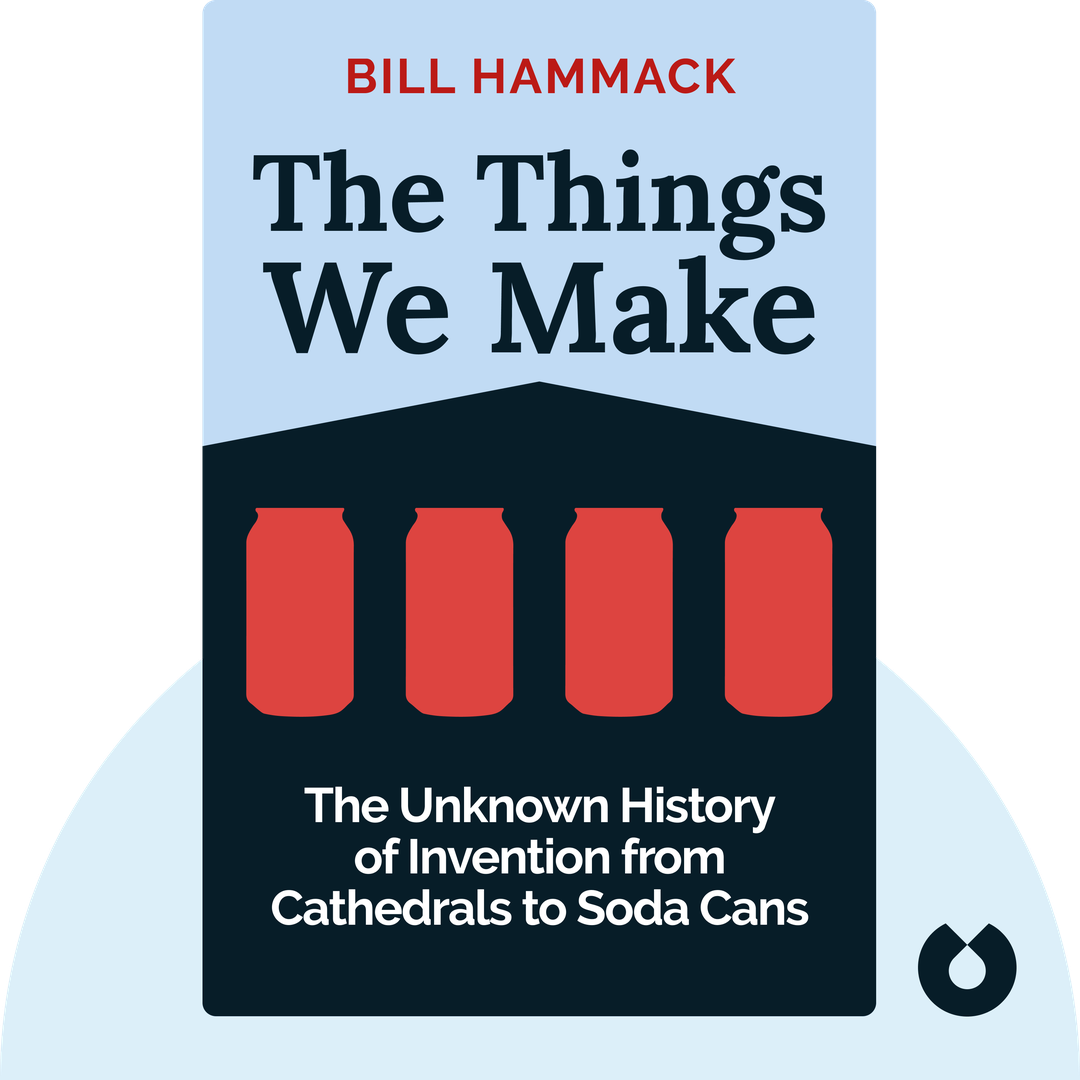
The Things We Make (2023) dispels the myth around some of the greatest and most ordinary inventions. It retells their making as a creative application of the engineering method, a principle that explains how people in ancient times built some of the marvels that still capture our imagination today.
Who Should Listen to The Things We Make?
- Anyone fascinated about how things of beauty and utility are made
- Engineering history buffs
- Curious minds trying to apply the engineering method to their own lives
Books Similar to The Things We Make
Readers who enjoyed this also liked these titles.