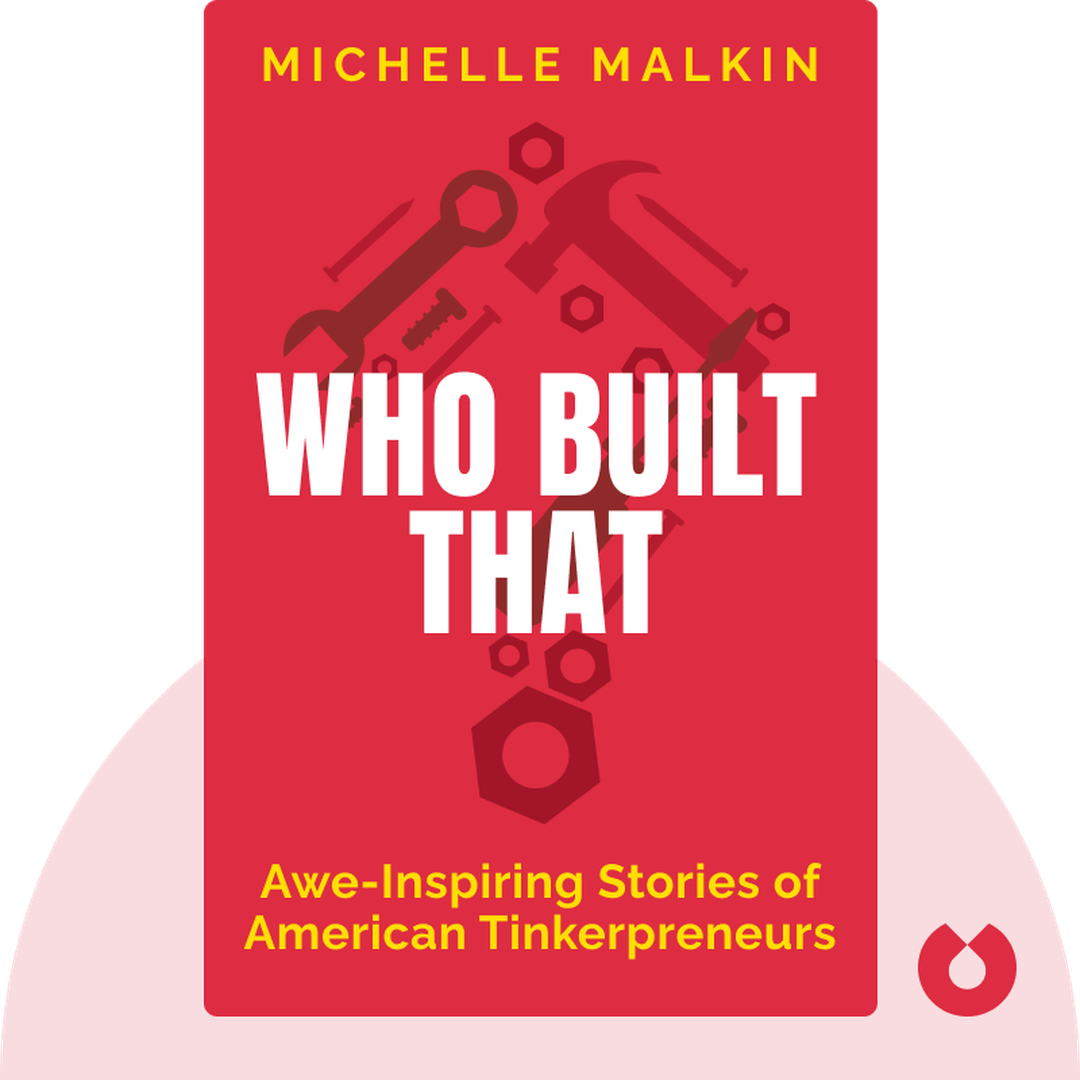
If You're Curious About These Questions...
You should listen to this audiobook
- Did you know that some of the most life-changing inventions in American history were created by "tinkerpreneurs" whose names you’ve likely never heard?
- Have you ever wondered why some brilliant ideas fizzle out while others overcome impossible odds to achieve massive commercial success?
- Are you curious about how the unsung heroes of innovation fought to protect their intellectual property and paved the way for the modern world?
Listen to Who Built That — Free Audiobook
Loading player...
Key Takeaways from Who Built That
- Understand why free market capitalism and individual determination, rather than government bureaucracy, are the true catalysts for American innovation.
- Discover the vital role of 'tinkerpreneurs'—driven visionaries who transition their ideas from the laboratory to the commercial market to create jobs and wealth.
- Learn how shifting your perspective and partnering with creative salespeople can transform a functional invention into a society-altering commercial product.
- Find out why true innovators must fiercely defend their ideas against rigid governments, threatened industries, and naysayers to achieve monumental success.
- Explore how radically simple, cost-effective solutions—such as the disposable bottle cap and steel razor—can revolutionize global industries through collaborative mentorship.
Learning Tools
Reinforce what you learned from Who Built That
Mind Map
Who Built That
The Tinkerpreneur Spirit+
Commercial Opportunism+
Overcoming Naysayers+
Power of Simple Ideas+
Vital Collaboration+
Threats to Innovation+
Quiz — Test Your Understanding
Question 1 of 6
According to the book, what is the primary disagreement between the author and President Obama regarding inventors?
Question 2 of 6
What key lesson does the story of Willis Carrier and Irvine Lyle demonstrate about innovation?
Question 3 of 6
Why did John Roebling, inventor of the revolutionary wire rope, leave Prussia for the United States?
Question 4 of 6
How did William Painter’s invention of the crown cap directly influence King Gillette?
Question 5 of 6
In the stories of Libbey & Owens and Tesla & Westinghouse, what shared theme emerges about the innovation process?
Question 6 of 6
According to the book, how has recent reform in the US patent system endangered innovation?
Who Built That — Full Chapter Overview
- 1Recommendation
- 2Tinkerpreneurs are the driving force behind innovation.
- 3For tinkerpreneurs, inventions offer opportunities for commercial success.
- 4Tinkerpreneurs often confront critics and naysayers along the road to success.
- 5Even small ideas can change the world.
- 6Collaboration is the greatest catalyst for innovation.
- 7Innovation is gravely threatened in the United States.
Who Built That Summary & Overview
Who Built That (2015) tells the stories of America’s most fascinating inventors from the last 150 years. These blinks reveal how these tinkerpreneurs, against all the odds, achieved commercial success with their revolutionary inventions.
Who Should Listen to Who Built That?
- Aspiring inventors interested in the history of innovation
- People interested in the development and future of intellectual property rights
- Businesses concerned about the current innovative capacities of the United States
Books Similar to Who Built That
Readers who enjoyed this also liked these titles.