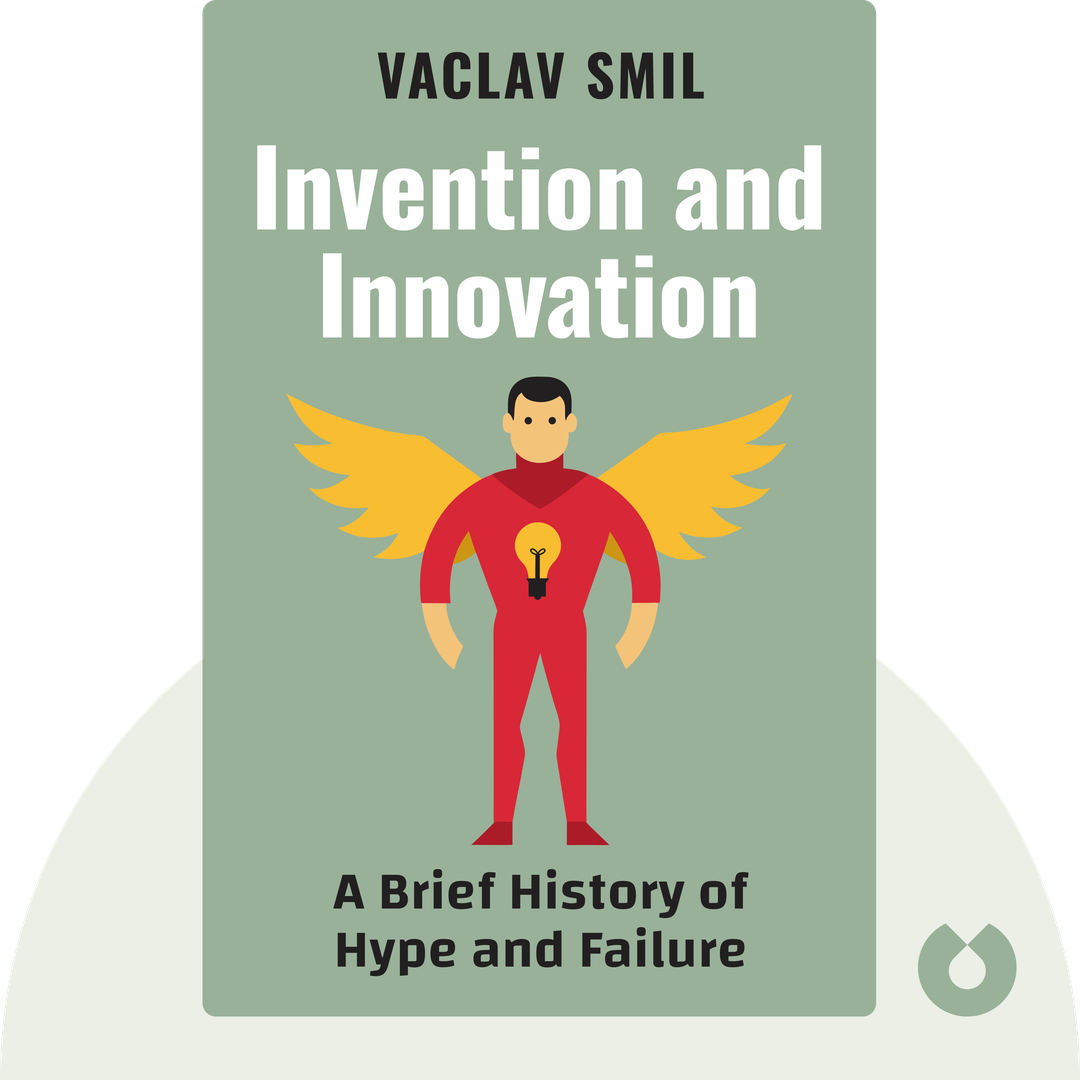
Invention and Innovation
Start ListeningDownload Try free on iPhoneScan to start in 5 seconds
Categories:
If You're Curious About These Questions...
You should listen to this audiobook
- Did you know that some of history’s most celebrated technological breakthroughs actually turned into global disasters?
- Have you ever wondered why certain 'revolutionary' inventions, like supersonic flight, failed to dominate the world as promised?
- Are you curious about the specific list of inventions we urgently need to solve today's crises—and why they aren't the ones you're hearing about in the news?
Listen to Invention and Innovation — Free Audiobook
Loading player...
Key Takeaways from Invention and Innovation
- Understand why technological progress is rarely a predictable forward march, but rather a messy journey filled with trial, error, and unexpected consequences.
- Discover how the pursuit of corporate control championed toxic leaded gasoline over known safe alternatives, hiding devastating societal and health costs that spanned generations.
- Learn how a Nobel Prize-winning invention like DDT became a cautionary tale of environmental harm when its use expanded from targeted disease control to widespread agricultural spraying.
- Find out why the spectacular Hindenburg disaster wasn't the true end of the airship era, which was actually made obsolete by the rapid advancement of faster, more practical airplanes.
- Master the ability to spot false technological hype by recognizing that persistent futuristic dreams often fail to materialize due to insurmountable practical and economic limitations.
Learning Tools
Reinforce what you learned from Invention and Innovation
Mind Map
Invention and Innovation
Hidden Costs of Success+
Failed Promises & Obsolescence+
Perpetual Technological Dreams+
The Slow March of Innovation+
Practical Priorities for the Future+
Quiz — Test Your Understanding
Question 1 of 7
Why did tetraethyl lead (TEL) become the standard anti-knock additive in gasoline over safer alternatives like ethanol?
Question 2 of 7
What was the primary cause of DDT's transition from a celebrated, Nobel Prize-winning discovery to a banned substance?
Question 3 of 7
According to the text, what was the true reason for the demise of passenger airships?
Question 4 of 7
How does Vaclav Smil characterize the historical trajectory of nuclear power?
Question 5 of 7
Which of the following is cited as an example of a technological dream that has remained perpetually elusive despite decades or centuries of effort?
Question 6 of 7
What misconception about innovation does the text argue is caused by Moore's Law (the rapid advancement of computing power)?
Question 7 of 7
Based on the book's conclusion, where should humanity focus its technological priorities?
Invention and Innovation — Full Chapter Overview
- 1Recommendation
- 2The hidden price of leaded gasoline
- 3DDT’s unexpected journey
- 4Airships and the road of failed promise
- 5Nuclear power’s unrealized revolution
- 6The long wait for breakthrough technologies
- 7Innovation’s slow progress and practical priorities
- 8Final summary
Invention and Innovation Summary & Overview
Invention and Innovation (2023) examines the complex history of human invention, offering a sober analysis that distinguishes between genuine innovation and overhyped promises. It explores various categories of inventions – those that failed to dominate as promised, those that turned disastrous, and those long-promised but not yet realized – along with a pragmatic wish list of inventions urgently needed to address 21st century challenges.
Who Should Listen to Invention and Innovation?
- Cautious technology investors seeking realistic market assessments
- Curious historians studying technological development patterns
- Anyone interested in technology’s past and future
Books Similar to Invention and Innovation
Readers who enjoyed this also liked these titles.