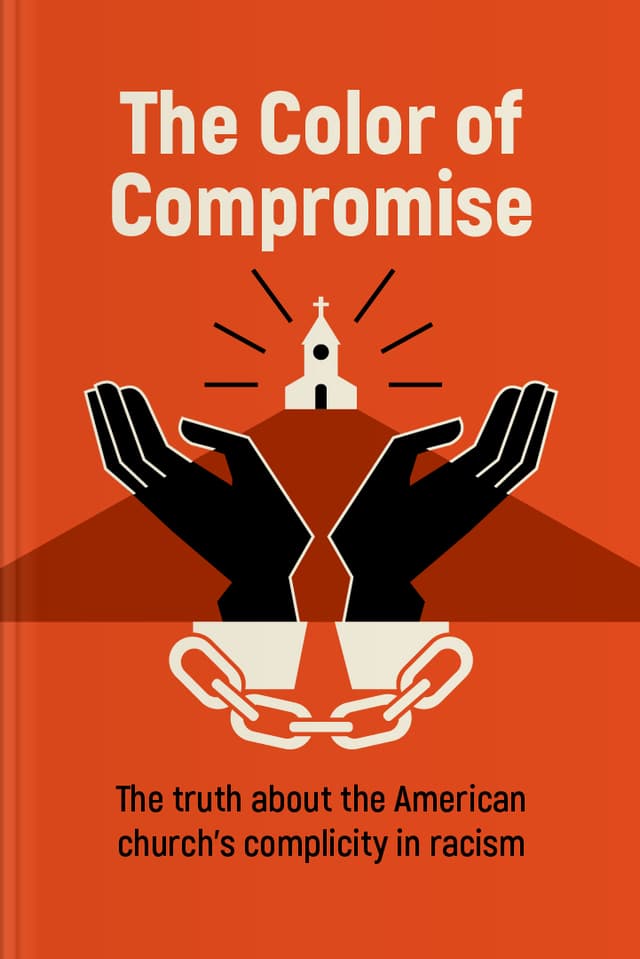
If You're Curious About These Questions...
You should listen to this audiobook
- Did you know that early colonial laws were specifically rewritten to ensure that the spiritual freedom of baptism didn't lead to physical freedom for enslaved people?
- Have you ever wondered how the same theology used to build racial hierarchies was also used by the 'invisible institution' of Black worship to resist oppression?
- What if the secret to healing modern racial divisions within the church lies not in moving on, but in carefully uncovering the historical truths many have tried to hide?
Listen to The Color of Compromise
What You'll Learn from The Color of Compromise
- — Letting the Whole Truth Speak
- — When Freedom Was Redefined to Protect Power
- — How a System Was Built, Piece by Piece
- — Revival in the Soul, Chains in the Street
- — The Birth of the ‘Invisible Institution’
The Color of Compromise Chapter Overview
Chapter 1: AudiobookHub Recommendation
Chapter 2: — Letting the Whole Truth Speak
Chapter 3: — When Freedom Was Redefined to Protect Power
Chapter 4: — How a System Was Built, Piece by Piece
Chapter 5: — Revival in the Soul, Chains in the Street
Chapter 6: — The Birth of the ‘Invisible Institution’
Chapter 7: — When Scripture Was Turned Into a Weapon
Chapter 8: — Learning the Past, Choosing the Next Step
About The Color of Compromise
This audio narration invites listeners into a careful, compassionate examination of an uncomfortable reality: the American Christian Church has often reflected the racial hierarchies of its culture rather than the liberating heart of Jesus’ message. Instead of hiding the “ugly” parts of history, this story treats truth as a form of spiritual care—something that can free people from denial and help communities grow.
Moving from colonial laws about baptism and slavery, to the construction of racial categories, to the Great Awakening and the rise of the “invisible institution” of Black worship, the chapters show how theology was sometimes used to protect power—and how faith was also used to resist oppression. The closing chapter offers gentle, practical ways to engage: learning history, speaking openly, and participating in actions that support justice.
Who Should Listen to The Color of Compromise
- Listeners who want a thoughtful, faith-aware introduction to how racism became embedded in American church life—and how honesty can become a path toward repair.
- Christian communities, small groups, and individuals seeking language for hard conversations that stays grounded in humility, history, and moral clarity.
- Anyone who wants to understand how religious beliefs can be used either to liberate or control—and how to discern the difference with care.
More Books Like The Color of Compromise
Readers who enjoyed this also liked these titles.

Master your emotional skills for lasting success

Building a Better World for All

Getting Things Done with Others

In a world that tells them they're flawed