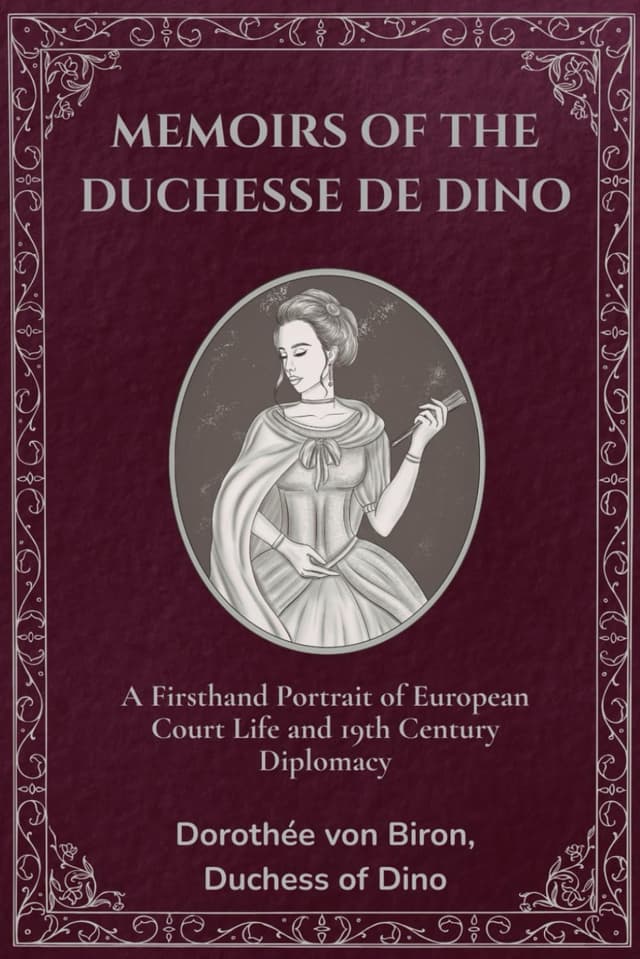
Penned between 1831 and 1862, the memoirs of the Duchesse de Dino were written across the grand estates and diplomatic capitals of Europe, primarily in Paris, London, and the Château de Valençay. Authored by Dorothée, the Duchesse de Dino (born von Biron, though historically intertwined and often discussed alongside her contemporary, the diplomat Dorothea von Lieven), the journals emerged during a period of profound geopolitical transformation. The mid-nineteenth century was defined by the fragile post-Napoleonic order, the French July Monarchy, and shifting imperial alliances. As the constant companion and niece-by-marriage to the legendary French diplomat Charles Maurice de Talleyrand, the Duchesse possessed unparalleled access to the highest echelons of European power, writing from the very epicenter of aristocratic and political life.
When the memoirs were published posthumously in the early twentieth century, they immediately sparked fascination and controversy. Readers were captivated by her sharp, unfiltered observations of royalty, statesmen, and cultural icons. Her diaries stripped away the polished veneer of nineteenth-century diplomacy, revealing the personal ambitions, private scandals, and backroom negotiations that truly governed Europe. Her candid critiques of prominent historical figures, alongside her intimate portrayal of Talleyrand’s final years, challenged established historical narratives and made the text a subject of intense debate among both scholars and surviving aristocratic families.
Today, the work holds a lasting impact on both literature and historical scholarship. It is celebrated not only as a masterpiece of the memoir genre but also as an indispensable primary source for understanding nineteenth-century high society. The text permanently elevated the literary legacy of aristocratic women, proving that behind the era's patriarchal facades, brilliant female observers were acting as crucial, albeit unofficial, political architects and the ultimate chroniclers of their age.