If You're Curious About These Questions...
You should listen to this audiobook
- What’s the secret to maintaining unshakeable resilience while navigating a career path where no one looks like you?
- Did you know how the specific cultural and familial roots of a young girl in Miami paved the way for her to become a voice for justice at the highest level?
- Have you ever wondered what it really feels like to stand at the intersection of history and personal ambition during a high-stakes Supreme Court confirmation?
Listen to Lovely One — Cinematic Audio Edition
Loading player...
Key Takeaways from Lovely One
- Discover how Ketanji Brown Jackson’s historic journey to the Supreme Court serves as a powerful blueprint for using resilience to combat systemic injustice.
- Learn how deeply rooted family values and the legacy of overcoming Jim Crow-era segregation shaped Jackson’s early ambitions and instilled a profound pride in her heritage.
- Understand the impact of W.E.B. Du Bois’s concept of 'double consciousness' and how Jackson navigated the tension of existing in two worlds to overcome societal stereotypes.
- Find out why a humbling childhood interaction with her grandmother taught Jackson the crucial lesson of honoring the generational sacrifices that pave the way for success.
- Explore how a stranger's timely advice to 'persevere' and the backing of a tight-knit community helped Jackson conquer imposter syndrome during her challenging transition to Harvard.
Learning Tools
Reinforce what you learned from Lovely One
Mind Map
Lovely One
Family Legacy & Early Years+
Identity & Double Consciousness+
Harvard & Perseverance+
Legal Career & Mentorship+
Motherhood & Values+
The Supreme Court & Legacy+
Quiz — Test Your Understanding
Question 1 of 7
How did Ketanji Brown Jackson relate to W.E.B. Du Bois's concept of 'double consciousness' during her youth?
Question 2 of 7
What key factors helped Ketanji Brown Jackson overcome her initial feelings of doubt and isolation as an undergraduate at Harvard?
Question 3 of 7
What valuable lesson did Ketanji learn after initially laughing at a misspelled note from her grandmother, Queenie?
Question 4 of 7
During her clerkship with US Supreme Court Justice Stephen Breyer, what principle of his did Ketanji deeply admire and later adopt in her own career?
Question 5 of 7
Why did Ketanji Brown Jackson eventually leave her position at a large corporate law firm (big law)?
Question 6 of 7
As vice-chair of the US Sentencing Commission, what significant policy change did Ketanji strongly advocate for, despite potential risks to her future judicial career?
Question 7 of 7
During her Supreme Court confirmation hearings, how did Ketanji Brown Jackson describe the primary role of a judge?
Lovely One — Full Chapter Overview
- 1Recommendation
- 2A name and a legacy
- 3Living with double consciousness
- 4Perseverance
- 5The importance of mentorship
- 6Becoming a mother
- 7Building for the future
- 8Final summary
Lovely One Summary & Overview
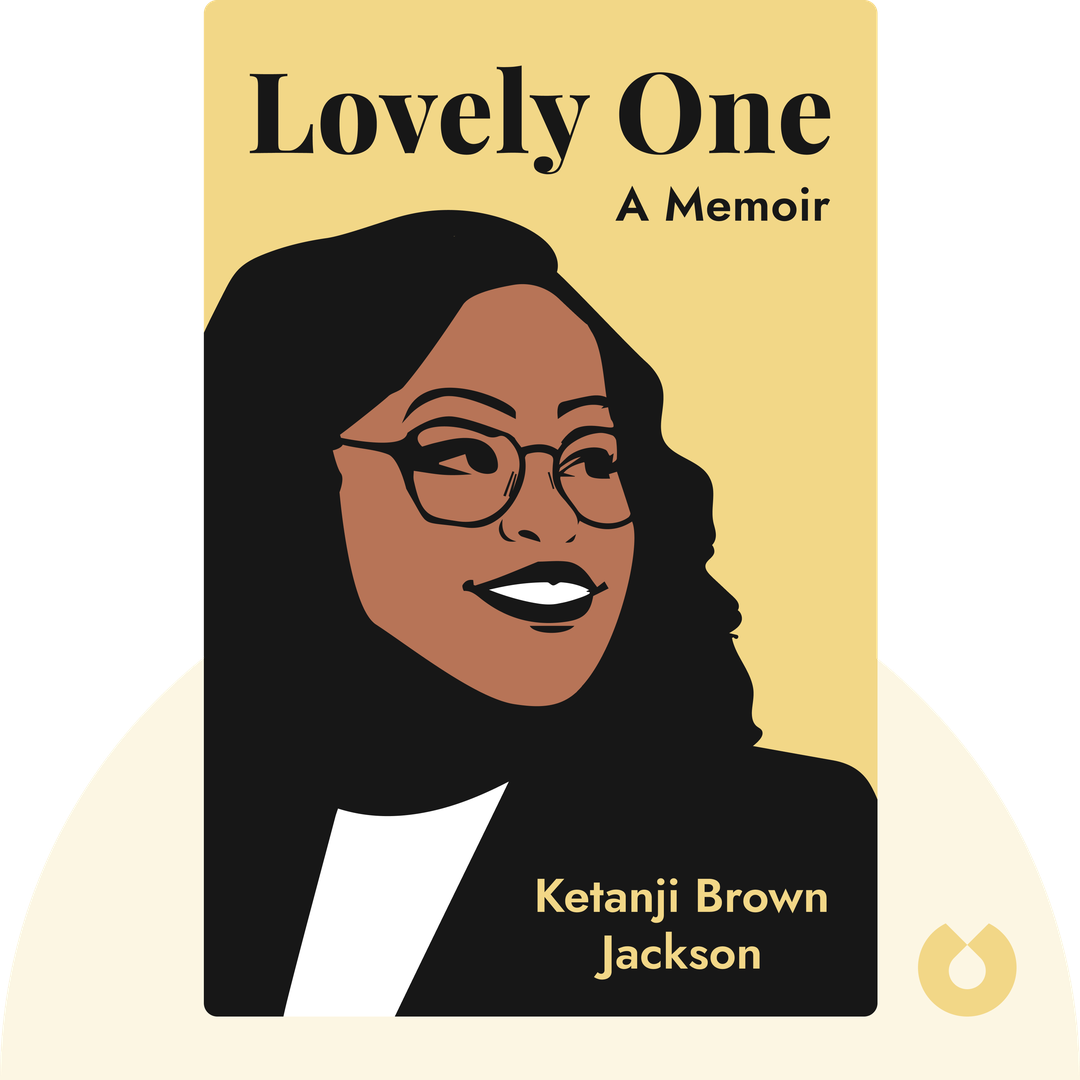
Lovely One (2024) tells the inspiring story of Kentanji Brown Jackson’s journey from a young girl dreaming of justice to becoming the first Black woman on the Supreme Court. Through candid reflections on her family and career challenges, she highlights the power of resilience and ambition. It is a heartfelt memoir that represents the intersections of identity, aspiration, and the pursuit of equality in America.
Who Should Listen to Lovely One?
- Aspiring legal professionals
- Social justice advocates
- Parents and caregivers
Books Similar to Lovely One
Readers who enjoyed this also liked these titles.