If You're Curious About These Questions...
You should listen to this audiobook
- Have you ever wondered why the secret to finding the perfect partner might actually have nothing to do with the other person?
- What if you could transform your romantic future by mastering the one skill most people overlook in their search for love?
- Are you curious about how your personal history is silently shaping your relationships today, and what it takes to break the cycle?
Listen to Loving Bravely — Cinematic Audio Edition
Loading player...
Key Takeaways from Loving Bravely
- Understand why honest love must start within, and how practicing relational self-awareness helps you attract emotionally invested partners.
- Discover the true meaning of 'brave love,' which requires staying present with the messy richness of relationships rather than chasing a fantasy of constant ease.
- Recognize how your childhood and family dynamics act as a lens for your current relationships, and why examining these old patterns prevents you from repeating them.
- Master the 'Name-Connect-Choose' method to identify your emotional triggers, accept your past without judgment, and intentionally choose healthy responses in the present.
- Realize that no one is irreparably injured by their past, and learn how shifting your focus from being a perfect partner to a repair-capable one makes lasting love possible.
Learning Tools
Reinforce what you learned from Loving Bravely
Mind Map
Loving Bravely
Relational Self-Awareness+
Reframing Narratives+
Navigating Cultural Norms+
Expectations and Soulmates+
Sex and Physical Intimacy+
Handling Conflict+
Apologies and Forgiveness+
Presence and Self-Compassion+
Quiz — Test Your Understanding
Question 1 of 10
What is 'relational self-awareness' as described in the book?
Question 2 of 10
Why does the author recommend telling 'dialectic stories' about our partners?
Question 3 of 10
According to the text, how should individuals approach cultural norms regarding dating and gender roles?
Question 4 of 10
What did social psychologists Spike W. S. Lee and Norbert Schwartz discover about people who believe in 'perfect matches'?
Question 5 of 10
What is the necessary first step to having good sex with a partner, according to the book?
Question 6 of 10
How does taking a reflective pause help during an emotional conflict with a partner?
Question 7 of 10
Which of the following is an example of an 'intimacy-inviting phrase' to use during a conflict?
Question 8 of 10
What is an 'amends action' in the context of apologizing for a major transgression?
Question 9 of 10
Besides putting away technology, what internal practice is crucial for remaining fully present and open to receiving love?
Question 10 of 10
Why does the author suggest interviewing your parents as an actionable step?
Loving Bravely — Full Chapter Overview
- 1Recommendation
- 2To truly love someone else, you must first understand yourself.
- 3To shift your mindset, tell yourself better and more accurate stories.
- 4Your love life doesn’t need to match cultural expectations.
- 5No partner can meet all your needs all the time.
- 6Sex is natural, but good sex takes some work.
- 7Prevent emotional conflict by creating space to process and reflect.
- 8A genuine apology can strengthen a relationship.
- 9Relationships endure when you work to be fully present.
- 10Final summary
Loving Bravely Summary & Overview
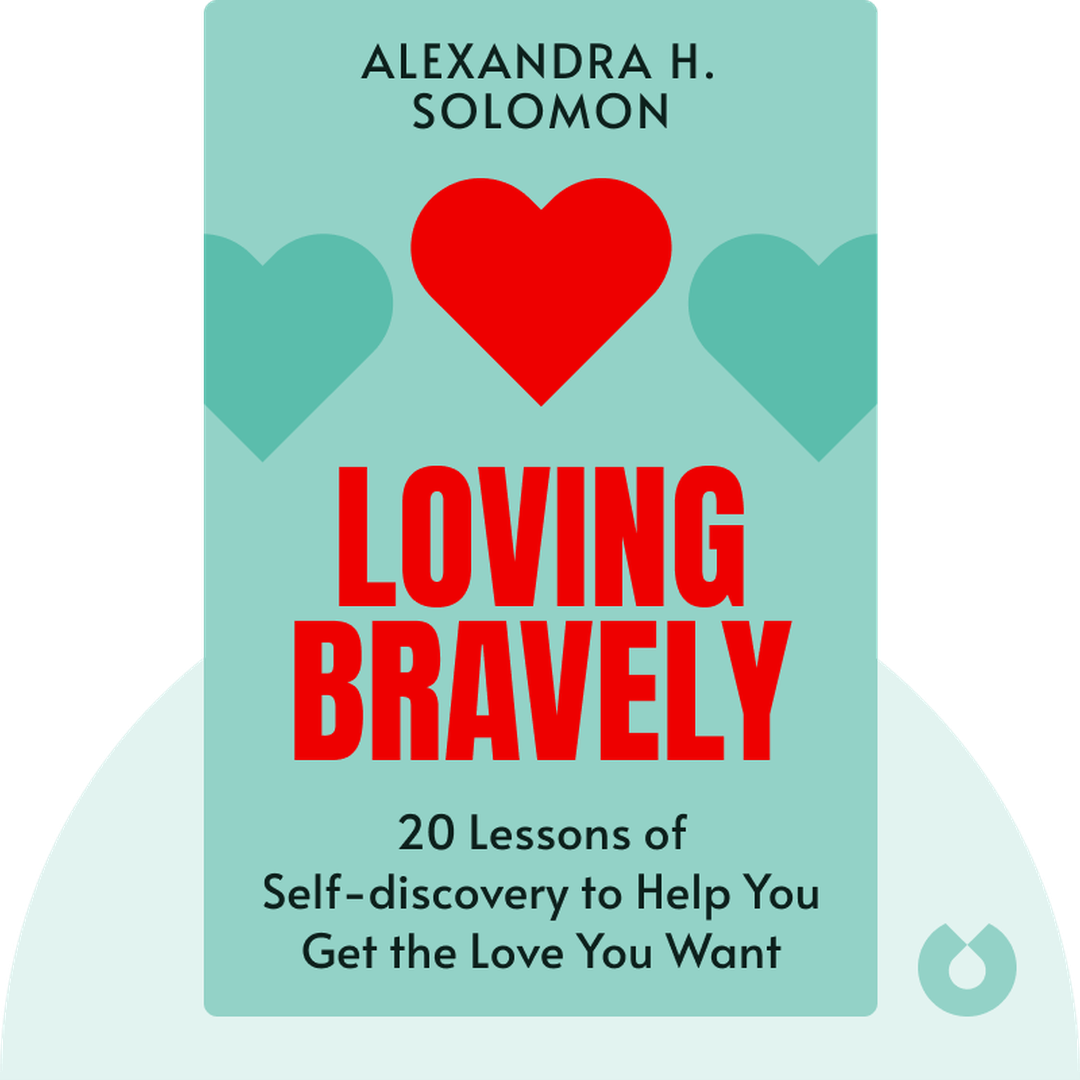
Loving Bravely (2017) is a primer on finding love through introspection and self-discovery. This guide to love teaches invaluable lessons about how to build relationships that actually last.
Who Should Listen to Loving Bravely?
- Lonely hearts looking for love
- True romantics seeking lasting relationships
- Anyone curious about the psychology of attachment
Books Similar to Loving Bravely
Readers who enjoyed this also liked these titles.