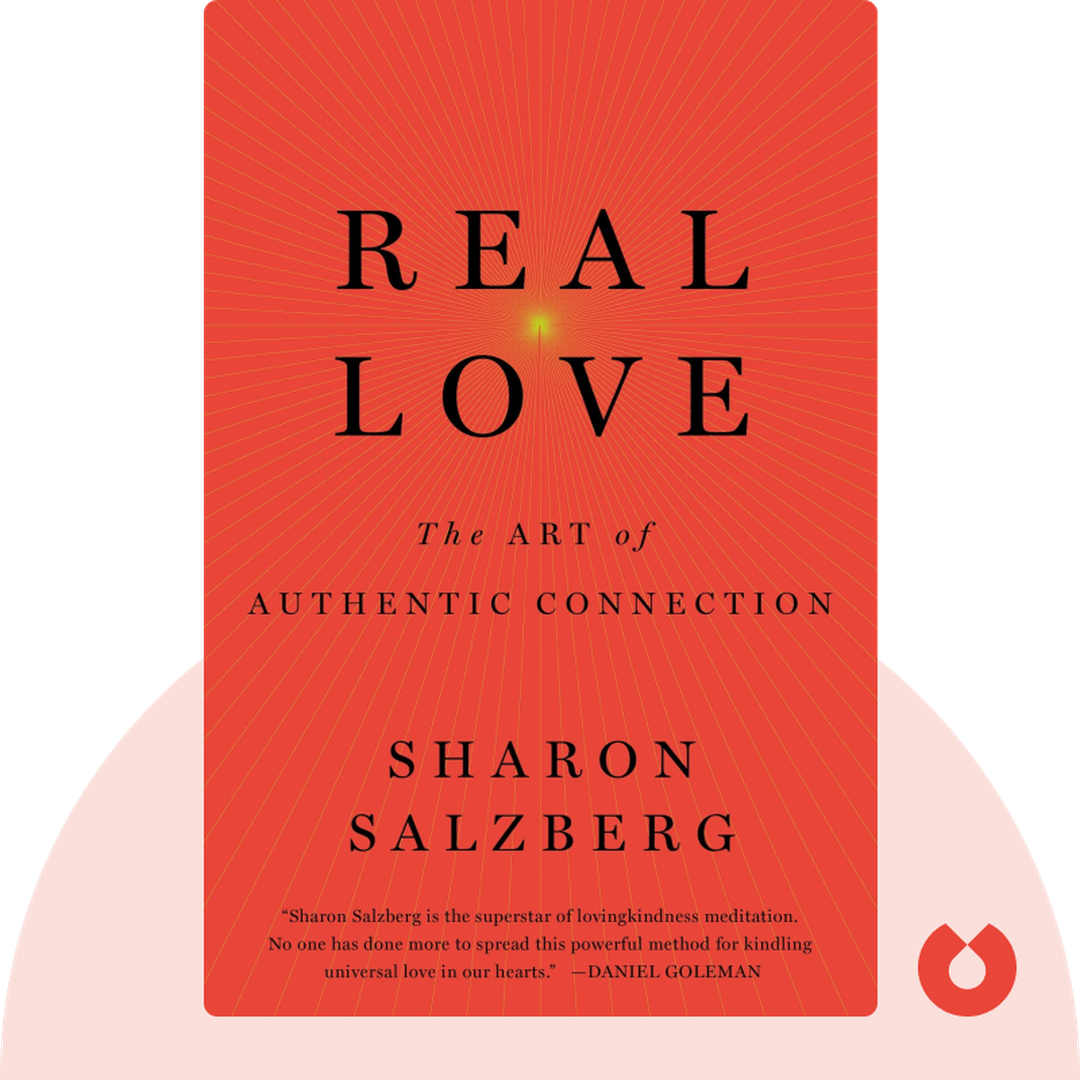
If You're Curious About These Questions...
You should listen to this audiobook
- Have you ever wondered why our cultural conditioning and everyday habits often act as invisible barriers to the deep connections we crave?
- What if you could turn your most challenging relationship conflicts into a source of profound joy and lasting intimacy?
- Are you curious about the secret to practicing a form of love that goes beyond romance and starts with transforming your relationship with yourself?
Listen to Real Love — Free Audiobook
Loading player...
Key Takeaways from Real Love
- Discover how to expand your definition of love beyond close family and romance to weave joyful, meaningful connections into every aspect of your daily life.
- Recognize why you are often an unreliable narrator of your own life, and learn how to reframe the faulty, self-limiting stories your brain creates about the past.
- Understand why repressing difficult emotions like grief or shame only prolongs suffering, and discover how fully engaging with your pain paves the way for true forgiveness.
- Learn how to stop filling the ambiguous gaps in your relationships with damaging assumptions by practicing supportive communication rather than acting out of hurt.
- Master the practice of kindness during moments of conflict, which relationship researchers identify as the single most accurate predictor of a successful marriage.
Learning Tools
Reinforce what you learned from Real Love
Mind Map
Real Love
Redefining Love+
Reframing Narratives+
Engaging Difficult Emotions+
Navigating Relationships+
Letting Go of Expectations+
Cultivating Sympathetic Joy+
Connecting with the World+
Quiz — Test Your Understanding
Question 1 of 8
According to the book, what is a common but limiting view of love that inhibits our happiness?
Question 2 of 8
Why does the author argue that we are 'unreliable narrators' of our own lives?
Question 3 of 8
How does the author suggest we handle difficult emotions like grief or shame to achieve long-term happiness?
Question 4 of 8
According to research by the Gottman Institute, what is the most accurate indicator of a successful marriage?
Question 5 of 8
What is a major downside of trying to 'fix' a loved one who is emotionally or physically ill?
Question 6 of 8
What is the final step in transforming jealousy into 'sympathetic joy'?
Question 7 of 8
What did the University of California experiment involving tall eucalyptus trees demonstrate?
Question 8 of 8
In the RAIN method for exploring difficult emotions, what does the 'N' stand for?
Real Love — Full Chapter Overview
- 1Recommendation
- 2The stories we tell about our lives strongly shape how we see ourselves, for better or worse.
- 3For lasting happiness, we must first face difficult emotions.
- 4An open, level playing field is the best ground for finding real love.
- 5How we handle the space between ourselves and our loved ones deeply affects our happiness.
- 6To build a deep connection with someone, we must release our expectations.
- 7We can turn jealousy into joy by examining its causes.
- 8The key to building loving connections is actively noticing the people you meet and the world around you.
- 9Taking time to embrace the world around us, even briefly, helps happiness grow.
- 10Final summary
Real Love Summary & Overview
Real Love (2017) draws our attention to the habits and cultural conditioning that stop us from forming deep connections with others. By inviting us to expand our notions of love and the ways in which we practice it in our day-to-day lives, Sharon Salzberg provides practical advice on how we can strengthen our relationships and experience more joy.
Who Should Listen to Real Love?
- Couples who want to learn how to handle conflict constructively
- Sufferers of low self-esteem hoping to develop self-love
- People seeking deeper connections with others
Books Similar to Real Love
Readers who enjoyed this also liked these titles.