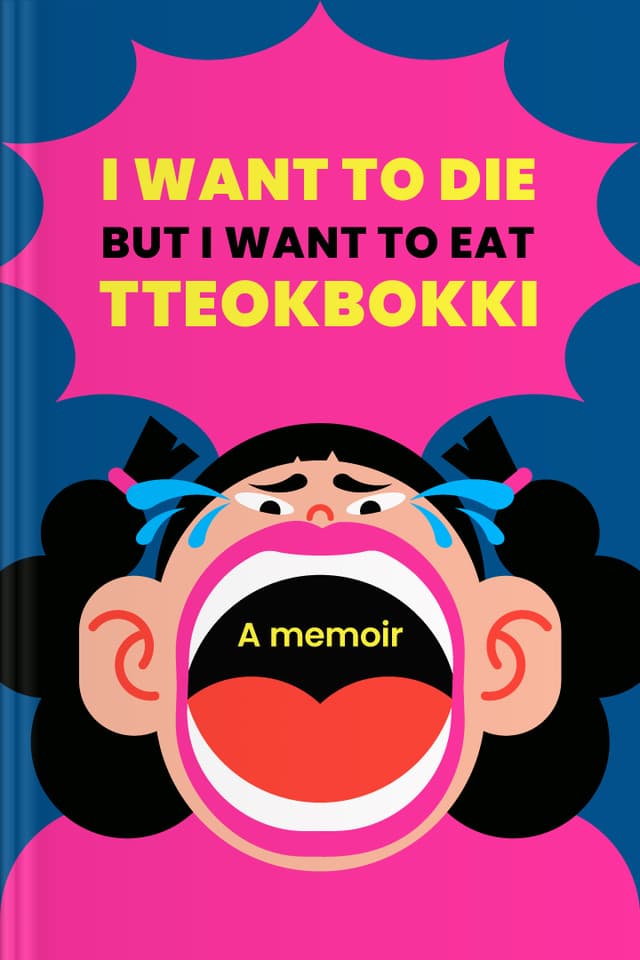
If You're Curious About These Questions...
You should listen to this audiobook
- Have you ever wondered why you can feel a deep sense of hopelessness while still craving life’s small joys, and what this contradiction reveals about the way we process sadness?
- Are you curious about how 'black-and-white thinking' might be distorting your self-image and making you feel like you’re constantly failing at being yourself?
- What if the secret to healing isn't about finding a 'perfect' fix, but about learning to embrace the messy, quiet parts of your story that you’ve been trying to hide?
Listen to I Want to Die but I Want to Eat Tteokbokki
What You'll Learn from I Want to Die but I Want to Eat Tteokbokki
- — When Life Feels Heavy, and Words Feel Small
- — Learning to Offer Yourself Kindness, Bit by Bit
- — When Fear Shapes Connection, and Honesty Softens It
- — Softening the Mirror: Taste, Appearance, and Acceptance
- — Self-Esteem in Motion: Setbacks, Work, and Quiet Repair
I Want to Die but I Want to Eat Tteokbokki Chapter Overview
Chapter 1: AudiobookHub Recommendation
Chapter 2: — When Life Feels Heavy, and Words Feel Small
Chapter 3: — Learning to Offer Yourself Kindness, Bit by Bit
Chapter 4: — When Fear Shapes Connection, and Honesty Softens It
Chapter 5: — Softening the Mirror: Taste, Appearance, and Acceptance
Chapter 6: — Self-Esteem in Motion: Setbacks, Work, and Quiet Repair
Chapter 7: — Choosing Yourself Without Abandoning Love
Chapter 8: — A Gentle Ending: Care as a Daily Beginning
About I Want to Die but I Want to Eat Tteokbokki
This audiobook-style narration follows Baek Sehee’s therapy reflections as she names the weight of low self-esteem, depression, and relationship anxiety—without pretending there’s a neat, inspirational fix. Instead, the story moves gently, like real healing often does, offering honest language for feelings many people hide.
Across these chapters, Sehee explores how childhood wounds can echo into adulthood, how black-and-white thinking can distort relationships and self-image, and how learning to receive care can be as challenging as giving it. The overall message is not perfection—it’s companionship, clarity, and the possibility of treating oneself with a little more tenderness.
Who Should Listen to I Want to Die but I Want to Eat Tteokbokki
- Listeners who feel worn down by self-criticism, overthinking, or the sense that happiness has become hard to access
- Anyone who tends to people-please, fear abandonment, or lose themselves in relationships and wants gentler, steadier boundaries
- Those curious about therapy-informed self-understanding and practical ways to soften harsh inner standards
More Books Like I Want to Die but I Want to Eat Tteokbokki
Readers who enjoyed this also liked these titles.

Getting Things Done with Others

Building a Better World for All
Master your emotional skills for lasting success

In sunlit Florence and buttoned-up England, young Lucy Honeychurch discovers that a “room with a view” is more than a hotel preference—it is a challenge to inherited propriety, awakening desire, and the risk of living truthfully.