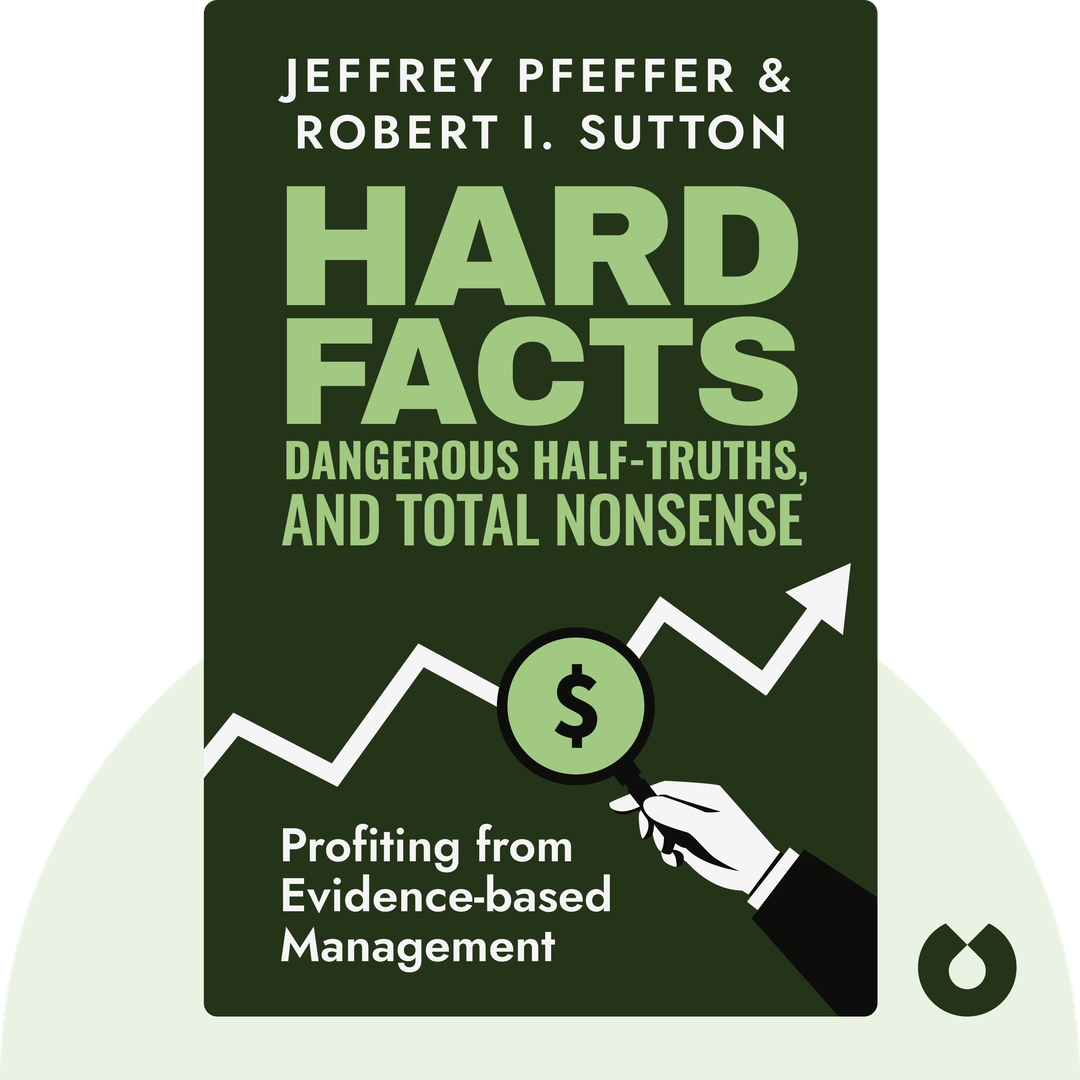
Hard Facts, Dangerous Half-Truths, and Total Nonsense
Start ListeningDownload Try free on iPhoneScan to start in 5 seconds
Categories:
If You're Curious About These Questions...
You should listen to this audiobook
- Did you know that some of the most popular management 'best practices' are actually dangerous half-truths that could be sabotaging your team’s success?
- Have you ever wondered why smart leaders often ignore hard data in favor of unproven trends and 'total nonsense' that doesn't actually work?
- What if you could transform your decision-making process by learning to distinguish between common business myths and the evidence-based facts that actually drive results?
Listen to Hard Facts, Dangerous Half-Truths, and Total Nonsense — Free Audiobook
Loading player...
Key Takeaways from Hard Facts, Dangerous Half-Truths, and Total Nonsense
- Learn how to use evidence-based management to replace gut feelings and outdated assumptions with hard data, drastically improving your business decisions.
- Discover why blindly copying successful companies often leads to failure, and realize the importance of understanding the deep-rooted philosophies behind their success.
- Adopt the mindset of treating your organization as an 'unfinished prototype' that continually evolves through ongoing experiments and fresh insights.
- Understand how past success can create ego blind spots, and learn to seek objective feedback from outsiders to prevent overconfidence from clouding your judgment.
- Find out how to market data-driven choices using compelling narratives, and discover subtle strategies to slow down the implementation of unavoidable bad decisions.
Learning Tools
Reinforce what you learned from Hard Facts, Dangerous Half-Truths, and Total Nonsense
Mind Map
Hard Facts, Dangerous Half-Truths, and Total Nonsense
The Problem with Traditional Management+
Understanding Evidence-Based Management (EBM)+
Real-World EBM Case Studies+
Principles for Implementing EBM+
Core Philosophy+
Quiz — Test Your Understanding
Question 1 of 5
What is the fundamental premise of evidence-based management (EBM) as described in the text?
Question 2 of 5
What did Google's internal study reveal about what makes an effective manager?
Question 3 of 5
Why did competitors fail when they attempted to replicate Toyota's success in automobile manufacturing?
Question 4 of 5
According to the implementation principles of EBM, what does it mean to treat an organization as an 'unfinished prototype'?
Question 5 of 5
How do the authors suggest a leader should handle a mandated executive decision that clearly contradicts solid evidence?
Hard Facts, Dangerous Half-Truths, and Total Nonsense — Full Chapter Overview
- 1Recommendation
- 2The influence of evidence-based management
- 3Putting EBM into practice
- 4Final summary
Hard Facts, Dangerous Half-Truths, and Total Nonsense Summary & Overview
Hard Facts, Dangerous Half-Truths, and Total Nonsense (2006) is a critical examination of how business decisions are often made based on flawed reasoning and unsupported beliefs. It advocates for evidence-based management, emphasizing the importance of relying on facts and rigorous analysis rather than popular yet unsubstantiated management practices.
Who Should Listen to Hard Facts, Dangerous Half-Truths, and Total Nonsense?
- Business leaders seeking data-driven decision-making methods
- Managers challenging conventional wisdom in business
- Professionals interested in evidence-based management practices
Books Similar to Hard Facts, Dangerous Half-Truths, and Total Nonsense
Readers who enjoyed this also liked these titles.