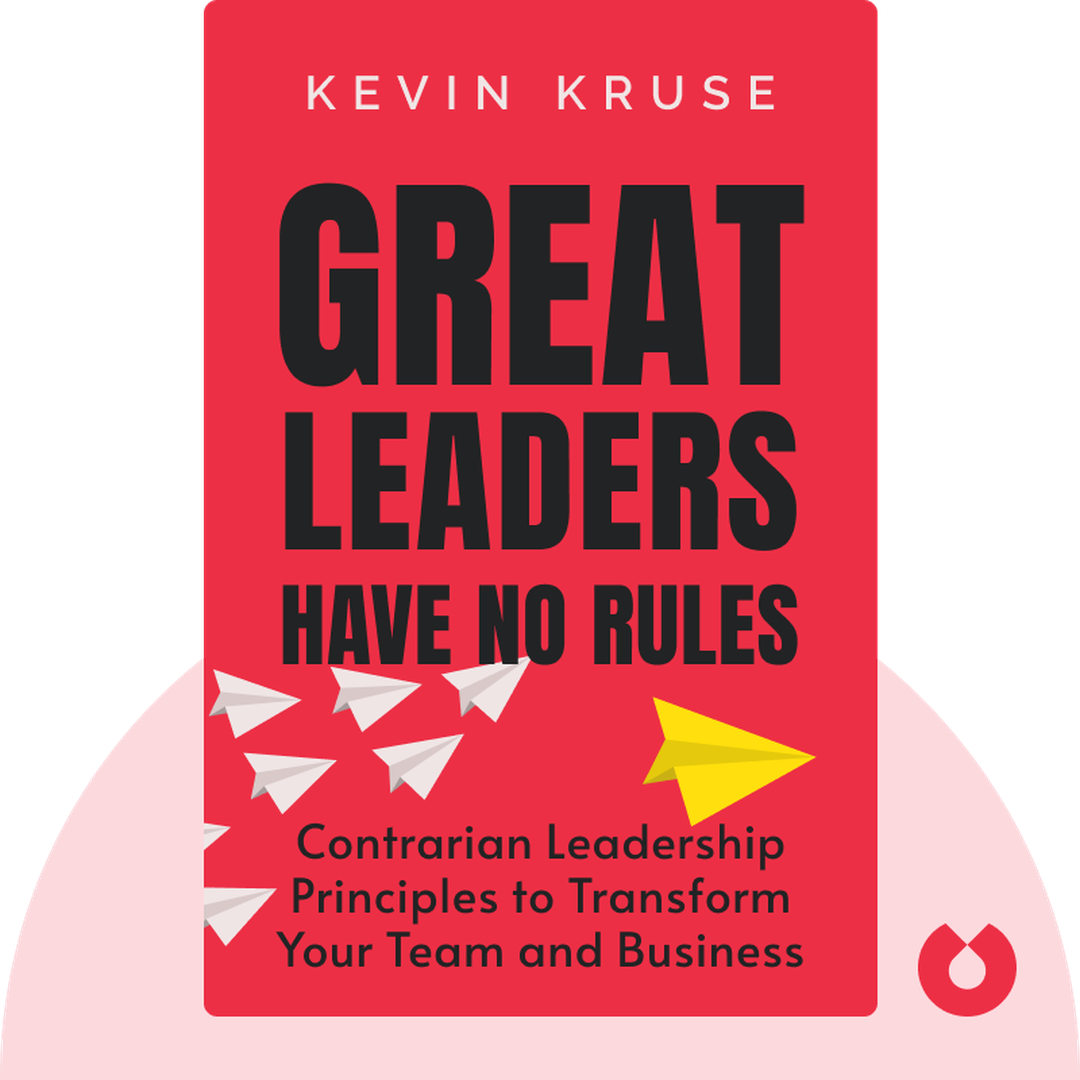
Great Leaders Have No Rules
Start ListeningDownload Try free on iPhoneScan to start in 5 seconds
Categories:
If You're Curious About These Questions...
You should listen to this audiobook
- What if you could achieve more by doing less and focusing on what truly matters?
- Are you curious about the biggest mistakes leaders make when trying to motivate their teams?
- What's the secret to creating a high-performing team without micromanaging or endless meetings?
Listen to Great Leaders Have No Rules — Free Audiobook
Loading player...
Key Takeaways from Great Leaders Have No Rules
- Discover why abandoning your traditional open-door policy actually boosts your productivity and forces your team to develop crucial decision-making skills.
- Learn how to replace constant interruptions with deliberate, scheduled availability to keep your team supported while protecting your own focus.
- Understand why strict workplace rules destroy trust and accountability, and learn how to establish collective standards that empower your employees instead.
- Find out how micromanagement and rigid policies shift your team's focus from actual outcomes to mere activities, ultimately inhibiting their overall performance.
- Master the ability to lead effectively by prioritizing what is right for the business rather than sabotaging your decision-making through a need to be liked.
Learning Tools
Reinforce what you learned from Great Leaders Have No Rules
Mind Map
Great Leaders Have No Rules
Time & Availability+
Rules & Standards+
Leadership Mindset+
Culture of Openness+
Productivity Hacks+
Quiz — Test Your Understanding
Question 1 of 8
Why does the author argue that leaders should abandon the traditional open-door policy?
Question 2 of 8
According to the book, what is a major negative consequence of implementing too many workplace rules?
Question 3 of 8
Why is the desire to be liked by employees considered detrimental to effective leadership?
Question 4 of 8
How does the author suggest leaders practically demonstrate a 'loving' or caring workplace?
Question 5 of 8
What time management technique does the author recommend instead of using traditional to-do lists?
Question 6 of 8
What is the author's stance on how a manager should distribute their time among employees?
Question 7 of 8
What is a primary benefit of 'open-book management' where employees have access to the organization's financial records?
Question 8 of 8
According to the text, why is vulnerability considered an essential leadership quality in the contemporary workplace?
Great Leaders Have No Rules — Full Chapter Overview
- 1Recommendation
- 2Drop your open-door policy and manage your schedule more deliberately.
- 3Ditch the rules! They only hold employee performance back.
- 4Wanting to be liked undermines leadership, but leading well earns respect.
- 5An effective workplace is a loving workplace.
- 6Get obsessed with time.
- 7Treating everyone identically is unfair.
- 8Practice transparency.
- 9Vulnerability builds connection.
- 10Final summary
Great Leaders Have No Rules Summary & Overview
Great Leaders Have No Rules (2019) challenges leaders to adopt a contrarian approach to managing people and their time so that they succeed more easily and quickly. By identifying the flaws in traditional or typical leadership practices, it reveals why going against the grain results in better outcomes.
Who Should Listen to Great Leaders Have No Rules?
- Leaders who want to optimize their performance
- Managers looking for new ways to motivate their teams
- Entrepreneurs seeking to create a dynamic workplace culture
Books Similar to Great Leaders Have No Rules
Readers who enjoyed this also liked these titles.