Grimms' Fairy Tales emerged from a pivotal moment in European intellectual history. In the early 19th century, the Brothers Grimm—Jacob and Wilhelm—began collecting oral folk narratives as part of the broader Romantic movement's effort to preserve national cultural heritage. Germany at this time was not yet a unified nation but a patchwork of principalities, and the Grimms saw folklore as a way to capture an authentic German spirit rooted in the common people. The first volume of Kinder- und Hausmärchen appeared in 1812, followed by a second in 1815. Over subsequent editions (the final 'definitive' edition came in 1857), the brothers revised the tales—softening some violence, adding Christian morality, and polishing the prose—transforming raw folk material into a literary product suitable for middle-class families. The collection drew on sources ranging from peasant storytellers to educated friends and earlier printed compilations, reflecting a blend of oral tradition and literary shaping. Its publication coincided with rising interest in philology, mythology, and nationalism across Europe, and the Grimms' work became a foundational text for the emerging discipline of folklore studies. Today, these tales remain among the most translated and adapted works in world literature, their archetypes—wicked stepmothers, enchanted forests, transformative quests—woven into the fabric of global storytelling.
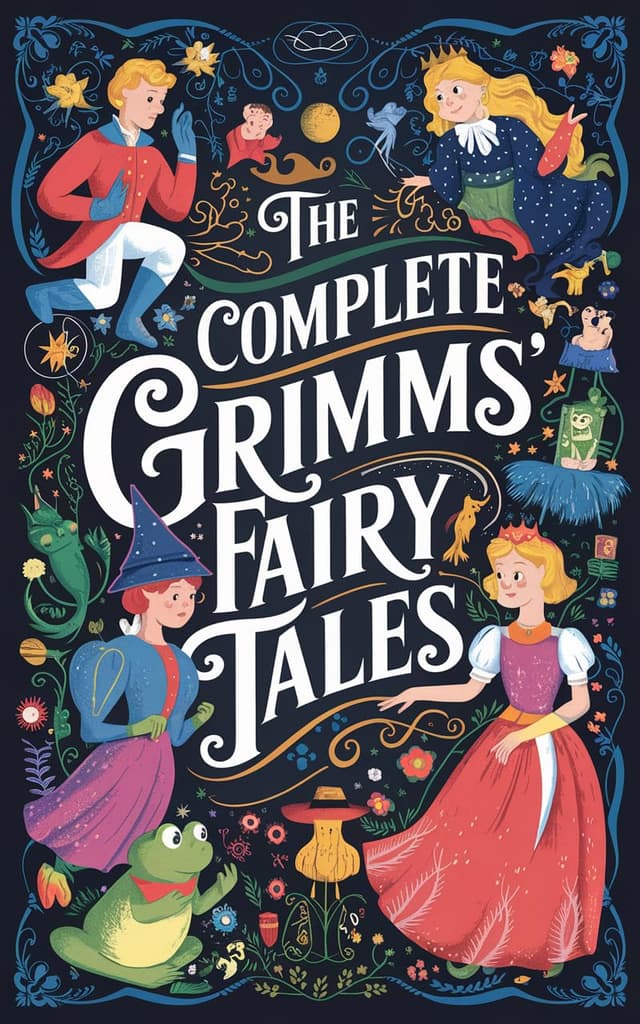
Listen to Grimms’ Fairy Tales (Full Version)
Historical Background
Study Questions
How did the Brothers Grimm's revisions across multiple editions change the tone and content of the tales, and what does this reveal about 19th-century attitudes toward childhood and morality?
In what ways do recurring motifs—such as the forest, the number three, and animal helpers—function symbolically across different stories in the collection?
How have Grimms' Fairy Tales influenced modern fantasy literature, film adaptations, and psychological interpretations of folklore?
What Critics and Readers Say
Grimms’ Fairy Tales — originally published as Kinder- und Hausmärchen (Children and Household Tales) in the early 19th century — is one of the most influential collections in folklore and Western literature, shaping modern storytelling and the very idea of what a “fairy tale” is. Although it wasn’t originally intended exclusively for children, the Grimms’ anthology has become a cornerstone of childhood storytelling in many cultures. 
Critically, scholars highlight the collection’s cultural and historical significance rather than purely literary style. The Grimms collected and preserved oral folk narratives during a period of cultural change, and their work has been credited with inspiring folklore studies and influencing storytellers worldwide. Its listing in the UNESCO Memory of the World Register reflects its global cultural impact. 
Readers and educators often note that the tales contain archetypal characters, symbolic themes, and moral lessons, from tales about clever children overcoming adversity to narratives that explore fear, bravery, and justice. While modern adaptations often soften the original content, the darker elements and psychological depths of many stories remain topics of discussion among readers and critics alike. 
On reader platforms like Goodreads, Grimms’ Fairy Tales continues to be celebrated for its timeless appeal and imaginative power, with many readers acknowledging how the stories have shaped their understanding of folklore and moral storytelling from childhood onward. 
Overall, Grimms’ Fairy Tales is recognised both as a foundational anthology in Western folklore and as a rich cultural resource that continues to inspire reinterpretation, adaptation, and scholarly study across generations. 
Sources:
• Wikipedia – overview and influence of Grimms’ Fairy Tales: https://en.wikipedia.org/wiki/Grimms%27_Fairy_Tales 
• NEH Humanities – historical and cultural context: https://www.neh.gov/humanities/2015/marchapril/feature/how-the-grimm-brothers-saved-the-fairy-tale 
• EBSCO Literature & Writing – themes and psychological insights: https://www.ebsco.com/research-starters/literature-and-writing/grimms-fairy-tales-brothers-grimm 
• Goodreads – reader impressions and cultural impact: https://www.goodreads.com/book/show/3053419-grimms-fairy-tales 
Grimms’ Fairy Tales (Full Version) Chapter Overview
Chapter 1: AudiobookHub Recommendation
Chapter 2: AudiobookHub 1
Chapter 3: AudiobookHub 2
Chapter 4: AudiobookHub 3
Chapter 5: AudiobookHub 4
Chapter 6: AudiobookHub 5
Chapter 7: AudiobookHub 6
Chapter 8: AudiobookHub 7
Chapter 9: AudiobookHub 8
Chapter 10: AudiobookHub 9
Chapter 11: AudiobookHub 10
Chapter 12: AudiobookHub 11
Chapter 13: AudiobookHub 12
Chapter 14: AudiobookHub 13
Chapter 15: AudiobookHub 14
Chapter 16: AudiobookHub 15
Chapter 17: AudiobookHub 16
Chapter 18: AudiobookHub 17
Chapter 19: AudiobookHub 18
Chapter 20: AudiobookHub 19
Chapter 21: AudiobookHub 20
Chapter 22: AudiobookHub 21
About Grimms’ Fairy Tales (Full Version)
Grimms’ Fairy Tales gathers the famed stories collected and shaped by Jacob and Wilhelm Grimm, drawing on German and European oral traditions to create a defining treasury of folklore. Here are quests for golden birds and swift horses, bargains struck on lonely roads, enchantments cast in shadowed woods, and the strange justice of fairy-tale fate—where kindness can be rewarded, folly exposed, and courage demanded.
Beyond their unforgettable imagery, these tales endure for their moral ambiguity and psychological intensity. They explore temptation and transformation, family rivalry, luck and labor, and the uneasy boundary between the domestic and the wild. Their influence runs through modern fantasy and children’s literature, yet their original edge remains: brisk, symbolic narratives that speak to deep wishes and darker anxieties alike.
Who Should Listen to Grimms’ Fairy Tales (Full Version)
- Listeners who want the foundational fairy tales behind countless modern retellings, from fantasy novels to film.
- Adults and students interested in folklore, mythic storytelling patterns, and the cultural history of oral tradition.
- Families seeking classic bedtime tales—best enjoyed with discretion, since some stories retain their original Grimm severity.
More Books Like Grimms’ Fairy Tales (Full Version)
Readers who enjoyed this also liked these titles.
In sunlit Florence and buttoned-up England, young Lucy Honeychurch discovers that a “room with a view” is more than a hotel preference—it is a challenge to inherited propriety, awakening desire, and the risk of living truthfully.
In the cheerful suburbs of Victorian London, Charles Pooter records every scrape, social slight, and household triumph—only to discover that the smallest mishaps can feel like public catastrophes, and that respectability is a comedy best performed in earnest.
Master your emotional skills for lasting success

Why Customers Aren't Buying What You're Selling-And What to Do About It