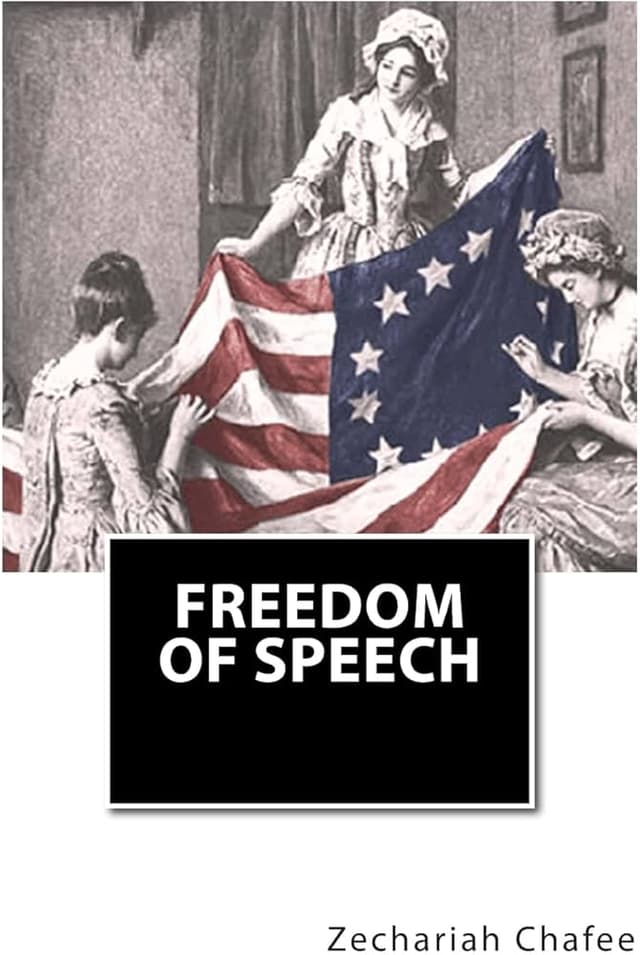
Zechariah Chafee Jr.’s seminal work, *Freedom of Speech*, was published in the United States in 1920, expanding upon a highly influential 1919 article he wrote for the *Harvard Law Review*. The book emerged during a deeply turbulent era in American history, immediately following World War I. The nation was gripped by the First Red Scare, a period characterized by intense political paranoia, anti-radical hysteria, and severe government crackdowns on dissent. Under the Espionage Act of 1917 and the Sedition Act of 1918, the federal government aggressively prosecuted pacifists, labor organizers, and political dissidents. In this climate of fear, the prevailing legal consensus offered little protection for unpopular expression, interpreting the First Amendment largely as a mere prohibition against prior restraint rather than a guarantee of free discourse.
Chafee’s publication was both profoundly significant and highly controversial because it boldly challenged this restrictive orthodoxy. He argued that the true purpose of the First Amendment was to protect the free exchange of ideas, asserting that speech should only be restricted if it posed a "clear and present danger" to society. This progressive stance drew fierce backlash from conservative legal circles, culminating in a dramatic "trial" at the Harvard Club where Chafee narrowly avoided dismissal from his professorship. Despite this intense opposition, the book’s intellectual rigor fundamentally shifted American jurisprudence. It directly persuaded Supreme Court Justices Oliver Wendell Holmes Jr. and Louis Brandeis, shaping their famous dissenting opinions that eventually became the bedrock of modern free speech law. Today, *Freedom of Speech* remains a foundational text in civil liberties literature, celebrated for transforming the abstract promise of the First Amendment into a robust, legally enforceable reality that continues to protect democratic society.