If You're Curious About These Questions...
You should listen to this audiobook
- Have you ever wondered why we fight to save certain historical monuments while letting others disappear, and who really determines their value?
- Did you know that our traditional ideas about preservation might actually be reinforcing historical injustices rather than healing them?
- What if the secret to saving our future lies not in keeping everything from the past, but in learning exactly what we should let go of?
Listen to What to Save and Why — Free Audiobook
Loading player...
Key Takeaways from What to Save and Why
- Discover why the human urge to conserve is deeply tied to our personal and collective identities. Protecting cherished artifacts and traditions is ultimately a way to honor what makes life meaningful in the present.
- Understand the ethical dimensions of preservation and why conservation is never a neutral act. Learn how deciding what to save can either empower communities by preserving their stories or marginalize them if they are excluded.
- Explore the complex criteria for deciding what is worth saving when faced with limited resources. You will learn to question whether you are trying to protect a physical object's historical authenticity or the intangible meaning wrapped around it.
- Learn how to reframe conservation not as a way to stop change entirely, but as a method to shape how change happens on your own terms. Recognizing that identities are dynamic allows you to carry core values forward while embracing evolution.
- Uncover how the specific context of a loss—whether through organic decay, neglect, or sudden destruction—shapes our emotional response to it. You will find that having a say in how things change is often more important than the fact that change is occurring at all.
Learning Tools
Reinforce what you learned from What to Save and Why
Mind Map
What to Save and Why
The 'Why' (Motivations)+
The 'What' (Selection)+
The 'From What' (Change & Loss)+
The 'How' (Methods)+
The 'Who' (Ethics & Politics)+
Quiz — Test Your Understanding
Question 1 of 6
According to the text, what is the primary underlying driver for our desire to conserve objects, traditions, and places?
Question 2 of 6
How does the text describe the role of 'authenticity' and replicas in conservation?
Question 3 of 6
What is the true goal of conservation regarding 'change,' as presented in the book?
Question 4 of 6
What is a major risk of taking a cultural item from its native setting and placing it behind glass in a gallery, according to the concept of 'situated conservation'?
Question 5 of 6
Why is the concept of 'stewardship' highlighted as a helpful lens for conservation?
Question 6 of 6
How does the book suggest we should view the act of conserving things for future generations?
What to Save and Why — Full Chapter Overview
- 1Recommendation
- 2Begin with why
- 3Shifting to what
- 4But from what?
- 5How ought we conserve?
- 6By and for whom must we conserve?
What to Save and Why Summary & Overview
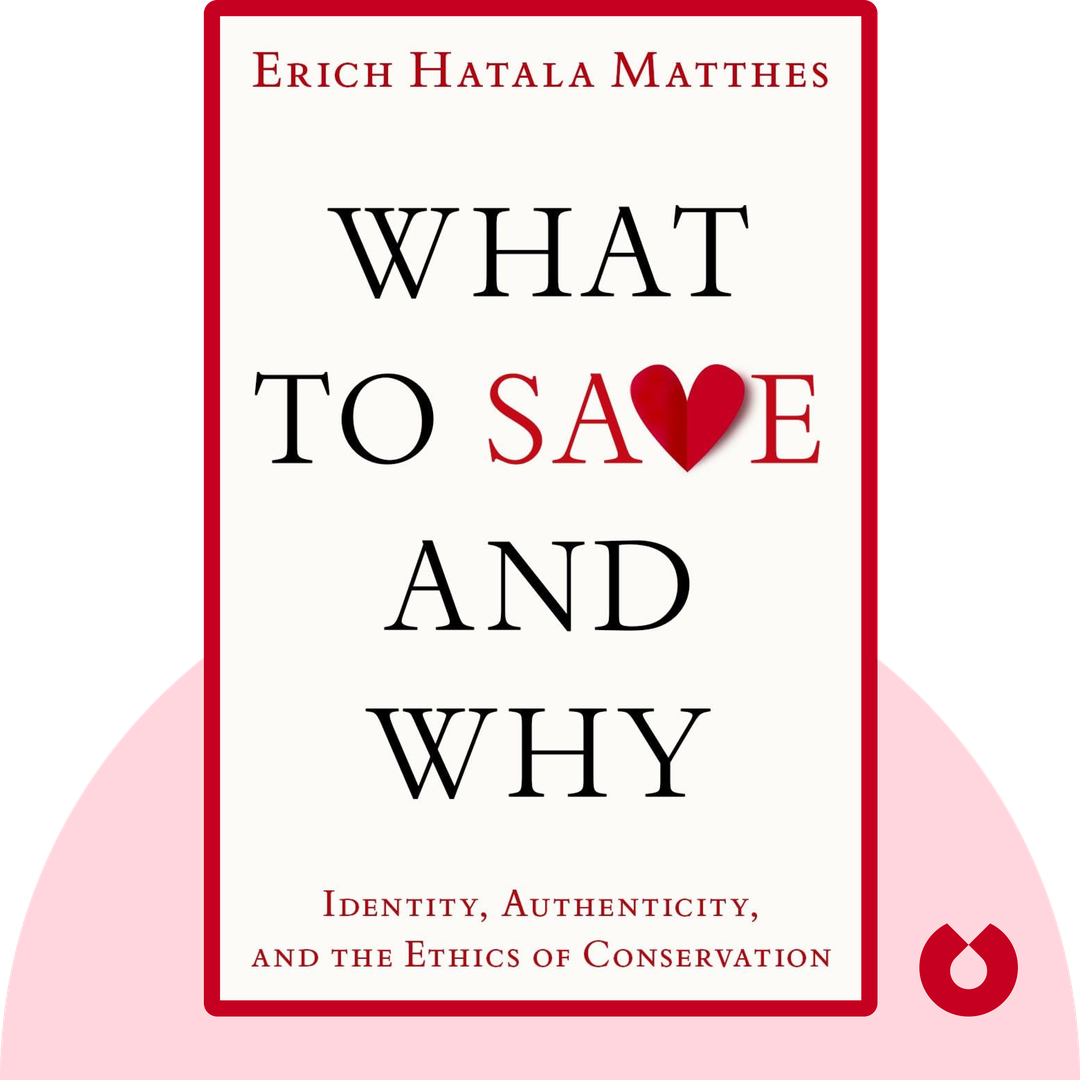
What to Save and Why (2024) explores how we decide what artifacts, heritage, and landscapes to preserve, especially in the face of historical injustice and shifting values. It challenges conventional assumptions about value, memory, and moral responsibility, advocating for a more philosophical approach to cultural preservation.
Who Should Listen to What to Save and Why?
- Anyone interested in the ethics of conservation
- Cultural policymakers
- Philosophy students studying aesthetics and the arts
Books Similar to What to Save and Why
Readers who enjoyed this also liked these titles.