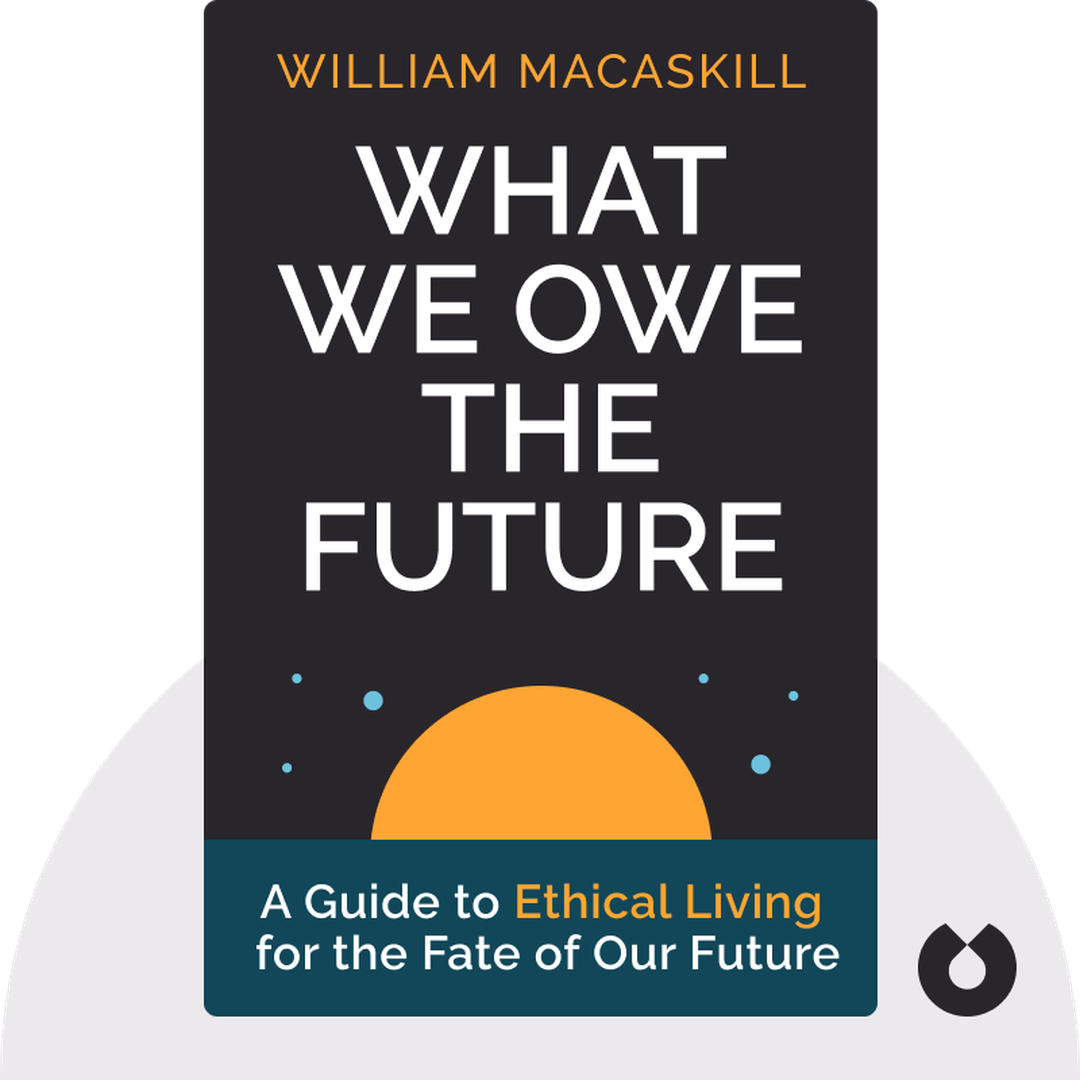
What We Owe the Future
Start ListeningDownload Try free on iPhoneScan to start in 5 seconds
Categories:
If You're Curious About These Questions...
You should listen to this audiobook
- Have you ever wondered why we focus so much on the present, when the vast majority of human lives are actually yet to be lived?
- What if the choices we make today about technology could permanently 'lock in' the moral values of humanity for the next million years?
- Did you know that we are currently living in one of the most pivotal moments in history, where our actions will decide if future generations thrive or suffer?
Listen to What We Owe the Future — Free Audiobook
Loading player...
Key Takeaways from What We Owe the Future
- Understand the core philosophy of longtermism and discover why future generations deserve the exact same moral consideration as people alive today.
- Discover why the staggering potential scale of humanity—where future humans could outnumber us a million to one—makes avoiding extinction our greatest collective responsibility.
- Learn why moral progress is not inevitable and why we must actively shape our currently malleable world to prevent a permanent 'value lock-in' of flawed beliefs.
- Recognize the unique threat posed by Artificial General Intelligence (AGI) and find out how its immortal nature could permanently enforce a single set of societal values.
- Explore how embracing political experimentalism, such as testing different ideologies in autonomous charter cities, can help humanity empirically discover the best possible society.
Learning Tools
Reinforce what you learned from What We Owe the Future
Mind Map
What We Owe the Future
The Core Philosophy of Longtermism+
Moral Trajectories & Value Lock-In+
Existential Risks & Civilizational Collapse+
High-Impact Actions to Safeguard the Future+
Quiz — Test Your Understanding
Question 1 of 7
According to the concept of longtermism, why do future people deserve our moral consideration?
Question 2 of 7
What does the historical example of the abolition of slavery illustrate about moral progress?
Question 3 of 7
Why is Artificial General Intelligence (AGI) considered a significant threat regarding 'value lock-in'?
Question 4 of 7
According to the text, why might the depletion of fossil fuels pose a severe existential risk to humanity?
Question 5 of 7
How does the author compare personal lifestyle changes, such as going vegetarian, to targeted financial donations?
Question 6 of 7
Why does the author argue that having children is a high-impact decision that benefits the future?
Question 7 of 7
What actionable advice does the author give regarding one's career?
What We Owe the Future — Full Chapter Overview
- 1Recommendation
- 2Why do future people matter?
- 3Is moral progress inevitable?
- 4How can we make the future better?
- 5How could we cause human extinction or civilizational collapse?
- 6How can we protect the future?
What We Owe the Future Summary & Overview
What We Owe the Future (2022) makes the case for longtermism – the idea that people today have an obligation to create a good future for successive generations. Using philosophical reasoning, historical anecdotes, and social science research, it argues that the current moment could decide whether future people will live happy, flourishing lives or extraordinarily miserable ones. By carefully considering our actions with respect to issues like AI safety, biotechnology, and value lock-in, we increase the chances that future people will thrive – just as many of us do, now, thanks to people from the past.
Who Should Listen to What We Owe the Future?
- Activists and charity donors who want to maximize the good they do
- People interested in moral philosophy and ethics
- Anyone concerned about the future of humanity
Books Similar to What We Owe the Future
Readers who enjoyed this also liked these titles.