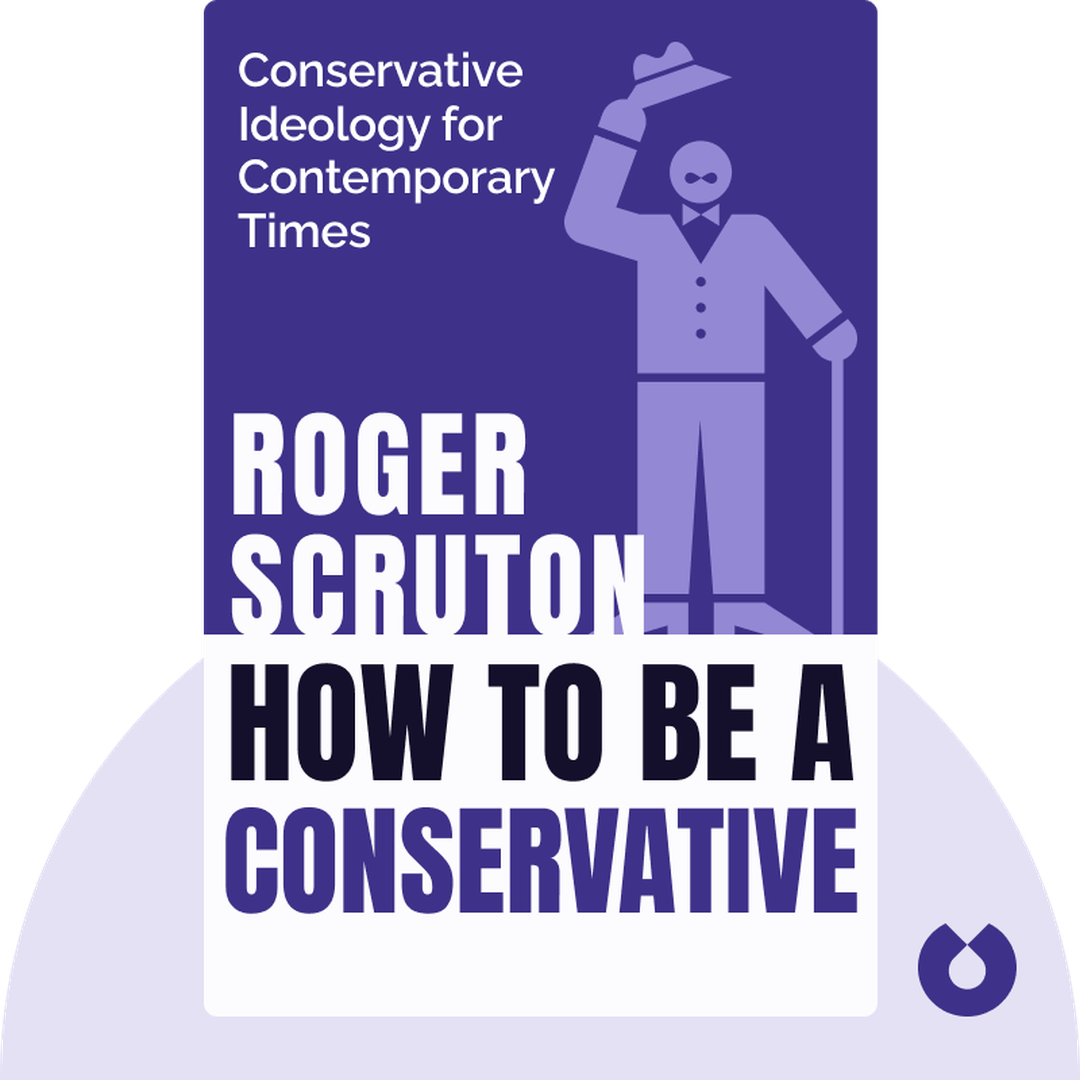
How to be a Conservative
Start ListeningDownload Try free on iPhoneScan to start in 5 seconds
Categories:
If You're Curious About These Questions...
You should listen to this audiobook
- Have you ever wondered why the nation-state might be the most essential ingredient for a functioning democracy and a true sense of belonging?
- Did you know that the modern concept of human rights might actually be undermining the very social bonds that hold our communities together?
- What’s the secret to preserving the things we love in a world that seems increasingly hostile to tradition and heritage?
Listen to How to be a Conservative — Free Audiobook
Loading player...
Key Takeaways from How to be a Conservative
- Discover how firsthand experiences with twentieth-century authoritarianism shaped a compelling argument for preserving individual freedom at all costs.
- Understand why a healthy, resilient society must be built organically from the bottom up, rather than imposed from above by rigid political ideologies.
- Learn how seemingly 'purposeless' everyday interactions like friendship and local community bonds form the true foundation of civil society.
- Find out how the conservative approach to social privilege creates real opportunity by opening up access to institutions, rather than shutting them down.
- Discover why championing individual responsibility and free enterprise is viewed as the ultimate defense against the overreach of the state.
Learning Tools
Reinforce what you learned from How to be a Conservative
Mind Map
How to be a Conservative
Scruton's Journey+
Organic Society+
Civil Associations+
The Nation-State+
The Free Market+
Human Rights+
Multiculturalism+
Quiz — Test Your Understanding
Question 1 of 8
What pivotal event contributed to Roger Scruton's shift toward conservatism by making him view middle-class intellectuals as ungrateful for their societal privileges?
Question 2 of 8
How does a true conservative view the formation of a healthy society, according to the text?
Question 3 of 8
How does the conservative approach differ from the Left's approach regarding private schools that confer unequal advantages?
Question 4 of 8
Why does Scruton argue that the secular nation-state is essential to a healthy, diverse society?
Question 5 of 8
According to the text, what is the primary reason socialist economies fail to distribute resources accurately compared to free markets?
Question 6 of 8
What caveat does Scruton add to his defense of the free market?
Question 7 of 8
How does traditional liberalism's concept of rights (as championed by John Locke) differ from modern human rights, according to Scruton?
Question 8 of 8
What does Scruton identify as the foundation that makes successful multiculturalism possible in the West?
How to be a Conservative — Full Chapter Overview
- 1Recommendation
- 2Scruton grew up in a Labour-supporting family, but twentieth-century events turned him into a conservative.
- 3Conservatives believe society should grow from the bottom up, not be imposed from above.
- 4Opportunity comes from opening society up, not shutting it down.
- 5The nation-state is central to a healthy society.
- 6Conservatives should defend the free market, with some important caveats.
- 7Traditional liberal rights differ from modern human rights.
- 8Multiculturalism in Western countries works best when Western values are upheld.
- 9Final summary
How to be a Conservative Summary & Overview
How to be a Conservative (2014) presents the case for traditional conservatism in a world that seems inhospitable to its existence. In this short volume, English philosopher Sir Roger Scruton lays out the case for the nation-state, a free market, and a more sensible approach to multiculturalism and human rights.
Who Should Listen to How to be a Conservative?
- Those who walk on the right side of politics
- Anyone interested in political philosophy
- Leftists looking for an alternative perspective
Books Similar to How to be a Conservative
Readers who enjoyed this also liked these titles.