If You're Curious About These Questions...
You should listen to this audiobook
- Did you know that the most powerful force for American democracy wasn't found in the halls of power, but in the radical grassroots movements of African American women who fought a two-front war against racism and sexism?
- Have you ever wondered how the vision of a truly biracial democracy was forged by women who were often excluded from the very movements they helped build?
- Are you curious about the secret history of the "vanguard" who took the unfulfilled promises of the American Revolution and turned them into a blueprint for modern justice?
Listen to Vanguard — Free Audiobook
Loading player...
Key Takeaways from Vanguard
- Discover how Black women stood at the vanguard of the civil rights movement, organizing and litigating to challenge an exclusionary democracy from the nation's founding.
- Understand why the anti-slavery movement deeply appealed to disenfranchised white women who saw clear parallels between the bondage of enslaved Americans and their own 'slavery of sex.'
- Learn how racial prejudice within early abolitionist societies excluded highly qualified Black women, like entrepreneur Hester Lane, from leadership roles despite their immense financial and organizational contributions.
- Explore how activists like Maria Miller Stewart argued that defeating racism required total gender equality, urging Black women to chart their own paths to liberation when men refused to grant them equal rights.
- Find out how trailblazing Black women like Jarena Lee overcame fierce institutional obstacles, from domestic servitude to exclusionary church leadership, to spread their message and fight for equality.
Learning Tools
Reinforce what you learned from Vanguard
Mind Map
Vanguard
Core Premise+
Abolition & Early Activism+
Forging Independent Paths+
Intersection of Racism & Sexism+
Reconstruction & Jim Crow+
The Suffrage Movement Divide+
Post-19th Amendment Struggles+
Washington Influence & Victory+
Quiz — Test Your Understanding
Question 1 of 8
Why did the abolitionist movement heavily appeal to many white middle-class women?
Question 2 of 8
What did the experience of Hester Lane within the American Anti-Slavery Society (AASS) demonstrate?
Question 3 of 8
How did Jarena Lee contribute to the advancement of Black women's rights and visibility in the 19th century?
Question 4 of 8
What brutal legal reality did the 1855 court case of Celia, an enslaved woman in Missouri, illustrate?
Question 5 of 8
Following the Civil War, how did Southern states successfully circumvent the Fifteenth Amendment to disenfranchise Black men?
Question 6 of 8
Why did Mary Church Terrell feel it was necessary to create the National Association of Colored Women (NACW)?
Question 7 of 8
What was the immediate reality for Black women in the Jim Crow South after the ratification of the Nineteenth Amendment in 1920?
Question 8 of 8
How did Mary McLeod Bethune break new ground for the civil rights movement in the 1930s?
Vanguard — Full Chapter Overview
- 1Recommendation
- 2The abolitionist cause appealed to women seeking freedom for themselves.
- 3Despite their immense contributions, Black women were kept from leadership in the antislavery movement.
- 4Black women forged their own path to equality.
- 5Ending slavery and freeing women were two sides of the same coin.
- 6The Civil War brought radical changes, but Black Americans were still denied full equality.
- 7While other groups compromised, Black women continued to demand universal voting rights nationwide.
- 8Mary McLeod Bethune carried the fight to the Jim Crow South after women secured their right to vote.
- 9Gaining influence in Washington broke new ground for the civil rights movement.
Vanguard Summary & Overview
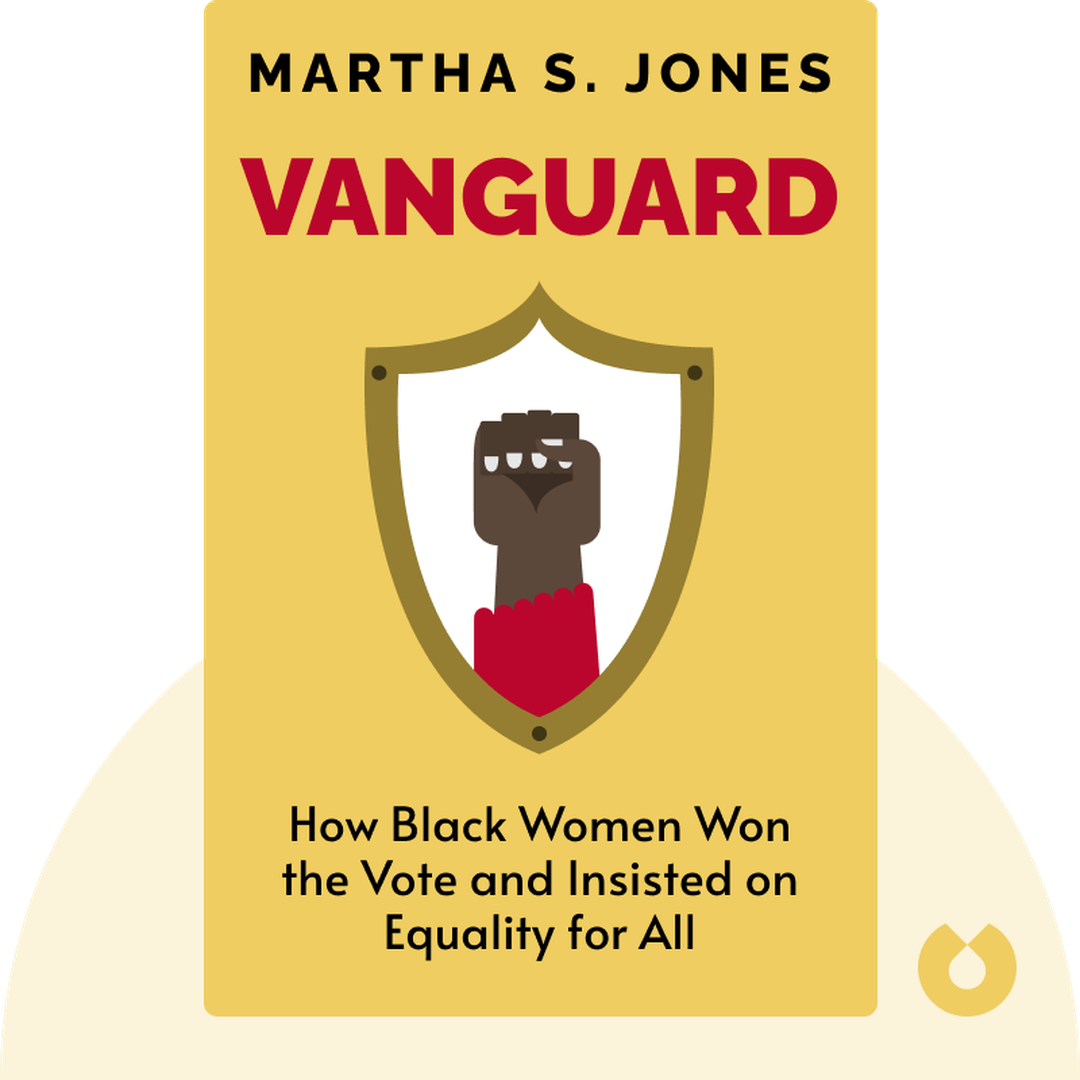
Vanguard (2020) is a history of the struggle for justice in the United States, told from the perspective of the African American women who were so often at its cutting edge. In these blinks, we’ll see how these women defied racism and sexism in their quest to create a society that lived up to the ideals of the American Revolution. Along the way, we’ll explore the complicated alliances, heroic grassroots organizations, and remarkable individuals who won Black women the vote and forged a biracial democracy.
Who Should Listen to Vanguard?
- Activists and campaigners
- History buffs
- Scholars and students
Books Similar to Vanguard
Readers who enjoyed this also liked these titles.