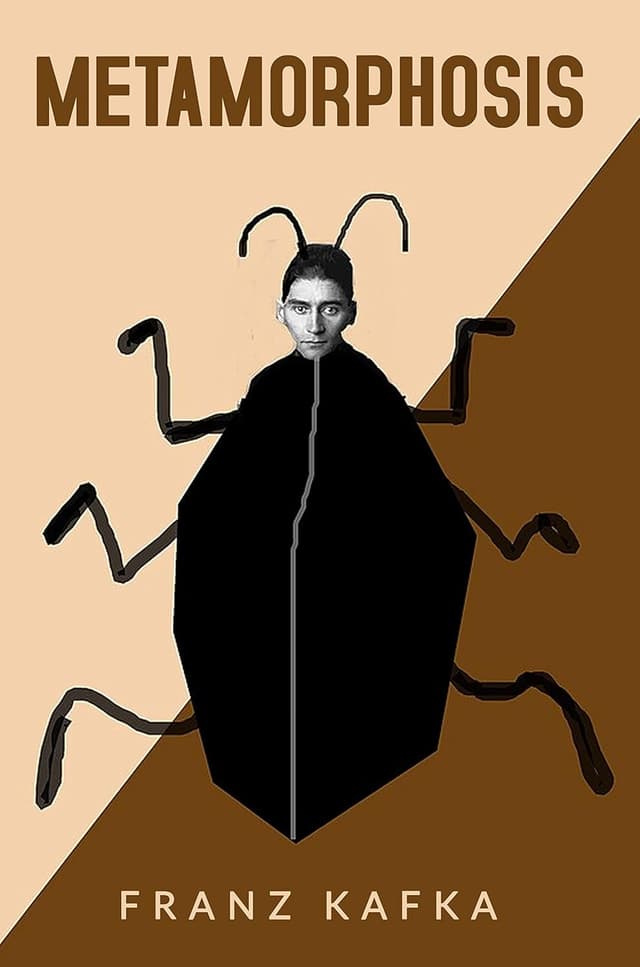
The Metamorphosis (Full Version) audiobook cover - When dutiful salesman Gregor Samsa wakes as an insect, the real horror is not his new body but the sudden unraveling of family love, work, and identity—an unforgettable descent into isolation rendered with calm, merciless clarity.

The Metamorphosis (Full Version)

When dutiful salesman Gregor Samsa wakes as an insect, the real horror is not his new body but the sudden unraveling of family love, work, and identity—an unforgettable descent into isolation rendered with calm, merciless clarity.

Franz Kafka

4.8 / 5(2660 ratings)
Categories:

Listen to The Metamorphosis (Full Version)

Loading player...

Historical Background

Franz Kafka wrote *The Metamorphosis* in the autumn of 1912 in Prague, then a prominent city within the Austro-Hungarian Empire, though it was not formally published until 1915 in Leipzig, Germany. The novella emerged during a period of profound social and political anxiety on the eve of World War I. Europe was undergoing rapid industrialization, leading to the rise of sprawling, impersonal bureaucratic systems that increasingly alienated the individual. As a German-speaking Jew in a Czech-majority city, Kafka personally experienced a deep sense of cultural and linguistic isolation. This backdrop, combined with the era's rigid patriarchal family structures and the dehumanizing pressures of early modern capitalism, heavily informed the narrative's exploration of duty, utility, and psychological isolation.

Upon its publication, *The Metamorphosis* was both groundbreaking and controversial. Its jarring premise—a dutiful traveling salesman inexplicably transforming into a giant insect—defied the strict conventions of literary realism prevalent at the time. Early readers and critics were bewildered by Kafka’s matter-of-fact delivery of such an absurd, grotesque scenario. The story challenged the era's rationalist optimism, presenting instead a bleak vision of human expendability where a person's worth is tied exclusively to their economic output. Over a century later, the novella's lasting impact on literature and society is immeasurable. It helped lay the foundation for existentialism, absurdist fiction, and magical realism, influencing literary giants from Albert Camus to Gabriel García Márquez. Furthermore, it birthed the ubiquitous term "Kafkaesque" to describe situations of surreal, nightmarish bureaucracy and illogical oppression. Today, Gregor Samsa’s tragic transformation remains a universally resonant metaphor for the alienation of the modern worker, the stigma of chronic illness, and the fragile nature of human identity.

Study Questions

  1. While the most obvious metamorphosis in the novella is Gregor's physical transformation into an insect, how do the other members of the Samsa family—particularly his sister, Grete—undergo their own psychological and social metamorphoses, and what does this suggest about the conditional nature of familial love?

  2. Kafka introduces an inherently absurd and horrifying premise using a remarkably detached, matter-of-fact narrative tone. How does this stylistic choice affect your interpretation of Gregor's plight, and what might it reveal about the dehumanizing effects of modern labor and capitalist society?

  3. Consider the symbolism of Gregor's room and the objects within it, such as the framed picture of the woman in furs and his family's eventual decision to use the room as a storage closet. How does the evolution of this physical space reflect Gregor's internal struggle between his lingering human consciousness and his new animalistic reality?

What Critics and Readers Say

First published in 1915, The Metamorphosis (Die Verwandlung) is one of Franz Kafka’s most famous and widely studied works of modern literature. The novella tells the story of Gregor Samsa, a traveling salesman who wakes one morning to discover he has transformed into a giant insect. The bizarre premise quickly becomes a powerful allegory about alienation, identity, and the pressures of modern life. 

Critics frequently highlight the story’s exploration of isolation and the dehumanizing effects of social and economic expectations. Gregor’s transformation reveals how his value to his family and society was largely tied to his ability to work and provide income. When he can no longer fulfill that role, he gradually becomes marginalized and rejected, illustrating the fragile nature of human relationships built on utility rather than compassion. 

Scholars also emphasize the novella’s role in shaping modernist and existential literature. Kafka’s surreal narrative style and symbolic storytelling create a haunting examination of human existence, reflecting themes of absurdity, alienation, and the search for meaning in an indifferent world. Many interpretations view Gregor’s transformation as a metaphor for the psychological pressures of modern society and the collapse of personal identity under external expectations. 

Readers today continue to find The Metamorphosis both unsettling and deeply thought-provoking. Many praise its memorable opening and stark imagery, noting that Kafka’s simple yet powerful prose allows the story to explore profound emotional and philosophical questions about family, duty, loneliness, and self-worth. Even more than a century after its publication, the novella remains one of the most influential and discussed works in modern fiction. 

Sources:

• Wikipedia – overview, plot, and critical interpretations: https://en.wikipedia.org/wiki/The_Metamorphosis

• IvyPanda – literary analysis of alienation and social themes: https://ivypanda.com/essays/the-social-problem-of-a-persons-worthiness-in-the-book-by-franz-kafka-the-metamorphosis/

• ResearchGate – discussion of existential themes and symbolic interpretation: https://www.researchgate.net/publication/392151245_A_Review_on_Kafka’s_Existential_Vision_in_Metamorphosis

• The Guardian – cultural influence and lasting reputation of the novella: https://www.theguardian.com/books/2015/jul/18/franz-kafka-metamorphosis-100-thoughts-100-years

The Metamorphosis (Full Version) Chapter Overview

About The Metamorphosis (Full Version)

Franz Kafka’s The Metamorphosis opens with one of literature’s most arresting shocks: Gregor Samsa awakens to find himself transformed into a monstrous vermin. Told in an eerily matter-of-fact voice, the story follows Gregor’s attempts to adapt to his new existence while his family’s fear, shame, and dependence reshape the household into something unrecognizable.

More than a tale of bodily change, Kafka’s novella is a parable of modern life—of labor that consumes the self, of love strained by economics, and of the quiet violence of being treated as a burden. Its blend of realism and nightmare helped define twentieth-century fiction, giving language to alienation and the fragility of human dignity. Spare, darkly comic, and devastating, it remains a timeless exploration of what we owe to one another when usefulness disappears.

Who Should Listen to The Metamorphosis (Full Version)

  • Listeners drawn to psychologically intense classics about alienation, family duty, and the pressures of work.
  • Fans of surreal or uncanny storytelling who want a foundational text of modernist literature.
  • Students and book-club readers seeking a short, discussion-rich masterpiece about identity and human value.

About Franz Kafka

Franz Kafka (1883–1924) was a German-speaking writer from Prague whose fiction transformed the literary landscape of modernity. Working in insurance while writing at night, he produced unsettling, precise narratives of bureaucracy, guilt, and estrangement, including The Trial, The Castle, and “In the Penal Colony.” Much of his work was published posthumously, preserved by his friend Max Brod against Kafka’s wishes. “Kafkaesque” has become shorthand for the claustrophobic logic and helplessness his stories so powerfully depict.

Can You Survive the AI Era?