Theme Song
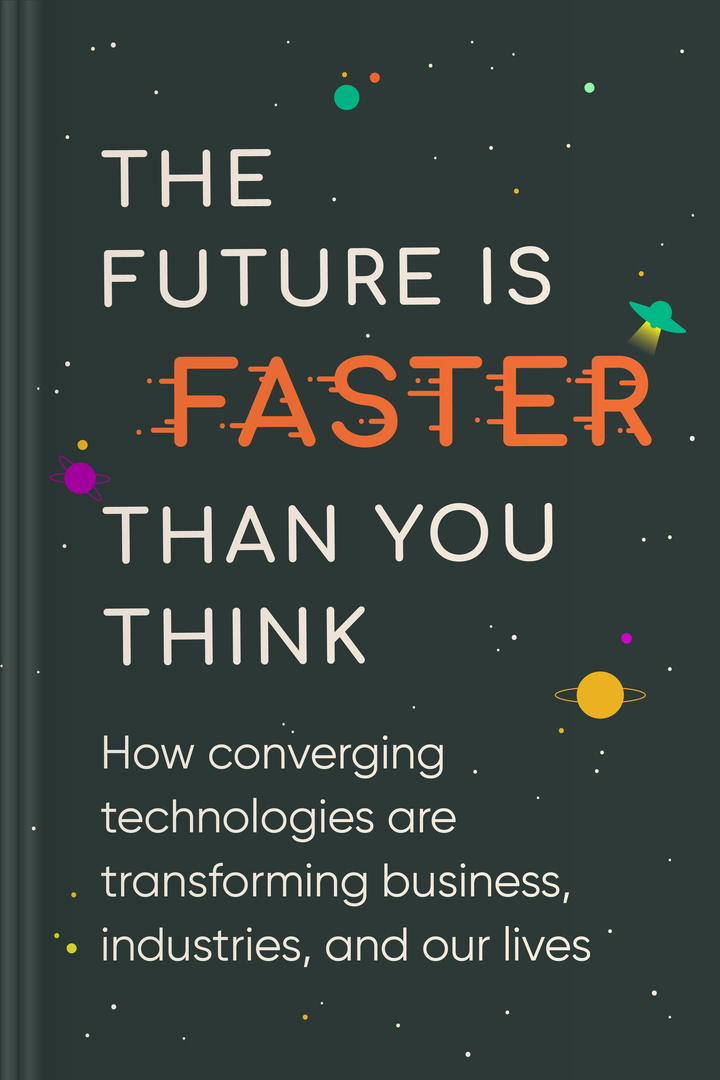
The Future Is Faster Than You Think
Start ListeningDownload Try free on iPhoneScan to start in 5 seconds
Categories:
If You're Curious About These Questions...
You should listen to this audiobook
- What's the secret to harnessing the power of exponential technologies to improve your life?
- Are you curious about how human needs are driving the acceleration of technology and what that means for your future?
- Can you imagine a world where you're prepared for and even benefiting from the rapid changes happening around you?
Listen to The Future Is Faster Than You Think — Free Audiobook
Loading player...
Key Takeaways from The Future Is Faster Than You Think
- Discover why the relentless human desire for ease, speed, and connection serves as the quiet engine driving all rapid technological advancement.
- Learn how to navigate the overwhelming pace of modern change by adopting a grounding mindset of attention, flexibility, and continuous learning.
- Understand the power of technological convergence, where once-distinct devices and industries merge into unified tools to support our blended lives.
- Master the 'six D's' framework—Digitalization, Deception, Disruption, Demonetization, Dematerialization, and Democratization—to decode the hidden patterns of exponential growth.
- Find out how breakthroughs in quantum computing and expanding global networks create new foundational platforms that multiply the speed of future innovations.
Learning Tools
Reinforce what you learned from The Future Is Faster Than You Think
Mind Map
The Future Is Faster Than You Think
1. The Driving Force: Human Needs+
2. The Pattern of Acceleration+
3. Key Converging Technologies+
4. The Transformation of Society+
5. Human Response to Change+
6. Preparing for the Future+
The Future Is Faster Than You Think — Full Chapter Overview
- 1Recommendation
- 2Needs That Keep the Future Moving
- 3When Technologies Merge and Multiply
- 4Industries Riding the Fast Lane
- 5When Machines Begin to Mirror Human Abilities
- 6AI: From Helper to Pattern-Finder
- 7Letting Change Be Change
- 8Choosing Real Benefits Over Imagined Doom
- 9Everyday Life, Reimagined by Convergence
- 10The Digital Makeover of Ordinary Systems
- 11Preparing Gently for a Future That’s Already Arriving
The Future Is Faster Than You Think Summary & Overview
This audio summary explores why technology keeps accelerating and how human needs quietly steer that momentum—from early tools for writing to today’s connected devices, intelligent systems, and rapidly merging industries.
Along the way, it introduces a simple framework for understanding exponential technologies, highlights key fields like networks, quantum computing, robotics, sensors, 3-D printing, and AI, and ends with an encouraging invitation: instead of fearing change, learn to notice it, prepare for it, and use it to focus on what matters most.
Who Should Listen to The Future Is Faster Than You Think?
- Listeners who feel curious—but also a little overwhelmed—by how quickly technology seems to change everyday life
- Students, professionals, and lifelong learners who want a clear, calm overview of exponential and converging technologies
- Anyone who wants supportive guidance on adapting to disruption through learning, retraining, and open-minded experimentation
Books Similar to The Future Is Faster Than You Think
Readers who enjoyed this also liked these titles.