If You're Curious About These Questions...
You should listen to this audiobook
- Have you ever wondered why owning things is becoming obsolete and what will replace our need for private property?
- What if the most revolutionary inventions of the next 30 years haven't even been thought of yet—and how can you be ready for them?
- Did you know that your everyday objects are on an 'inevitable' path to becoming smarter than you ever imagined?
Listen to The Inevitable — Free Audiobook
Loading player...
Key Takeaways from The Inevitable
- Discover why the constant, incremental improvements of our technological future guarantee that you will forever remain a 'newbie' adapting to new software and devices.
- Learn how artificial intelligence will 'cognify' everyday objects and collaborate with human specialists, freeing you to focus on uniquely human skills like intuition and empathy.
- Understand the massive shift from static material goods to 'flowing' digital services, where streaming, real-time updates, and sharing dictate the future of commerce.
- Find out why physical possession is quickly giving way to access, allowing you to utilize valuable resources and services through the sharing economy without the burden of ownership.
- Master the overwhelming expansion of online information by understanding how robust AI filters will personalize your digital experience and identify exactly what is relevant to you.
Learning Tools
Reinforce what you learned from The Inevitable
Mind Map
The Inevitable
Becoming+
Cognifying+
Filtering+
Flowing+
Sharing+
Accessing+
Remixing+
Interacting+
Screening+
Tracking+
Questioning+
Beginning+
Quiz — Test Your Understanding
Question 1 of 8
What does the author mean by describing the future as a 'protopia'?
Question 2 of 8
Why does the book suggest that people will permanently remain 'newbies' in the future?
Question 3 of 8
According to the text, how will Artificial Intelligence affect the human workforce?
Question 4 of 8
How does the concept of 'flowing' change the nature of modern commerce?
Question 5 of 8
Why are access-based businesses like Uber and Airbnb considered advantageous over traditional ownership models?
Question 6 of 8
How will the trend of 'screening' alter our relationship with information and ideas?
Question 7 of 8
What is the book's perspective on the future of personal privacy and 'tracking'?
Question 8 of 8
How will the exponential growth of information affect humanity's perception of 'truth'?
The Inevitable — Full Chapter Overview
- 1Recommendation
- 2Technology is constantly improving and always in flux.
- 3Artificial intelligence and powerful online filters will mold how we work and what we learn.
- 4“Hard” goods were yesterday; streaming content and shareable resources are the future of commerce.
- 5Why own goods when you can rent them instead? Possession will yield to access in the future.
- 6Virtual reality and screens will reshape human interaction, bringing the world into our homes.
- 7Personal privacy and certainty will fade in the future, but honestly, it’s not all that bad.
The Inevitable Summary & Overview
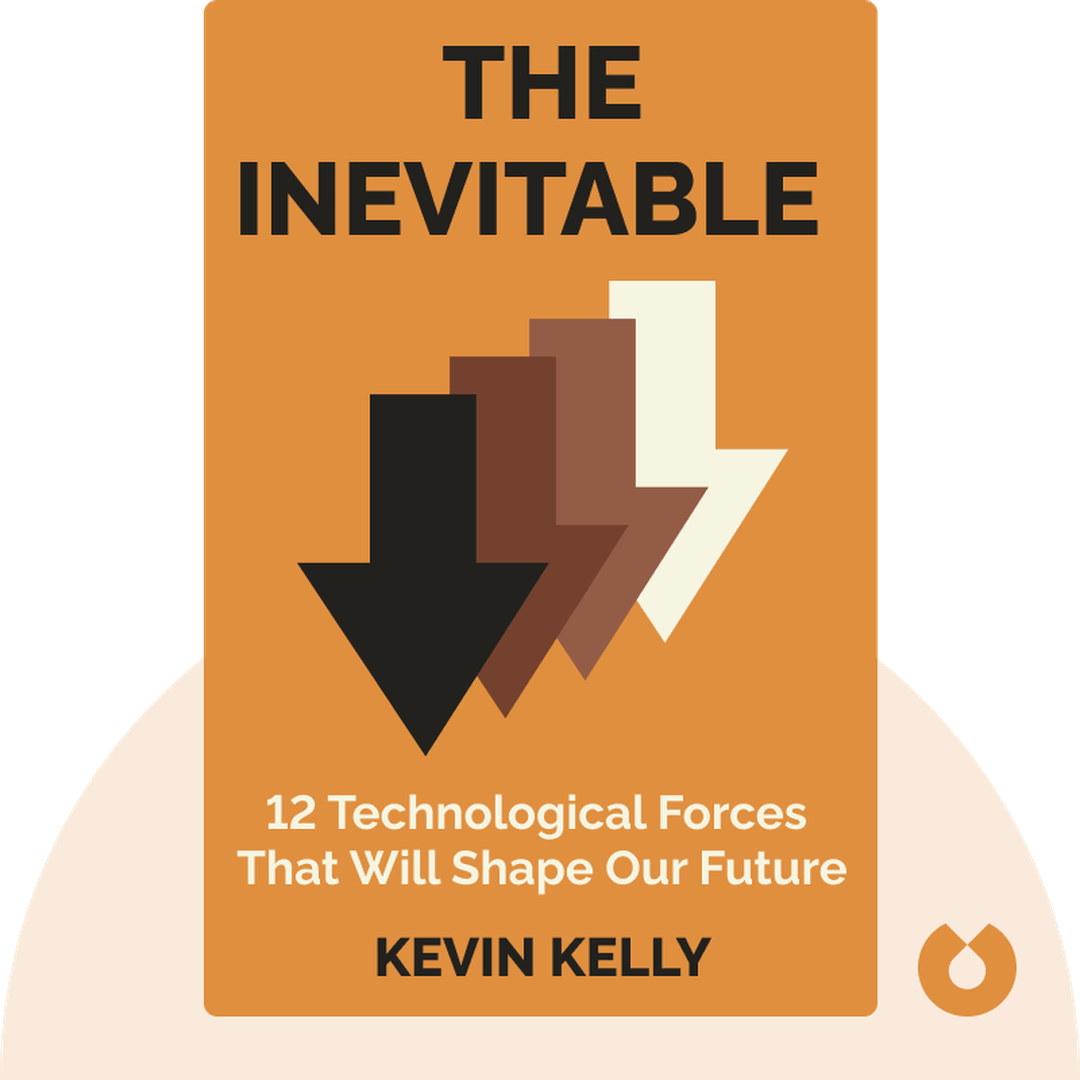
The Inevitable (2016) is your guide to understanding the technology trends that are gaining momentum today and will undoubtedly shape the future. These blinks delve into the ideas and motivations that are driving technology and what it all means for the world of tomorrow.
Who Should Listen to The Inevitable?
- Futurists or students curious about technological development
- People who fear technology
- Entrepreneurs interested in tech prognostications
Books Similar to The Inevitable
Readers who enjoyed this also liked these titles.