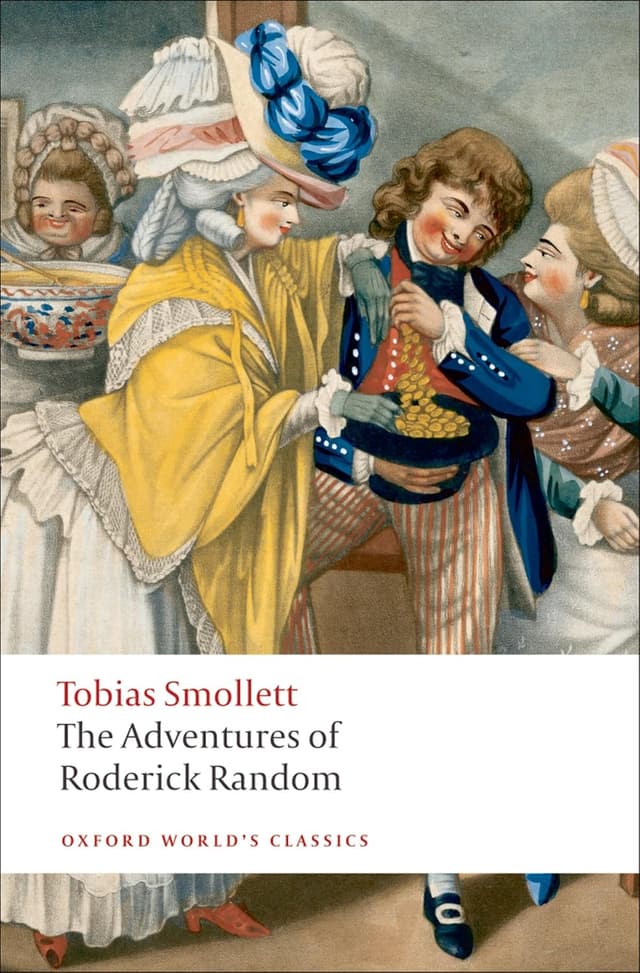
The Adventures of Roderick Random (Full Version) audiobook cover - Cast out by family pride and thrown early into hardship, young Roderick Random barrels through schoolyard tyrannies, social humiliations, and brutal institutions, sharpening his wits and temper into weapons as he fights to claim dignity in a world that rewards cruelty.

The Adventures of Roderick Random (Full Version)

Cast out by family pride and thrown early into hardship, young Roderick Random barrels through schoolyard tyrannies, social humiliations, and brutal institutions, sharpening his wits and temper into weapons as he fights to claim dignity in a world that rewards cruelty.

Tobias Smollett

4.8 / 5(4088 ratings)
Categories:

Listen to The Adventures of Roderick Random (Full Version)

Loading player...

Historical Background

Published in London in 1748, Tobias Smollett’s *The Adventures of Roderick Random* emerged during a period of significant imperial expansion and social upheaval in mid-eighteenth-century Britain. The novel is deeply rooted in the geopolitical conflicts of its era, most notably the War of Jenkins' Ear and the broader War of the Austrian Succession. Drawing heavily upon his own experiences as a naval surgeon's mate during the disastrous 1741 expedition to Cartagena, Smollett wrote the novel against a backdrop of rigid class hierarchies, widespread urban poverty, and the brutal realities of British military life.

Upon its publication, the novel proved highly significant—and deeply controversial—for its unflinching, gritty realism. In stark contrast to the highly moralistic and sentimental literature popular at the time, such as Samuel Richardson’s *Pamela*, Smollett’s work offered a coarse, cynical, and vividly grotesque portrayal of society. It scandalized polite readers with its bawdy humor, unapologetic violence, and morally ambiguous protagonist. Yet, it captivated the public by exposing the squalid, appalling conditions of the British Royal Navy. Smollett’s scathing depictions of press gangs, tyrannical captains, and horrific shipboard medical care served as a shocking exposé of the very institutions driving Britain's imperial might.

The novel’s lasting impact on both literature and society is profound. Literarily, it firmly established the picaresque tradition in the English novel, adapting the episodic, rogue-centered narrative style of European predecessors like *Gil Blas* for a British audience. Smollett’s biting satire and eccentric characterizations directly influenced generations of subsequent writers, most notably Charles Dickens, who revered Smollett's work. Socially, the novel's harrowing depiction of naval life brought unprecedented public awareness to the plight of ordinary sailors, contributing to the gradual reform of maritime conditions and cementing the book as a crucial socio-historical document.

Study Questions

  1. As a picaresque hero, Roderick Random is often vain, vengeful, and morally ambiguous. How does Smollett use Roderick's flawed character to expose and critique the hypocrisy and corruption of 18th-century British society, and does his ultimate success subvert or reinforce traditional moral lessons?

  2. Smollett drew upon his own experiences as a naval surgeon's mate to depict the brutal realities of life aboard a British warship, particularly during the Battle of Cartagena. How do these harrowing naval chapters serve as both a historical indictment of military incompetence and a crucial crucible for Roderick's personal development?

  3. The relationship between Roderick and his fiercely loyal companion, Hugh Strap, is central to the novel. How does their dynamic explore themes of class, exploitation, and genuine friendship, and what does Roderick's frequently poor treatment of Strap reveal about the corrupting influence of social ambition?

What Critics and Readers Say

First published in 1748, The Adventures of Roderick Random is the first novel by Scottish writer Tobias Smollett and an important early example of the picaresque novel in English literature. The story follows the life of Roderick Random, a young man who travels through Britain and abroad while encountering a series of adventures, hardships, and social encounters. Critics often highlight the book’s episodic structure and satirical tone, which allow Smollett to portray a wide panorama of eighteenth-century society. 

Scholars frequently point out that the novel draws heavily on Smollett’s own experiences as a naval surgeon’s mate, particularly during the British expedition against Cartagena in 1741. These experiences give the narrative vivid descriptions of naval life and the brutal realities of war at sea, adding a strong sense of realism to the otherwise adventurous plot. 

Critics have also noted the novel’s sharp satire and sometimes harsh depiction of human behavior, portraying corruption, social inequality, and hypocrisy in eighteenth-century Britain. While the protagonist is resourceful and ambitious, the story frequently exposes the cruelty and moral ambiguity of the world around him, making the novel both entertaining and socially critical. 

Upon publication, Roderick Random was a commercial success and helped establish Smollett’s literary reputation. The novel contributed significantly to popularizing the picaresque form in English fiction and influenced later writers such as Charles Dickens and Mark Twain, who admired Smollett’s lively storytelling and vivid characterization. 

Sources:

• Wikipedia – overview and historical reception: https://en.wikipedia.org/wiki/The_Adventures_of_Roderick_Random

• Encyclopaedia Britannica – summary and literary significance: https://www.britannica.com/topic/Roderick-Random

• Literary analysis of Smollett’s picaresque style and themes: https://literariness.org/2025/05/13/analysis-of-tobias-smolletts-roderick-random/

• Biographical background on Tobias Smollett and his influence: https://en.wikipedia.org/wiki/Tobias_Smollett

The Adventures of Roderick Random (Full Version) Chapter Overview

About The Adventures of Roderick Random (Full Version)

Tobias Smollett’s The Adventures of Roderick Random (1748) is a foundational English picaresque: a fast-moving, sharply comic tale in which an orphaned Scot of good birth but no protection is driven from one rough station to another, learning—painfully—how power, money, and hypocrisy govern “respectable” society. Roderick’s narration mingles indignation with exuberant mischief, exposing the everyday humiliations that shape character as much as any grand moral lesson.

Famed for its vigorous energy, seafaring episodes, and unsparing portraits of schools, law, medicine, and the navy, the novel turns adventure into social critique. Smollett’s satire targets both sentimental pretence and institutional cruelty, while still allowing room for resilience, friendship, and hard-won self-knowledge. The result is a classic that helped define the comic novel in English—rowdy, restless, and startlingly modern in its distrust of polite appearances.

Who Should Listen to The Adventures of Roderick Random (Full Version)

  • Listeners who enjoy roguish, episodic “adventure-of-a-life” classics in the tradition of the picaresque novel
  • Fans of sharp satire and social realism, especially critiques of institutions like school, law, and the navy
  • Readers interested in the roots of the English novel and the 18th-century world behind later writers like Dickens and Thackeray

About Tobias Smollett

Tobias Smollett (1721–1771) was a Scottish novelist, satirist, and trained physician whose experience as a surgeon’s mate and traveller fed the bite and bustle of his fiction. A major voice of the 18th-century comic novel, he is best known for Roderick Random, Peregrine Pickle, and The Expedition of Humphry Clinker, works prized for their vigorous plots, seafaring realism, and scalding social observation. Smollett also wrote criticism, translations, and a multi-volume History of England. His influence endures in the tradition of panoramic, institution-skewering British satire.

Can You Survive the AI Era?