If You're Curious About These Questions...
You should listen to this audiobook
- Have you ever wondered how a massive concrete structure can act as a silent witness, capturing the secret tension between a designer’s utopian dream and the state’s rigid control?
- Did you know that the stark buildings of the Soviet era weren't just functional blocks, but were actually part of a complex tug-of-war between three distinct artistic movements?
- Are you curious about how the buildings you pass every day reveal the emotional and political history of a vanished empire, from the hope of post-war years to the final days of perestroika?
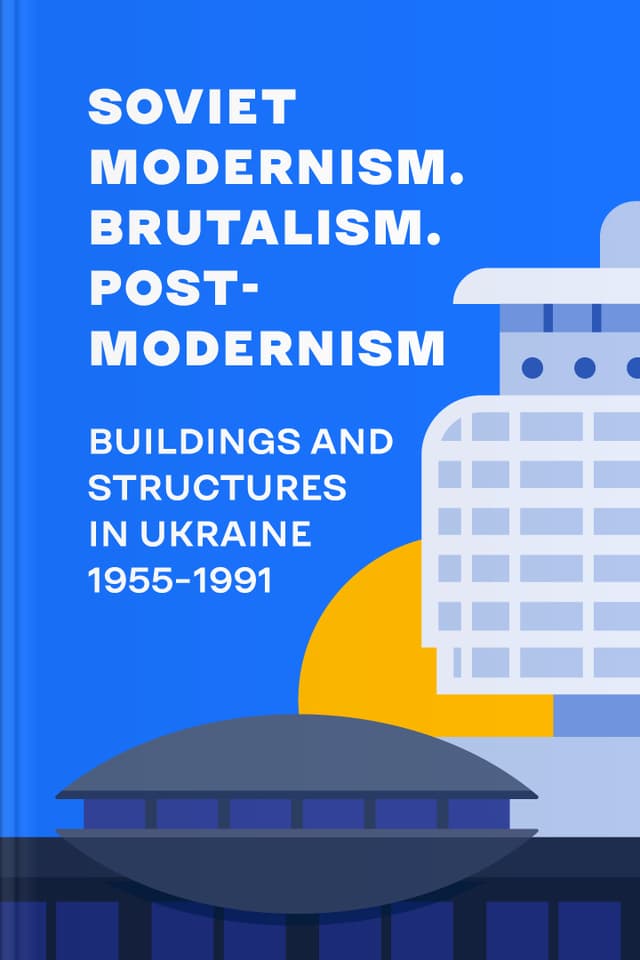
Listen to Soviet Modernism. Brutalism. Post-modernism. Buildings and Structures in Ukraine 1955-1991
What You'll Learn from Soviet Modernism. Brutalism. Post-modernism. Buildings and Structures in Ukraine 1955-1991
- — Buildings That Remember for Us
- — The Thaw and the Break with Stalinist Grandeur
- — Growth, Upheaval, and Silence Under Brezhnev
- — Stagnation, State Power, and a Brutalism That Didn’t Grow Naturally
- — Regional Voices and the Quiet Persistence of Ukrainian Experiment
Soviet Modernism. Brutalism. Post-modernism. Buildings and Structures in Ukraine 1955-1991 Chapter Overview
Chapter 1: AudiobookHub Recommendation
Chapter 2: — Buildings That Remember for Us
Chapter 3: — The Thaw and the Break with Stalinist Grandeur
Chapter 4: — Growth, Upheaval, and Silence Under Brezhnev
Chapter 5: — Stagnation, State Power, and a Brutalism That Didn’t Grow Naturally
Chapter 6: — Regional Voices and the Quiet Persistence of Ukrainian Experiment
Chapter 7: — A Postmodernism That Emerged Anyway
Chapter 8: — Learning to See the Ghosts and the Gifts
About Soviet Modernism. Brutalism. Post-modernism. Buildings and Structures in Ukraine 1955-1991
Architecture doesn’t argue. It doesn’t raise its voice. And yet, it remembers. This narration explores Soviet-era architecture in Ukraine as both a witness and a participant in history—shaped by ideology, constrained by the state, and still present in city skylines, small towns, and villages.
Moving through key periods from the post-war years to perestroika, we’ll gently untangle the major styles often grouped together too quickly—Modernism, Brutalism, and Postmodernism—and see how each one carried the mood of its time. Along the way, we’ll notice the tension between utopian dreams and daily realities, between creativity and control, and between what people needed and what power wanted to display.
Who Should Listen to Soviet Modernism. Brutalism. Post-modernism. Buildings and Structures in Ukraine 1955-1991
- Listeners curious about how buildings can reveal political, cultural, and emotional history—especially in Ukraine and the former USSR.
- Architecture and design lovers who want a clearer, more human understanding of Soviet Modernism, Brutalism, and Postmodernism.
- Anyone who enjoys reflective cultural storytelling and wants a gentle guide for seeing their own city with new eyes.
More Books Like Soviet Modernism. Brutalism. Post-modernism. Buildings and Structures in Ukraine 1955-1991
Readers who enjoyed this also liked these titles.

When spirited Elizabeth Bennet crosses paths with the proud, enigmatic Mr. Darcy, a web of misunderstandings, social pressures, and sharp-witted sparring begins—testing whether first impressions and class-bound “good sense” can survive the inconvenient pull of love.

Sent to America to recover from dangerous overwork, barrister Philip Lefrank expects rural quiet—until he enters a household poisoned by envy and suspicion, where a knife has already flashed, and one desperate man seems to carry a secret that could ruin them all.

A Memoir

Why Artificial Intelligence Keeps Making Epic Mistakes (and why the AI Bubble Will Burst)