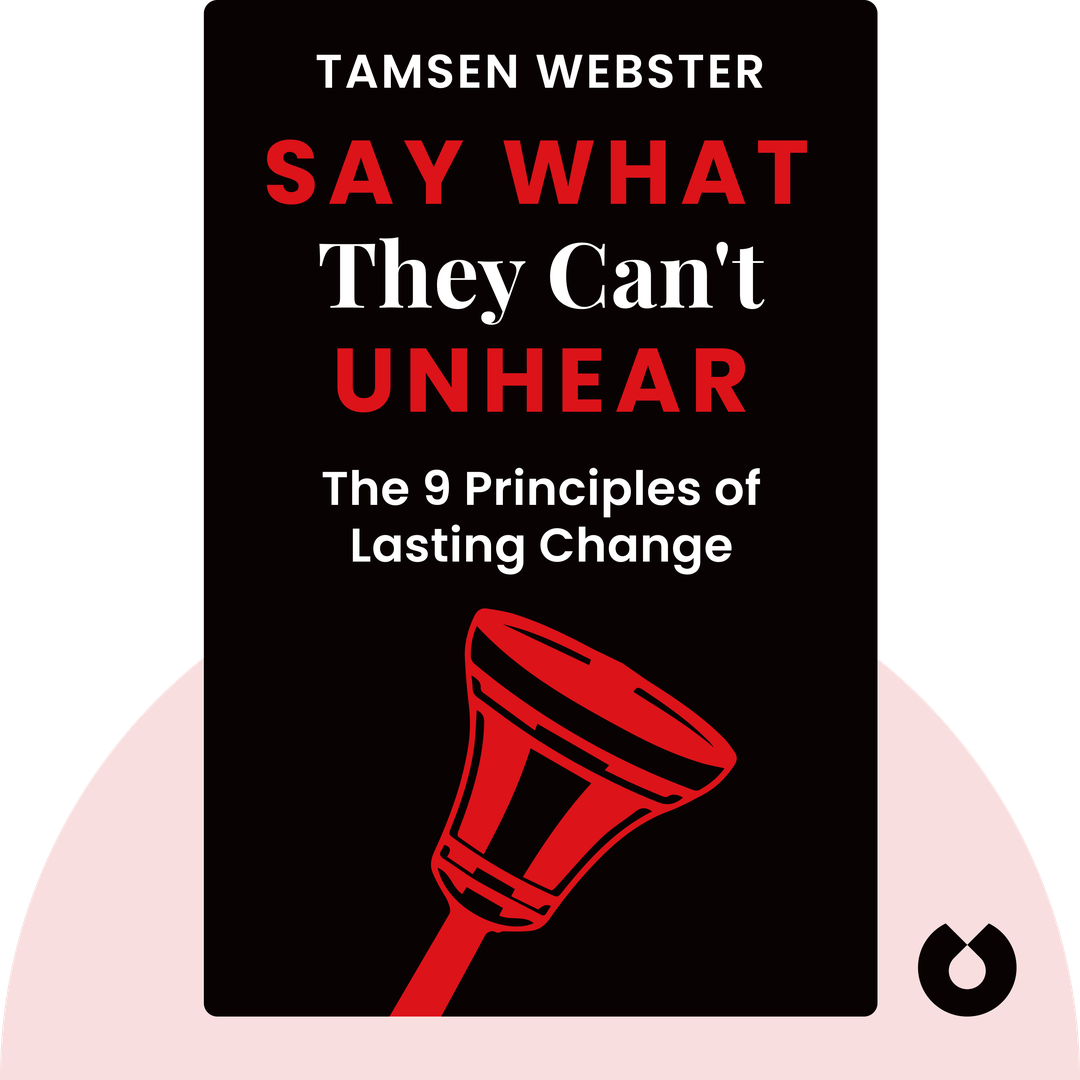
Say What They Can't Unhear
Start ListeningDownload Try free on iPhoneScan to start in 5 seconds
Categories:
If You're Curious About These Questions...
You should listen to this audiobook
- Have you ever wondered why people often agree with your ideas in the moment, yet fail to take any action afterward?
- What if you could craft a message so compelling that your audience literally finds it impossible to unhear or ignore?
- Are you curious about the nine persuasion principles that transform passive compliance into deep, lasting commitment?
Listen to Say What They Can't Unhear — Free Audiobook
Loading player...
Key Takeaways from Say What They Can't Unhear
- Discover why lasting change is a reaction rather than an action, and learn how to present new ideas without triggering defensiveness.
- Understand how every decision is driven by an internal story, and learn to align your proposed changes with the deeply held narratives of others.
- Master the art of persuasion by uncovering the core beliefs of your audience and framing your arguments to match their existing worldview.
- Learn how to encourage openness to new ideas by validating a person's identity and framing your advice to build on their existing strengths.
- Find out how to transform divisive conflicts into productive dialogues by consistently refocusing conversations on shared values and common ground.
Learning Tools
Reinforce what you learned from Say What They Can't Unhear
Mind Map
Say What They Can't Unhear
The Core Problem of Change+
The 9 Principles of Lasting Change+
The Changemaker's Approach+
Quiz — Test Your Understanding
Question 1 of 10
Why did doctors accept Florence Nightingale's handwashing rule but reject Ignaz Semmelweis's similar proposal?
Question 2 of 10
According to the book, why do people often end up buying things they didn't plan to purchase at stores like IKEA?
Question 3 of 10
What happens if you present a highly logical argument that contradicts someone's core principles?
Question 4 of 10
What does the author identify as the strongest influence on people's decisions?
Question 5 of 10
When facing a deeply held belief that stands in the way of change, what is the most effective strategy?
Question 6 of 10
Why do drastic, 'cold turkey' approaches to changing habits usually fail?
Question 7 of 10
How does the brain resolve cognitive dissonance when two beliefs or values come into conflict?
Question 8 of 10
What key lesson did the autonomous robot startup learn about inspiring change in farmers?
Question 9 of 10
Why do people rarely regret decisions that perfectly align with their core values, even if the outcome isn't flawless?
Question 10 of 10
According to the book's final summary, what is the ultimate key to making a change feel like a natural progression rather than a challenge?
Say What They Can't Unhear — Full Chapter Overview
- 1Recommendation
- 2Successful change depends on how people react, not on the action itself
- 3Every choice is guided by an internal story
- 4Grasping others’ core beliefs is the key to truly effective persuasion
- 5Promote openness to new ideas by respecting identity
- 6Seek common ground to foster productive dialogue
- 7Small, painless steps make durable change more attainable
- 8The strongest belief determines the path toward change
- 9Effective change starts by understanding genuine desire
- 10People don’t regret decisions aligned with their beliefs
Say What They Can't Unhear Summary & Overview
Say What They Can’t Unhear (2024) provides a fresh approach to driving lasting change by leveraging ethical persuasion and behavioral insights. It explores nine “persuasion principles” that help transform passive agreement into passionate buy-in, inspiring long-term shifts in thinking and behavior.
Who Should Listen to Say What They Can't Unhear?
- Business leaders seeking to inspire lasting organizational change
- Managers aiming to guide teams through transitions
- Entrepreneurs needing strategies to influence customer behavior
Books Similar to Say What They Can't Unhear
Readers who enjoyed this also liked these titles.