If You're Curious About These Questions...
You should listen to this audiobook
- What if you could transform a tense disagreement into a moment of genuine connection using a simple eight-step method?
- Have you ever wondered why most of our daily conversations stay on the surface, and what it actually takes to reach a level of truly 'deep' understanding?
- What’s the secret to making the people around you feel heard and valued, even when you don't see eye-to-eye?
Listen to Deep Listening — Free Audiobook
Loading player...
Key Takeaways from Deep Listening
- Discover why true listening is not automatic, and how avoiding common conversational traps like interrupting silence or rushing to offer solutions can transform your relationships.
- Learn how to establish a safe environment for deep conversations by curating a quiet physical space and tuning into your own emotional triggers before you even begin.
- Master the art of conversational presence by using physical grounding techniques—like noticing your breath or planting your feet—to prevent your mind from rehearsing replies.
- Understand how to cultivate intentional curiosity by giving up the need to control the conversation, keeping your own judgments in check, and embracing genuine empathy.
- Find out how the simple act of holding a soft, steady gaze and practicing physical stillness can make others feel profoundly safe, seen, and supported.
Learning Tools
Reinforce what you learned from Deep Listening
Mind Map
Deep Listening
The Core Problem & Value+
Preparation (Steps 1 & 2)+
Engagement (Steps 3 & 4)+
Stillness (Steps 5 & 6)+
Exploration (Steps 7 & 8)+
Boundaries & Growth+
Quiz — Test Your Understanding
Question 1 of 7
According to the text, what is a predictable trap that sabotages our ability to truly hear others?
Question 2 of 7
Why does the author suggest sitting at a slight angle rather than directly face-to-face when practicing deep listening?
Question 3 of 7
What does the author mean by acknowledging your 'shadows' before entering a conversation?
Question 4 of 7
In the context of deep listening, what inner posture is required to practice genuine curiosity?
Question 5 of 7
How does the text recommend handling silence during a deep listening conversation?
Question 6 of 7
What is the primary purpose of the 'reflect back' step in deep listening?
Question 7 of 7
What advice does the author give regarding the emotional toll and boundaries of deep listening?
Deep Listening — Full Chapter Overview
- 1Recommendation
- 2Why genuine listening is harder than it seems
- 3Before listening, slow down and make space
- 4Remain present and curious
- 5Stillness says more than quick replies
- 6Help speakers hear themselves more clearly
- 7Listen deeply while protecting yourself too
- 8Final summary
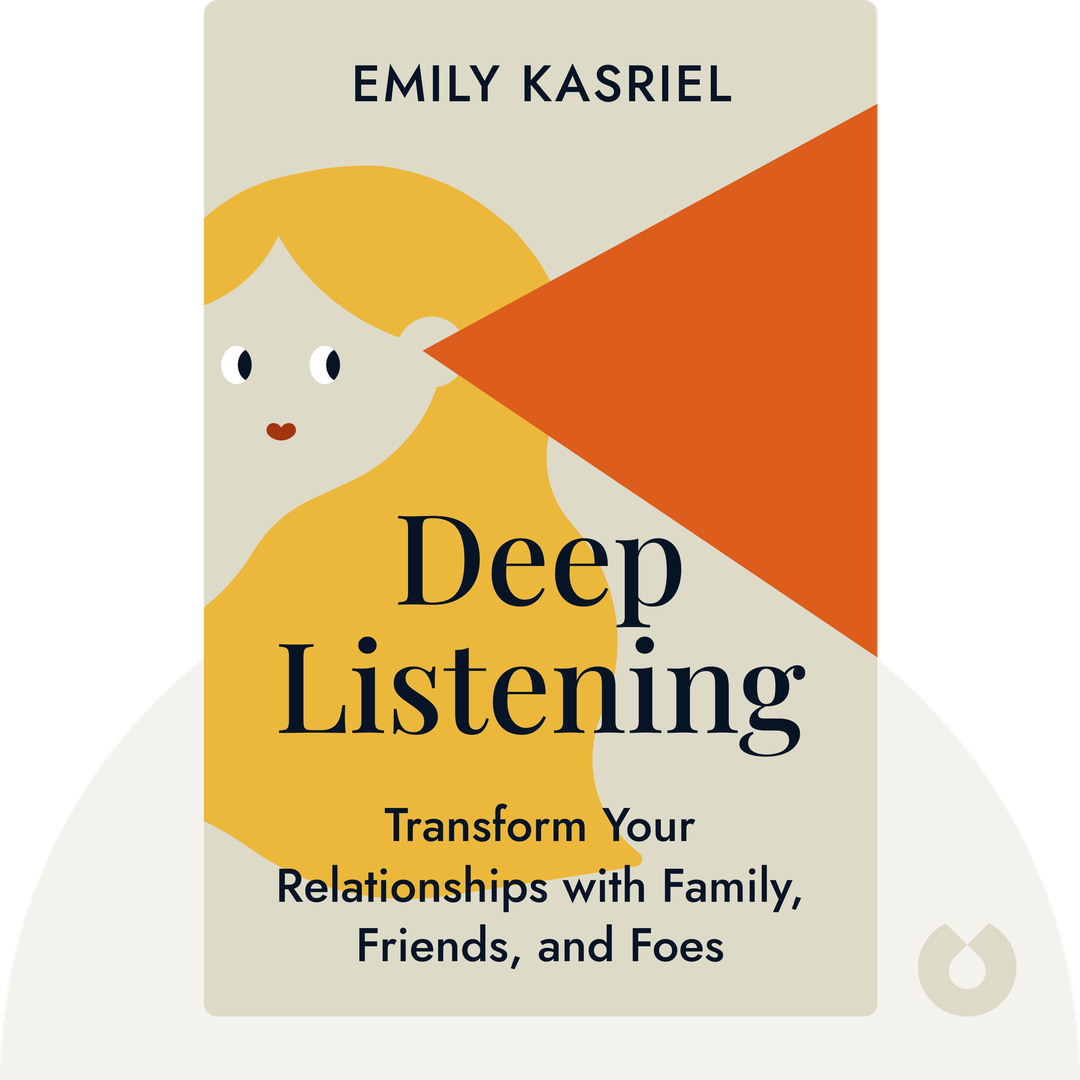
Deep Listening Summary & Overview
Deep Listening (2025) explores how truly hearing others can transform relationships, leadership, and community. It introduces an eight-step method that will help you move beyond surface conversations and create space for genuine understanding – even in moments of tension or disagreement. Grounded in research and real-world stories, it offers practical tools for building deeper, more human connections.
Who Should Listen to Deep Listening?
- People who want deeper conversations with loved ones
- Professionals who manage teams or lead organizations
- Therapists, coaches and other helping professionals
Books Similar to Deep Listening
Readers who enjoyed this also liked these titles.