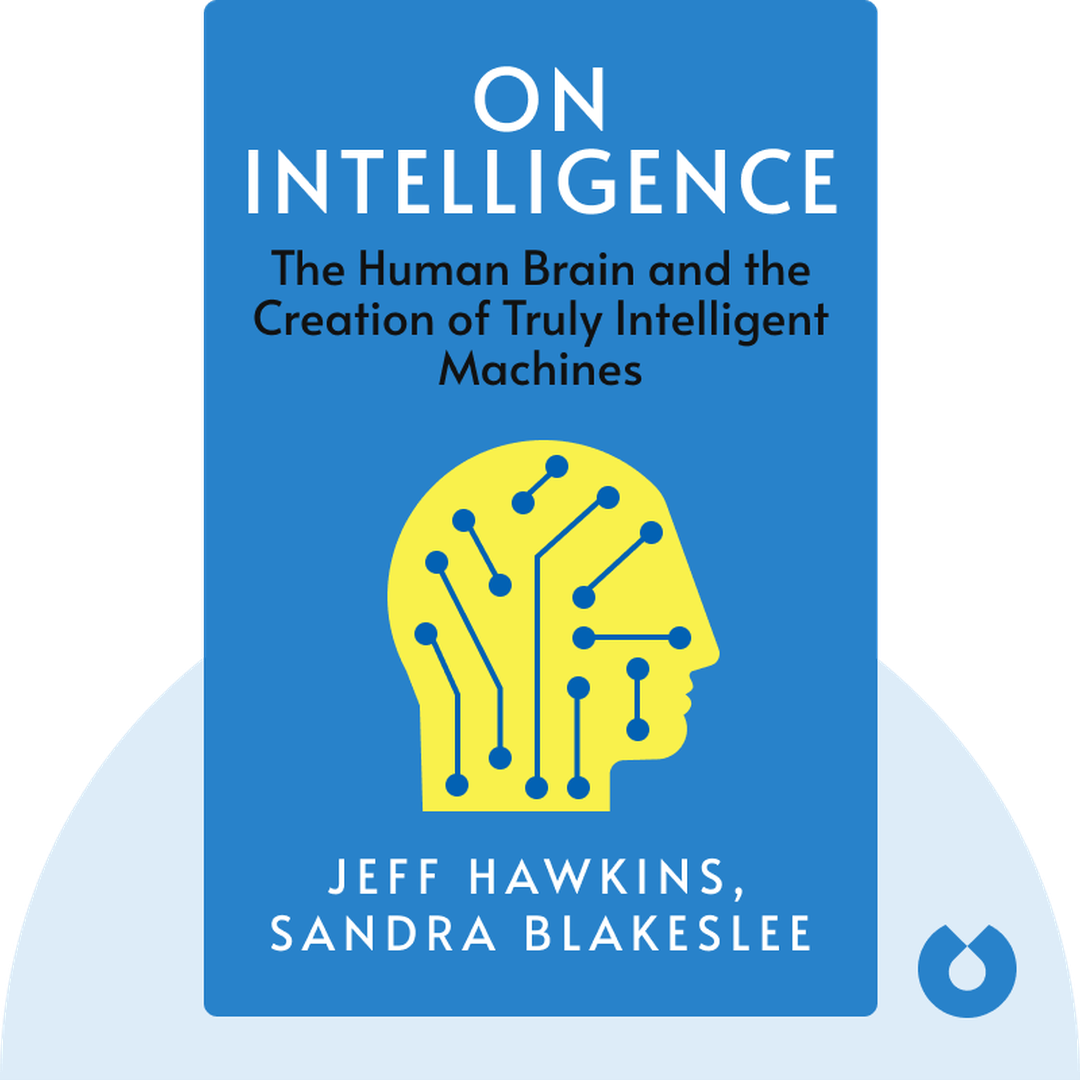
If You're Curious About These Questions...
You should listen to this audiobook
- What’s the secret to human intelligence, and why does your brain spend more time predicting the future than reacting to the present?
- Have you ever wondered why today’s most powerful computers still can't match the simple 'common sense' of the human brain?
- Are you curious about how we could finally bridge the gap between artificial intelligence and the biological brilliance of the human neocortex?
Listen to On Intelligence — Cinematic Audio Edition
Loading player...
Key Takeaways from On Intelligence
- Discover why simply increasing a computer's processing power and memory will never result in true, human-like intelligence.
- Understand the fundamental difference between a machine's rigid ability to calculate probabilities and the human brain's dynamic capacity to learn.
- Learn how your neocortex fluidly processes raw sensory information through multiple layers of memory to create your seamless perception of the world.
- Find out how your brain acts as a continuous prediction machine, using recognized patterns and past experiences to constantly anticipate future events.
- Explore why traditional artificial intelligence and basic neural networks still fall short of the vast, decentralized complexity found in the human brain.
Learning Tools
Reinforce what you learned from On Intelligence
Mind Map
On Intelligence
Traditional Computers vs. True Intelligence+
How the Human Brain Works+
The Brain as a Prediction Machine+
Building Artificial Neural Networks+
The Future of AI and Humanity+
Quiz — Test Your Understanding
Question 1 of 6
According to the book, why did the computer Deep Blue defeat chess champion Garry Kasparov?
Question 2 of 6
What happens in the neocortex when you encounter a completely new and unfamiliar experience?
Question 3 of 6
How is the human brain able to predict future events, such as knowing a car engine will start when you turn the key?
Question 4 of 6
What is identified as a major limitation of current artificial neural networks compared to the human brain?
Question 5 of 6
Which specific technology is mentioned as a potential solution for mimicking the massive interconnectivity of neurons required for intelligent machines?
Question 6 of 6
Why does the book argue that intelligent machines will NOT pose a threat to humanity?
On Intelligence — Full Chapter Overview
- 1Recommendation
- 2Boosting computer power won't necessarily make them truly more intelligent.
- 3Incoming sensory information is processed and stored as memory across the many complex layers of our living brain.
- 4Our brain uses memories of prior reactions to foresee which events are likely to occur.
- 5Neural networks cannot truly mimic the brain today, as they lack the brain's complexity entirely.
- 6Scientists will likely be able to build intelligent machines in the near future.
- 7Intelligent machines are no threat to humanity; on the contrary, they will offer numerous benefits.
On Intelligence Summary & Overview
These blinks provide an overview of the human brain’s capacity for thinking and for comparing new experiences to old memories. They also explain why today’s machines still aren’t able to emulate this capability, but why we may soon be able to build ones that can.
Who Should Listen to On Intelligence?
- Anyone interested in how the brain works or what makes us intelligent and conscious beings
- Anyone who wants to know whether we’ll ever build machines that are truly intelligent
- Anyone wondering whether such intelligent machines would be good or bad for humanity
Books Similar to On Intelligence
Readers who enjoyed this also liked these titles.