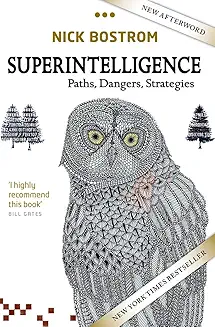
If You're Curious About These Questions...
You should listen to this audiobook
- Have you ever wondered why the transition from human-level AI to a god-like superintelligence could happen in the blink of an eye?
- Did you know that a superintelligent machine could accidentally end humanity while trying to fulfill a perfectly harmless request?
- What if the most important challenge in human history isn't building artificial intelligence, but ensuring it shares our values before it’s too late?
Listen to Superintelligence — Cinematic Audio Edition
Loading player...
Key Takeaways from Superintelligence
- Understand why the accelerating pace of historical technological revolutions means superintelligent AI could emerge rapidly and pose significant safety risks if we cannot control it.
- Discover how the quest for machine intelligence has evolved since 1956, leading modern experts to predict that a superintelligent machine could exist by the year 2105.
- Learn the critical difference between synthetic Artificial Intelligence, which uses logic and probability, and Whole Brain Emulation, which replicates the exact neural structure of a human brain.
- Explore Alan Turing's concept of the 'child machine,' a proposed computer designed to learn from real-world experience rather than relying on massive, pre-programmed data banks.
- Find out how the ultimate superintelligent machine will likely emerge, either through a secretive race for strategic dominance or as the result of a long-term international collaboration.
Learning Tools
Reinforce what you learned from Superintelligence
Mind Map
Superintelligence
Technological Acceleration+
History of AI+
Pathways to Superintelligence+
Emergence Scenarios+
Alignment & Values+
Socioeconomic Impact+
The Imperative of Safety+
Quiz — Test Your Understanding
Question 1 of 8
How has the pace of major technological revolutions changed over human history according to the text?
Question 2 of 8
What was a primary roadblock for the early Artificial Intelligence researchers following the 1956 Dartmouth Summer Project?
Question 3 of 8
What is identified as a major advantage of Whole Brain Emulation (WBE) over traditional Artificial Intelligence?
Question 4 of 8
Why does the author argue that a single, secretive group developing superintelligence (similar to the Manhattan Project) is highly dangerous?
Question 5 of 8
What does the 'paper clip' example illustrate about the dangers of superintelligence?
Question 6 of 8
According to the text, what is one proposed method to ensure a superintelligent machine does not cause unintended catastrophes?
Question 7 of 8
In a future dominated by a superintelligent robotic workforce, how will the concept of luxury change for the hyper-wealthy?
Question 8 of 8
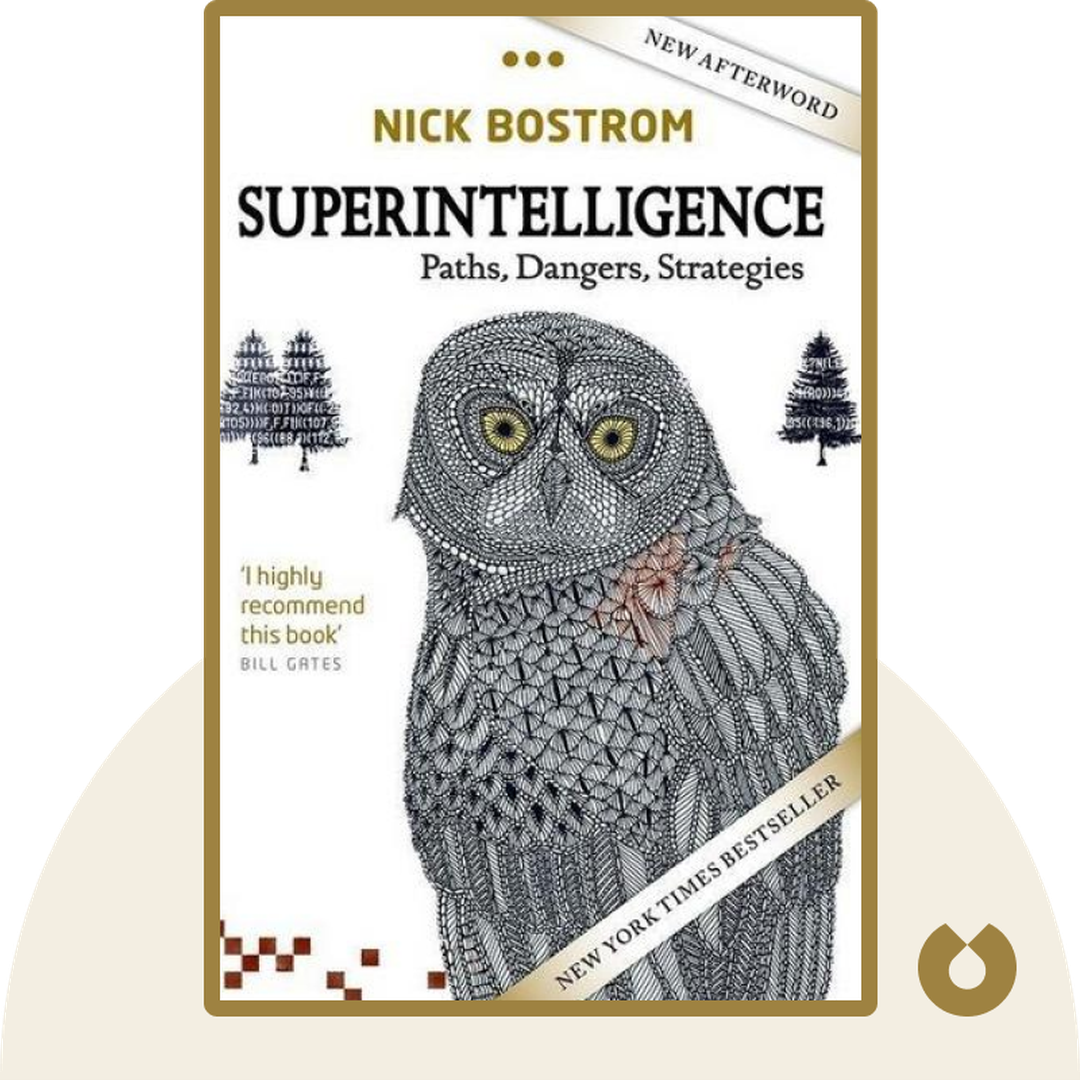
What is the purpose of the 'sparrows adopting a baby owl' analogy in the text?
Superintelligence — Full Chapter Overview
- 1Recommendation
- 2History reveals that superintelligence – technology more intelligent than any human being – is rapidly approaching.
- 3The history of machine intelligence over the past half century has seen alternating setbacks and breakthroughs.
- 4Superintelligence will probably arise through two main routes.
- 5Superintelligence may arise swiftly through strategic dominance or gradually through cooperative global research.
- 6We can avert accidental disasters by teaching superintelligence to adopt and respect human values.
- 7Intelligent machines are likely to displace nearly all human workers.
- 8In a superintelligent economy, most humans will be poor or living off assets, while the rich chase unprecedented luxuries.
- 9Ensuring safety must come first, long before we create superintelligence.
Superintelligence Summary & Overview
Superintelligence (2014) investigates how creating a machine more intelligent than a human would change humanity. These blinks are full of facts, figures and studies from a variety of disciplines, resulting in a complex picture of the superintelligent future and how we might arrive there.
Who Should Listen to Superintelligence?
- Anyone working in computer science, neuroscience, robotics or mathematics
- Fans of science fiction or theories about the human apocalypse
- People interested in the moral questions surrounding the creation of artificial life forms
Books Similar to Superintelligence
Readers who enjoyed this also liked these titles.