If You're Curious About These Questions...
You should listen to this audiobook
- Did you know that the person you call 'I' might actually be a clever illusion created by the language center of your brain?
- Have you ever wondered why modern neuroscience is now confirming an ancient Buddhist secret about the true nature of the human ego?
- What if the key to ending your internal struggle isn't finding yourself, but realizing that there was never a 'self' to find in the first place?
Listen to No Self, No Problem — Cinematic Audio Edition
Loading player...
Key Takeaways from No Self, No Problem
- Discover why the human brain constantly fills in gaps with fabricated stories during moments of uncertainty, and how recognizing this habit can free you from unnecessary anxiety.
- Learn how to instantly reduce stress by pausing to ask yourself a simple but profound question: 'Is this reality, or just my interpretation of reality?'
- Understand the fascinating neuroscience behind meditation, including how long-term practice can preserve your brain's problem-solving cortex and keep it functioning like someone decades younger.
- Find out how your brain's left hemisphere acts as a constant interpreter, often inventing logical but false reasons for your behaviors based on hidden default settings, emotional states, and hormonal shifts.
- Recognize how the mind uses language and categorization to label everyday experiences, and discover how these automatic mental tools can quietly generate unnecessary feelings of failure and stress.
Learning Tools
Reinforce what you learned from No Self, No Problem
Mind Map
No Self, No Problem
The Illusion of the Self+
The Left Brain (The Interpreter)+
The Right Brain (The Present Mind)+
Practices to Access the Right Brain+
Quiz — Test Your Understanding
Question 1 of 10
What is the central argument of Buddhism that contemporary neuroscience is beginning to substantiate?
Question 2 of 10
When neuroscientists map the functions of the human mind onto the brain, what do they discover about the concept of the 'self'?
Question 3 of 10
In the famous split-brain experiments, what did researchers discover about how the left hemisphere of the brain operates?
Question 4 of 10
How does the left brain's use of language contribute to the illusion of the self?
Question 5 of 10
Why does the left brain's tendency to recognize patterns sometimes lead to unnecessary mental suffering?
Question 6 of 10
What did Dr. Jill Bolte Taylor's stroke reveal about right-brain consciousness?
Question 7 of 10
Why are practices like yoga and meditation effective at tapping into right-brain consciousness?
Question 8 of 10
In the card game study measuring sweat gland activity, what did the results suggest about human intuition?
Question 9 of 10
According to the text, which two practices are scientifically shown to exercise and strengthen right-brain intelligence?
Question 10 of 10
What actionable advice does the author suggest to begin cultivating gratitude and aligning with the right brain?
No Self, No Problem — Full Chapter Overview
- 1Recommendation
- 2Modern neuroscience and Buddhist teachings concur: the self is ultimately illusory.
- 3The left brain interprets reality and invents coherent, compelling stories.
- 4The left brain uses language to categorize experience.
- 5The brain’s impulse to find patterns can craft the self’s illusion and fuel deep, ongoing mental suffering.
- 6We are all capable of accessing right-brain consciousness, as Dr. Jill Bolte Taylor clearly demonstrates for us.
- 7The right brain is the spatial hub, and movement-based practices are one way to tap it fully.
- 8Intuition is an essential facet of right-brain intelligence.
- 9You can strengthen right-brain intelligence by cultivating compassion and gratitude.
No Self, No Problem Summary & Overview
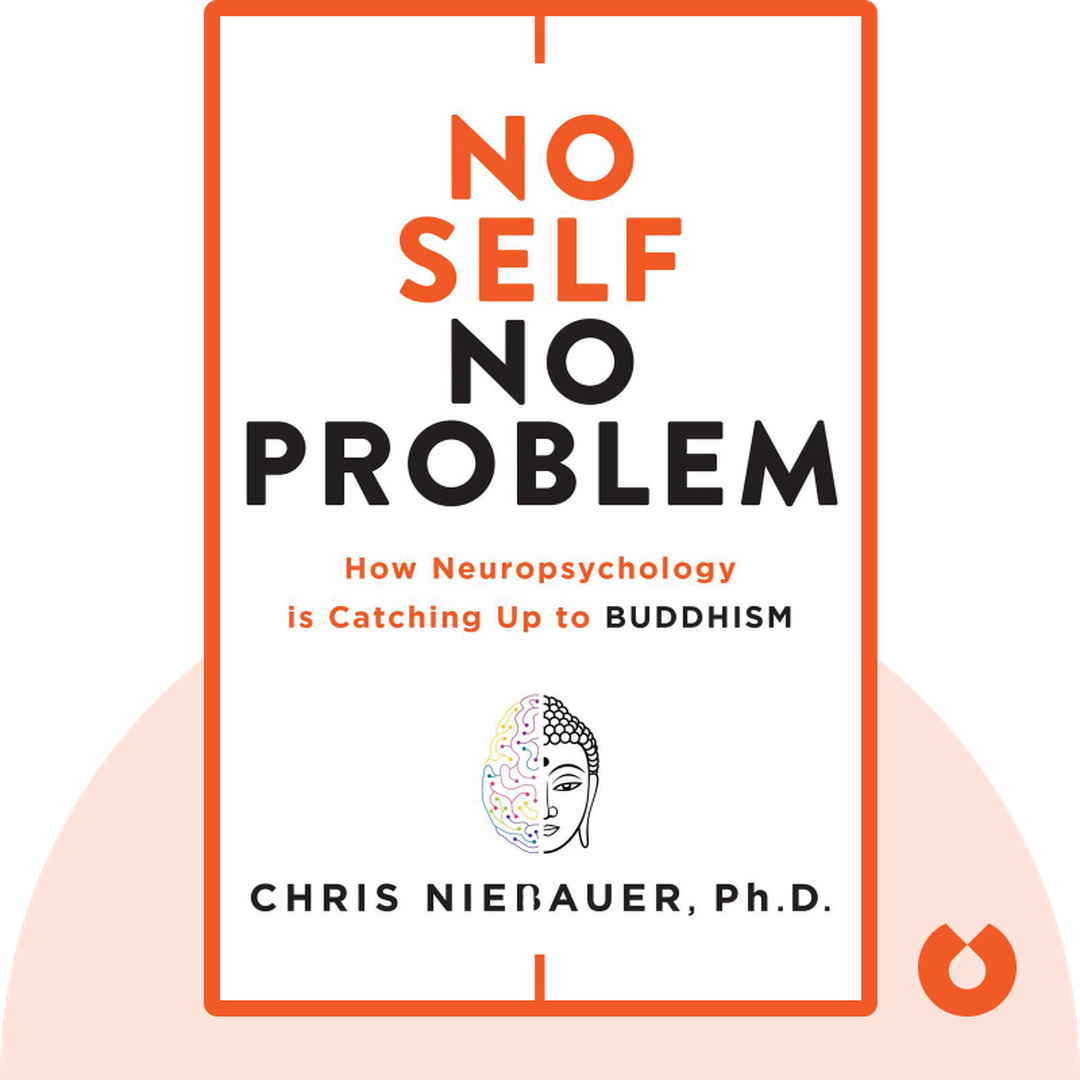
No Self, No Problem (2019) offers an array of neuroscientific evidence that supports an age-old Buddhist thesis: that there’s no such thing as a stable, continuous self. Recent research indicates that the self is an illusion, a nonexistent pattern created by the language center of the human brain.
Who Should Listen to No Self, No Problem?
- Scientifically minded spiritual seekers
- Skeptics of meditation, yoga and tai chi
- People who’ve been called “left-brained”
Books Similar to No Self, No Problem
Readers who enjoyed this also liked these titles.