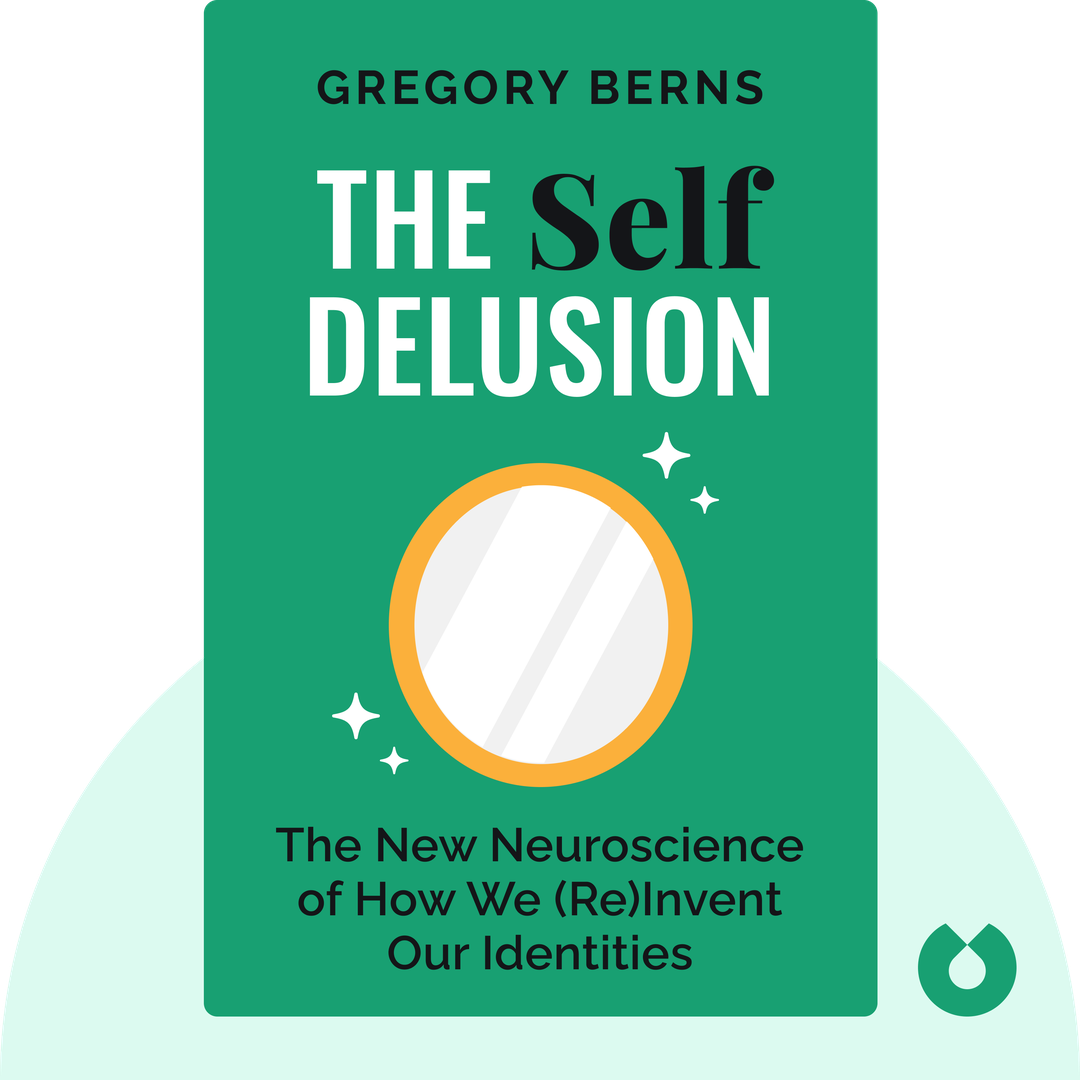
If You're Curious About These Questions...
You should listen to this audiobook
- Did you know that the “you” from yesterday, today, and tomorrow are actually three entirely different people?
- Have you ever wondered why your brain works so hard to create the illusion of a single, continuous identity?
- What if you could harness the science of your brain’s storytelling to rewrite your past and shape a completely new future?
Listen to The Self Delusion — Free Audiobook
Loading player...
Key Takeaways from The Self Delusion
- Discover why your perception of reality and your own identity is actually a carefully stitched-together simulation created by your brain.
- Understand how your memories function less like perfect video recordings and more like fragile, reconstructed stories that shape your ongoing self-image.
- Learn how your brain acts as a continuous predictive machine, using simplified mental storyboards to guess what happens next and filter your sensory experiences.
- Explore the psychological concept of dissociation to see why you naturally switch between multiple versions of yourself to adapt to different social environments.
- Recognize that because your self-narrative is built on flexible guesswork rather than fixed facts, you have the ultimate power to rewrite your story and change who you become.
Learning Tools
Reinforce what you learned from The Self Delusion
Mind Map
The Self Delusion
The Illusion of Self+
The Flawed Nature of Memory+
The Brain as a Prediction Engine+
The Social & Multi-layered Self+
The Power of Narrative+
Rewriting Your Story+
Quiz — Test Your Understanding
Question 1 of 7
How does the brain handle the encoding and retrieval of memories according to the text?
Question 2 of 7
Why does touching your own cheek feel different from someone else touching it?
Question 3 of 7
What is a major consequence of 'Theory of Mind' as described in the book?
Question 4 of 7
What did author Gregory Berns discover when scanning the brains of students who were reading a historical novel?
Question 5 of 7
According to the text, which of the following is part of the checklist for spotting false narratives?
Question 6 of 7
Why does the 'regret of omission' usually feel heavier than the regret over actions we actually took?
Question 7 of 7
What alternative framework does the author suggest embracing over the popular 'hero's journey' narrative?
The Self Delusion — Full Chapter Overview
- 1Recommendation
- 2Beginning the script
- 3Using flawed data to make predictions
- 4The mentality of the group
- 5The strength of a compelling narrative
- 6Crafting a new story free of regret
The Self Delusion Summary & Overview
The Self Delusion (2022) asks a mind-bending question: What if the “you” from yesterday, today, and tomorrow are actually three different people? It explains how our brains create the illusion of a single, continuous self – and how we can rewrite that story to shape our future.
Who Should Listen to The Self Delusion?
- Science geeks
- Anyone interested in how the brain works
- People looking for a fresh start in life
Books Similar to The Self Delusion
Readers who enjoyed this also liked these titles.