If You're Curious About These Questions...
You should listen to this audiobook
- When disaster strikes, is your instinct to flee actually the most dangerous choice you could make?
- Could your home—right now, as it is—keep your family safe, fed, and functional for weeks without outside help?
- What would it take to turn your neighborhood from a collection of strangers into a coordinated survival network?
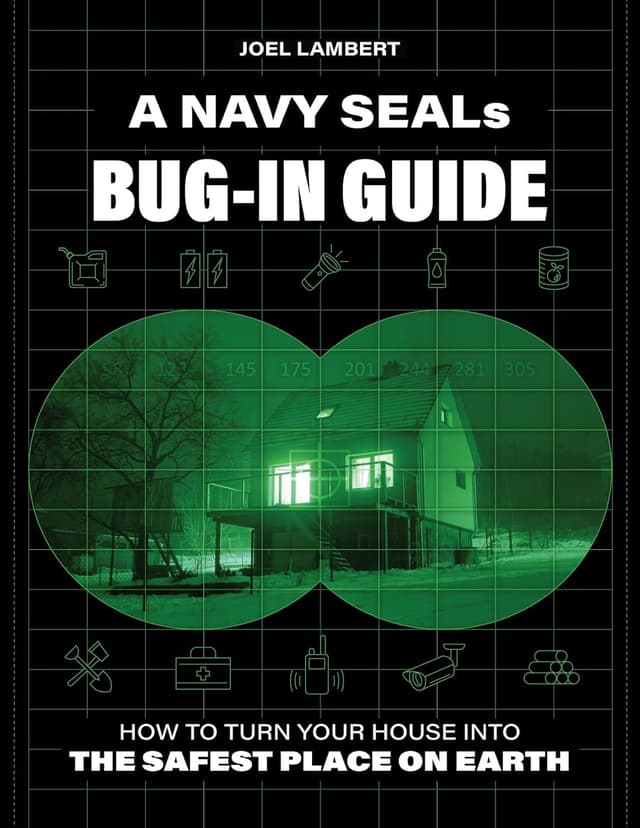
Listen to NAVY SEALS BUG IN GUIDE: How to Transform Your Home into the Safest Place on Earth
What You'll Learn from NAVY SEALS BUG IN GUIDE: How to Transform Your Home into the Safest Place on Earth
- — Why Bugging In Usually Wins
- — Risk First: Know What You’re Preparing For
- — Turning a House into a System
- — Building the Bug-In Plan and Stockpiling Food
- — Water Security: Storage, Purification, and Reality Checks
NAVY SEALS BUG IN GUIDE: How to Transform Your Home into the Safest Place on Earth Chapter Overview
Chapter 1: AudiobookHub Recommendation
Chapter 2: — Why Bugging In Usually Wins
Chapter 3: — Risk First: Know What You’re Preparing For
Chapter 4: — Turning a House into a System
Chapter 5: — Building the Bug-In Plan and Stockpiling Food
Chapter 6: — Water Security: Storage, Purification, and Reality Checks
Chapter 7: — Power, Defense, and Communications When the Grid Fails
Chapter 8: — Health, Hygiene, and Surviving Each Other
Chapter 9: — Skills, Mindset, and Community Defense-in-Depth
Chapter 10: — Hardening the House and Adapting as Reality Changes
About NAVY SEALS BUG IN GUIDE: How to Transform Your Home into the Safest Place on Earth
This book argues that in most real emergencies, staying home—“bugging in”—beats fleeing into uncertainty. It frames the house as the one place you understand best, where your supplies, tools, routines, and neighbors can become force multipliers rather than liabilities. From that premise, it builds a layered preparedness plan: assess likely threats, harden weak points, and stock the essentials that keep life functioning when outside systems collapse.
Chapter by chapter, the guide covers home risk assessment, food and water planning, backup power, defensive hardening, communications when internet and cell service fail, medical readiness, sanitation for long disruptions, core survival skills, and the psychological side of enduring isolation and stress. It closes by expanding preparedness beyond one household—security tech, neighborhood watch, mutual aid, and safe resource sharing—then emphasizes constant review and adaptation as conditions change.
Who Should Listen to NAVY SEALS BUG IN GUIDE: How to Transform Your Home into the Safest Place on Earth
- Homeowners or renters who want a structured “bug-in” plan for outages, storms, supply disruptions, or unrest
- Families building practical stockpiles (food, water, meds) and household procedures without relying on fantasy survival scenarios
- Community-minded preppers interested in neighborhood coordination, watch networks, and mutual aid
More Books Like NAVY SEALS BUG IN GUIDE: How to Transform Your Home into the Safest Place on Earth
Readers who enjoyed this also liked these titles.

The Unmentionable World of Human Waste and Why It Matters

Growing Excellence in Yourself and Those You Lead

Mimicry and Camouflage

In a world that tells them they're flawed