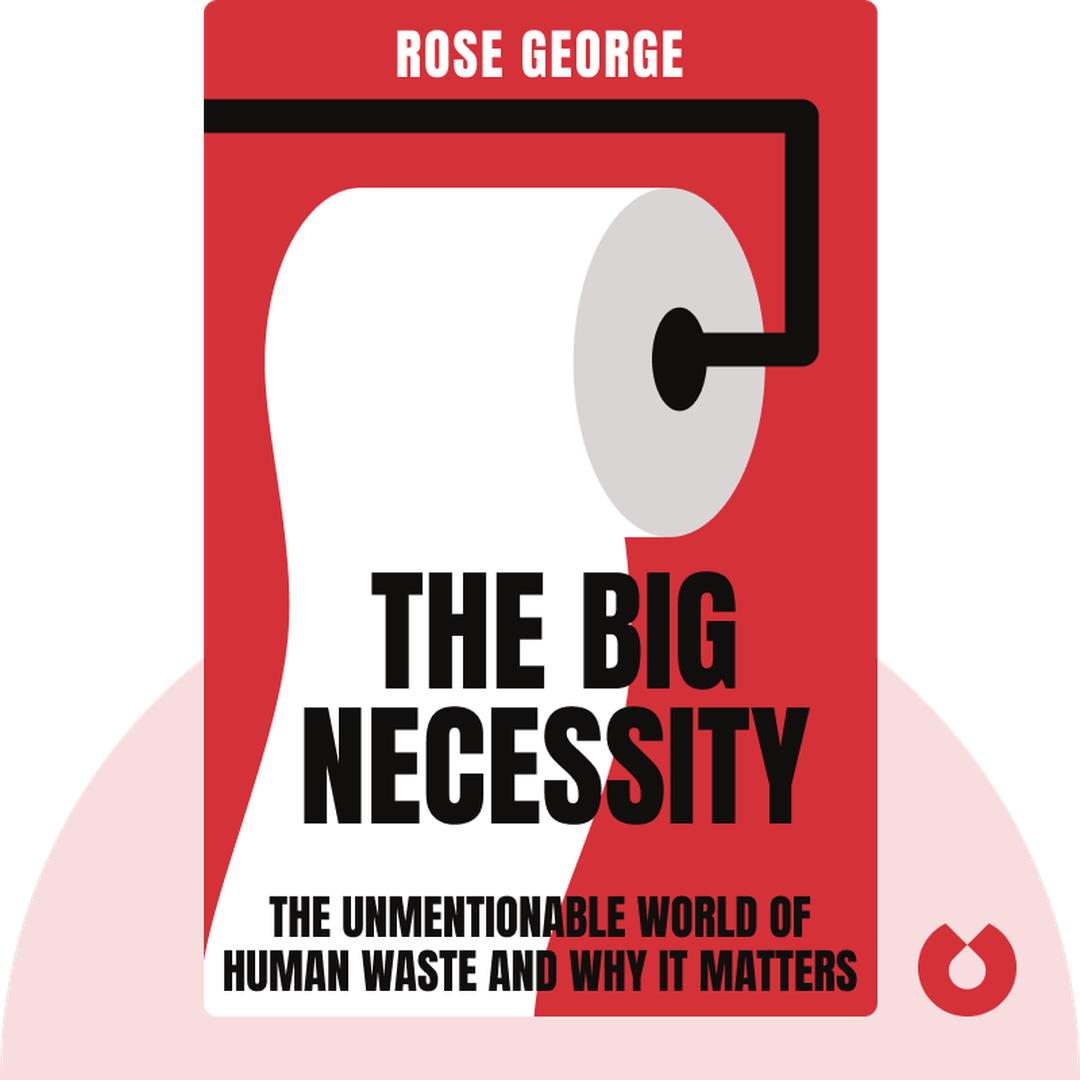
If You're Curious About These Questions...
You should listen to this audiobook
- Did you know that the world’s most uncomfortable “taboo” is actually responsible for more preventable deaths than almost any other global health crisis?
- Have you ever wondered what truly happens after you flush, and why the hidden world beneath our streets is the only thing keeping modern civilization from collapse?
- What if the very waste we try so hard to ignore is actually the secret to solving some of the planet's biggest energy and water challenges?
Listen to The Big Necessity — Free Audiobook
Loading player...
Key Takeaways from The Big Necessity
- Understand the staggering global health crisis caused by a lack of sanitation, which forces 2.6 billion people to live without toilets and causes one in ten illnesses worldwide.
- Discover why investing in proper sanitation is both a medical and economic miracle, yielding a seven-dollar return for every dollar spent and potentially adding 20 years to the average human lifespan.
- Realize the deadly consequences of fecally contaminated environments, which cause a child to die every 15 seconds from diarrhea—making it a bigger threat than AIDS, tuberculosis, or malaria.
- Learn how societal discomfort and linguistic taboos around human waste prevent governments and aid agencies from prioritizing and funding life-saving sanitation infrastructure.
- Find out why changing cultural habits is just as important as building infrastructure, as evidenced by the millions of state-issued latrines in India that go unused due to a flawed top-down approach.
Learning Tools
Reinforce what you learned from The Big Necessity
Mind Map
The Big Necessity
The Global Health Crisis+
The ROI of Sanitation+
The Taboo Roadblock+
Activism & Habit Change+
Developed World Failures+
Feces as a Resource+
Moving Forward+
Quiz — Test Your Understanding
Question 1 of 8
Why does UNICEF consider diarrhea to be the biggest barrier to survival for small children in developing countries?
Question 2 of 8
According to the text, what is the average economic return for every dollar invested in global sanitation?
Question 3 of 8
How does the taboo surrounding human waste negatively impact international aid and government budgets?
Question 4 of 8
Why did the top-down approach of simply building millions of latrines in India largely fail?
Question 5 of 8
What effective strategy did activist Kamal Kar use to discourage open defecation in the Bangladeshi village of Mosmoil?
Question 6 of 8
What is a primary cause of the sewage system failures in New York City during heavy rain?
Question 7 of 8
How has China successfully utilized human waste in millions of rural households?
Question 8 of 8
Despite the benefits of biogas in rural China, what was a major challenge that led some farmers to abandon the system?
The Big Necessity — Full Chapter Overview
- 1Recommendation
- 2Poor sanitation remains a massive global health crisis with truly lethal consequences.
- 3Adequate sanitation can save millions of lives and billions of dollars.
- 4Sanitation is a taboo subject, which makes it far harder for people to address effectively today.
- 5Changing people’s habits and attitudes toward sanitation is crucial for effective activism.
- 6Sanitation is a global problem that no one can ignore.
- 7Human waste is a valuable resource, as China is clearly demonstrating.
- 8Recycling human waste has numerous complexities and challenges, much like our attitudes toward it today.
The Big Necessity Summary & Overview
The Big Necessity (2008) takes a detailed look at the issues surrounding human excrement. Most people would rather ignore these issues – but turning a deaf ear is precisely what’s led to the sanitation crises plaguing the world today. Sanitation is too important to dismiss; a lack of it is causing thousands of needless deaths worldwide. Find out what can be done to help in these blinks.
Who Should Listen to The Big Necessity?
- Anyone who’s ever had a bowel movement
- Anthropologists interested in city-planning, urban design and living
- Activists interested in global health and saving lives
Books Similar to The Big Necessity
Readers who enjoyed this also liked these titles.