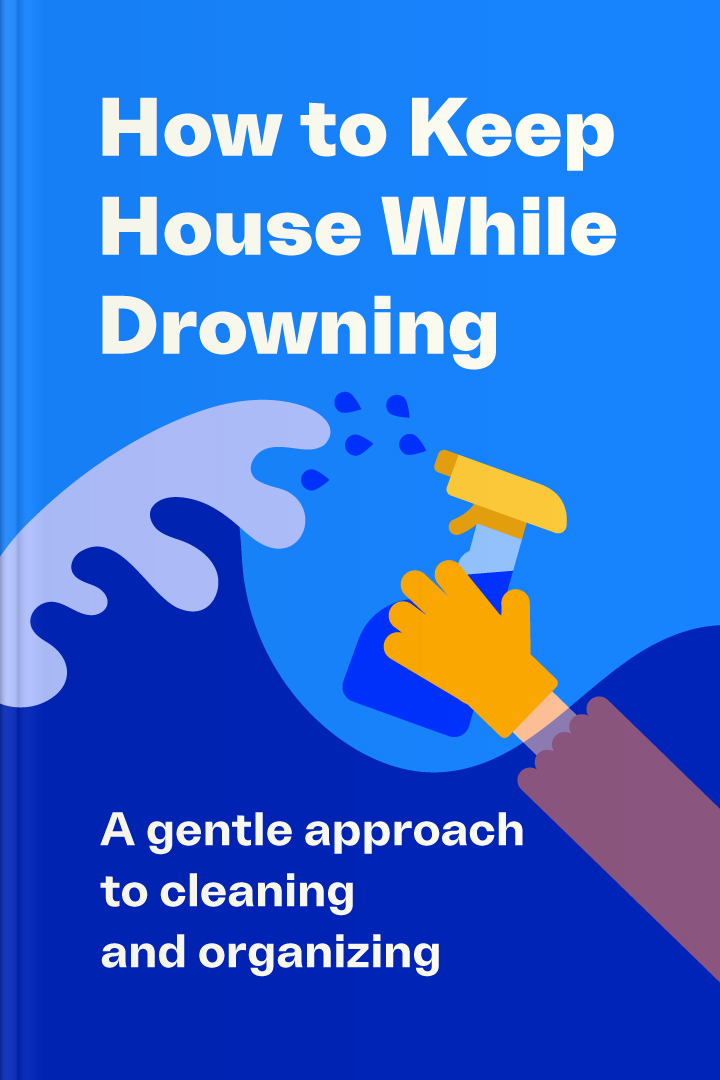
How to Keep House While Drowning
Start ListeningDownload Try free on iPhoneScan to start in 5 seconds
Categories:
If You're Curious About These Questions...
You should listen to this audiobook
- What's the secret to making daily care tasks feel less overwhelming and more manageable, even when you're struggling with anxiety or depression?
- Are you curious about why shame might be holding you back from tackling household chores, and how to overcome it?
- What if you could transform your self-care routine into a source of comfort and dignity, rather than a source of stress and guilt?
Listen to How to Keep House While Drowning — Free Audiobook
Loading player...
Key Takeaways from How to Keep House While Drowning
- Understand why care tasks like doing the dishes or folding laundry are morally neutral, and how separating your self-worth from a messy room breaks the paralyzing cycle of shame.
- Discover how to embrace rest without guilt or the need to 'earn' it, recognizing that stepping back is a vital necessity for your nervous system rather than a sign of laziness.
- Learn to recognize the hidden sensory and mental complexities of household chores so you can stop judging yourself when facing real barriers like burnout, trauma, or ADHD.
- Adopt a liberating new perspective on home maintenance by embracing the core philosophy that you do not exist to serve your space, but rather your space exists to serve you.
- Master the gentle art of starting difficult tasks by reframing your internal dialogue, transforming harsh obligations into small, manageable acts of kindness for your future self.
Learning Tools
Reinforce what you learned from How to Keep House While Drowning
Mind Map
How To Keep House While Drowning
Permission to Be Human+
Wellness Over Worthiness+
The Gentle Art of Getting Started+
Letting Function Be Enough+
Five Simple Piles & a Calmer Mind+
Tiny Hygiene, Real Dignity+
Worthy, Even Now+
How to Keep House While Drowning — Full Chapter Overview
- 1Recommendation
- 2Permission to Be Human
- 3Choosing Wellness Over Worthiness
- 4The Gentle Art of Getting Started
- 5Letting Function Be Enough
- 6Five Simple Piles and a Calmer Mind
- 7Tiny Hygiene, Real Dignity
- 8Worthy, Even Now
How to Keep House While Drowning Summary & Overview
This summary offers a warm, supportive approach to care tasks—cleaning, dishes, laundry, hygiene—especially for anyone living through overwhelm, depression, anxiety, ADHD, burnout, or major life transitions. Instead of pushing perfection, it focuses on dignity, safety, and a kinder inner voice.
Across seven chapters, you’ll explore why care tasks can feel so heavy, how shame blocks action, and how small, practical strategies can create real relief. The message is simple and steady: a person’s value is never measured by the state of a home or the ease of brushing teeth.
Who Should Listen to How to Keep House While Drowning?
- Anyone who feels ashamed or stuck around cleaning, laundry, dishes, or hygiene, especially during depression, anxiety, ADHD, burnout, grief, or chronic stress
- Parents and caregivers who want a calmer, more realistic approach to home care—one that protects well-being and reduces guilt
- People healing from trauma or harsh upbringing messages about cleanliness, who want to replace perfectionism with compassion and function
Books Similar to How to Keep House While Drowning
Readers who enjoyed this also liked these titles.