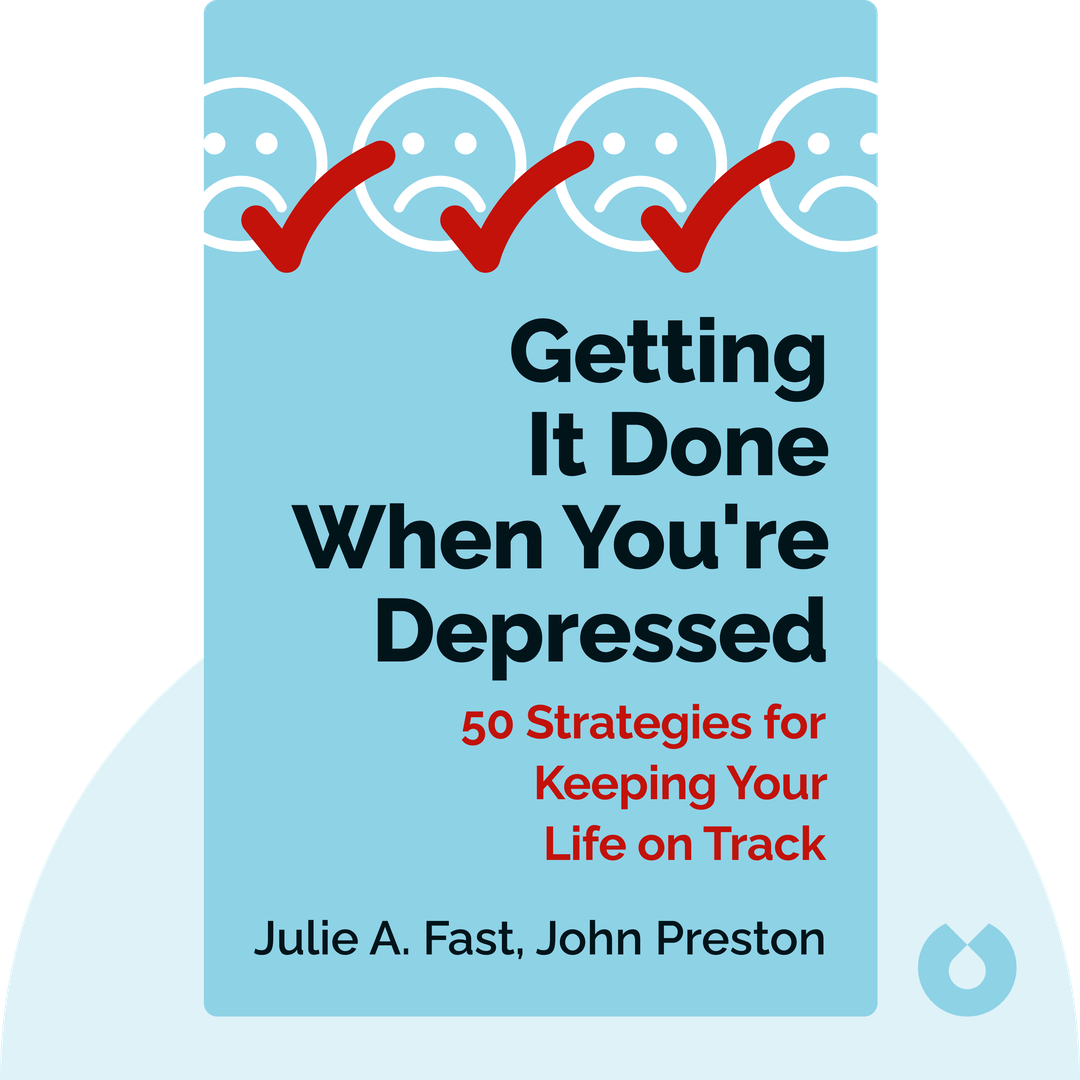
Getting It Done When You're Depressed
Start ListeningDownload Try free on iPhoneScan to start in 5 seconds
Categories:
If You're Curious About These Questions...
You should listen to this audiobook
- What if you could reclaim your productivity and regain control of your life without waiting for your depression to lift first?
- Have you ever wondered why traditional productivity advice often fails during a mental health struggle, and what specific strategies actually work?
- Are you curious about how a simple shift in your daily structure can help you bypass the paralyzing feeling of being overwhelmed?
Listen to Getting It Done When You're Depressed — Free Audiobook
Loading player...
Key Takeaways from Getting It Done When You're Depressed
- Discover why action creates motivation, and learn how starting tasks—even when you feel completely uninspired—can help you regain control and make surprising progress.
- Understand how to defeat paralyzing self-criticism by suspending judgment on your work until it is finished, proving that depression is an unfair judge.
- Learn how to break through immobilizing inertia by adopting a commanding inner voice and applying predictable, structured routines to your day.
- Master the practice of separating your identity from your illness by reminding yourself, 'This is depression, not me,' to drastically reduce self-blame and foster self-compassion.
- Find out how working alongside a disciplined friend can act as a powerful anchor, allowing you to mirror their focus and complete tasks when you feel overwhelmed.
Learning Tools
Reinforce what you learned from Getting It Done When You're Depressed
Mind Map
Getting It Done When You're Depressed
The Power of Action+
Structured Strategies+
Fostering Connection+
Environment and Body+
Managing Thoughts and Words+
Quiz — Test Your Understanding
Question 1 of 7
What is a key insight the book offers regarding motivation and depression?
Question 2 of 7
How does the book suggest dealing with the inward focus typically caused by depression?
Question 3 of 7
What unconventional strategy do Alex and Rani use to break through depressive inertia in the morning?
Question 4 of 7
Why is it helpful to remind yourself, 'This is depression, not me'?
Question 5 of 7
How can friends and family most effectively support someone with depression, according to the text?
Question 6 of 7
What impact do habits involving sugar and caffeine typically have on a depressive state?
Question 7 of 7
How does the book recommend viewing the timeline for making lasting progress against depression?
Getting It Done When You're Depressed — Full Chapter Overview
- 1Recommendation
- 2Find a path forward when depression holds you back
- 3Overcome depression with structured strategies
- 4How connection helps you overcome depression
- 5Move, create, and reshape your environment to ease depression
- 6Reclaim truth, balance, and connection from depression’s grip
- 7Keep momentum when progress feels slow
- 8Final summary
Getting It Done When You're Depressed Summary & Overview
Getting It Done When You’re Depressed (2021) offers 50 practical strategies to break the cycle of unproductivity and regain control of your life while managing depression. It provides step-by-step guidance on shifting your mindset and creating a daily structure tailored to your needs. With its actionable advice, it will empower you to overcome mental health challenges and live a more fulfilling life.
Who Should Listen to Getting It Done When You're Depressed?
- Individuals struggling with depression
- People seeking actionable mental health improvement strategies
- Friends and family supporting someone with depression
Books Similar to Getting It Done When You're Depressed
Readers who enjoyed this also liked these titles.