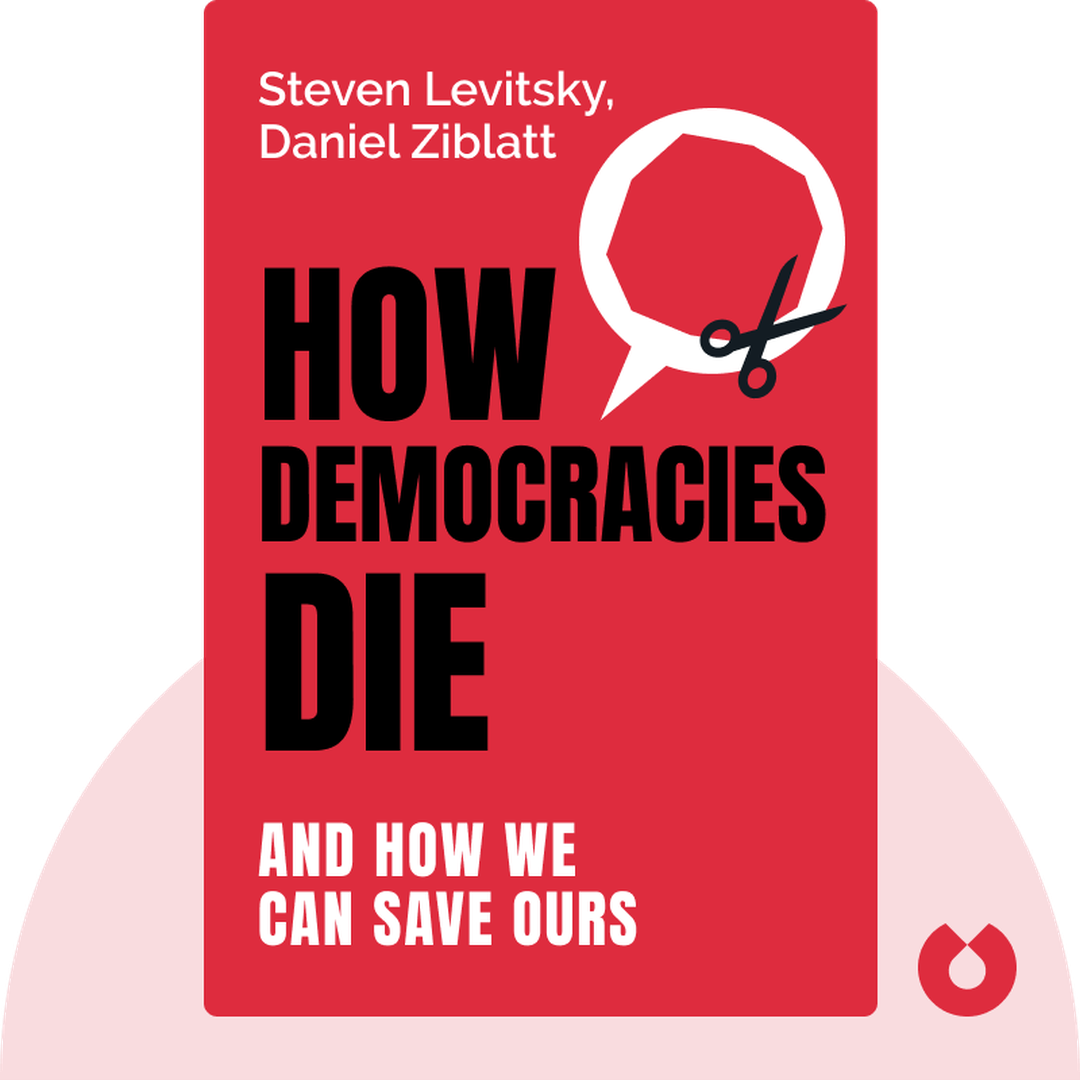
If You're Curious About These Questions...
You should listen to this audiobook
- Did you know that modern democracies are no longer usually overthrown by military coups, but are instead dismantled from within by the very leaders we elect?
- Have you ever wondered why the survival of a nation depends less on its written constitution and more on two specific unwritten rules of political conduct?
- Are you curious about the four-point 'litmus test' that can help you identify a potential autocrat long before they take full control of a government?
Listen to How Democracies Die — Cinematic Audio Edition
Loading player...
Key Takeaways from How Democracies Die
- Understand how modern demagogues rise to power not through violent coups, but by aligning with established politicians who mistakenly believe they can control them.
- Discover the four critical warning signs of an autocrat, which include rejecting democratic rules, discrediting opponents, encouraging violence, and threatening civil liberties.
- Learn why political parties must serve as strict gatekeepers of democracy by actively expelling extremists before they can enter mainstream politics.
- Realize the danger of normalizing extremist behavior and why establishment leaders must avoid any public alliances that validate anti-democratic actions.
- Find out how the traditional backroom nomination process historically protected the US from populist threats like Henry Ford, and why that gatekeeping system ultimately broke down.
Learning Tools
Reinforce what you learned from How Democracies Die
Mind Map
How Democracies Die
Rise of Autocrats+
Role of Gatekeepers+
Gradual Dismantling Playbook+
Unwritten Rules of Democracy+
US Political Divide+
The Trump Presidency+
Resisting Authoritarianism+
Quiz — Test Your Understanding
Question 1 of 8
According to the authors, how do dangerous demagogues typically rise to power in modern times?
Question 2 of 8
Which of the following is NOT one of the four warning signs used to spot a potential demagogue?
Question 3 of 8
What crucial role do established political parties play as 'gatekeepers' of democracy?
Question 4 of 8
What event in US history significantly weakened the gatekeeping power of party leaders, leading to the rise of binding primaries?
Question 5 of 8
What are the three stages of dismantling a democracy, as demonstrated by figures like Alberto Fujimori?
Question 6 of 8
Which two unwritten rules are essential for keeping a democracy functioning effectively?
Question 7 of 8
According to the text, what historical event marked a major turning point that realigned modern US political parties along lines of race and religion?
Question 8 of 8
How do the authors suggest citizens and politicians should effectively resist authoritarianism?
How Democracies Die — Full Chapter Overview
- 1Recommendation
- 2Potentially dangerous autocrats can be difficult to spot in advance.
- 3Democracy needs strong gatekeepers.
- 4For many years, gatekeepers in the US did their jobs well.
- 5Donald Trump bypassed the gatekeepers, raising many red flags along the way.
- 6Democracy can be dismantled gradually.
- 7Alongside laws, unwritten democratic rules help prevent autocracy.
- 8While trying to restore democracy after the Civil War, the US began a history of voter discrimination.
- 9Race, religion, and heated rhetoric shaped modern political divides in the US.
- 10In the Trump era, democracy’s future depends on the public and political leadership.
- 11Resisting authoritarianism means upholding democratic norms.
- 12Final summary
How Democracies Die Summary & Overview
How Democracies Die (2018) examines the fundamental principles of democracy, with a look at historical cases – particularly in Latin America – where democracies have turned into dictatorships or autocracies. The authors examine how these democratic downfalls have happened, whether it could happen again in the future, and what could be done to prevent this dangerous and often lethal outcome. Attention is also given to the presidency of Donald Trump, to question his motives and determine whether he qualifies as an American autocrat.
Who Should Listen to How Democracies Die?
- Anyone interested in current affairs
- Students of political science or government
- Readers interested in the historical relevance of the Trump presidency
Books Similar to How Democracies Die
Readers who enjoyed this also liked these titles.