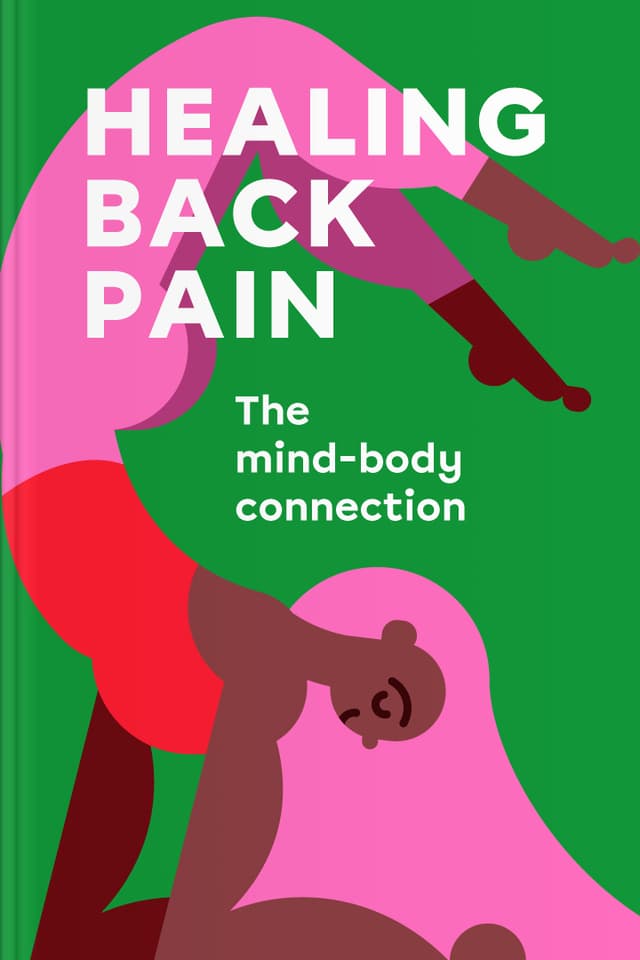
If You're Curious About These Questions...
You should listen to this audiobook
- Have you ever wondered why persistent back or neck pain often flares up during times of high stress, even when there is no clear physical injury?
- Did you know that your nervous system can create very real physical symptoms as a way to process hidden emotional tension and learned fear patterns?
- What if the secret to breaking the cycle of chronic muscle pain isn't found in conventional physical treatments, but in changing how your mind perceives danger?
Listen to Tension Myoneural Syndrome (TMS) and the Mind–Body Pattern of Pain (Summary Narration)
What You'll Learn from Tension Myoneural Syndrome (TMS) and the Mind–Body Pattern of Pain (Summary Narration)
- — When Pain Isn’t Proof of Damage
- — The Hidden Engine: Stress, Tension, and the Unconscious
- — Why It’s So Hard to Recognize the Pattern
- — Unwinding Fear: What Helps, What Often Doesn’t
- — Let Feelings Be Felt: The Role of Psychotherapy
Tension Myoneural Syndrome (TMS) and the Mind–Body Pattern of Pain (Summary Narration) Chapter Overview
Chapter 1: AudiobookHub Recommendation
Chapter 2: — When Pain Isn’t Proof of Damage
Chapter 3: — The Hidden Engine: Stress, Tension, and the Unconscious
Chapter 4: — Why It’s So Hard to Recognize the Pattern
Chapter 5: — Unwinding Fear: What Helps, What Often Doesn’t
Chapter 6: — Let Feelings Be Felt: The Role of Psychotherapy
Chapter 7: — The Bigger Picture: How Mind and Body Speak
Chapter 8: — A Gentle Closing: Belief, Safety, and the Path Forward
About Tension Myoneural Syndrome (TMS) and the Mind–Body Pattern of Pain (Summary Narration)
This warm, supportive narration explores a mind–body perspective on persistent back and body pain commonly described as Tension Myoneural Syndrome, or TMS. The central idea is not that pain is “imagined,” but that the nervous system can produce very real symptoms when emotional tension, stress, and learned fear patterns become overwhelming.
Across these chapters, you’ll be guided through how TMS may develop, why it can be hard to detect, why conventional treatments sometimes fall short, and how recovery may begin through understanding, reduced fear, gradual return to activity, and—when needed—psychotherapy. The tone here is invitational: to widen the lens, keep appropriate medical care in mind, and gently explore what might change when fear softens and emotional awareness grows.
Who Should Listen to Tension Myoneural Syndrome (TMS) and the Mind–Body Pattern of Pain (Summary Narration)
- People living with persistent back, neck, or muscle pain—especially when imaging or standard treatments haven’t fully explained the symptoms.
- Listeners who notice their pain flares with stress, pressure, conflict, or life transitions and want a compassionate mind–body framework.
- Anyone curious about how conditioning, fear, and the autonomic nervous system can shape real physical sensations—and how understanding may support healing.
More Books Like Tension Myoneural Syndrome (TMS) and the Mind–Body Pattern of Pain (Summary Narration)
Readers who enjoyed this also liked these titles.

A timeless tale of friendship, mortality, and the search for meaning

Everything You Need to Start Making Money Today

Why Artificial Intelligence Keeps Making Epic Mistakes (and why the AI Bubble Will Burst)

Building a Better World for All