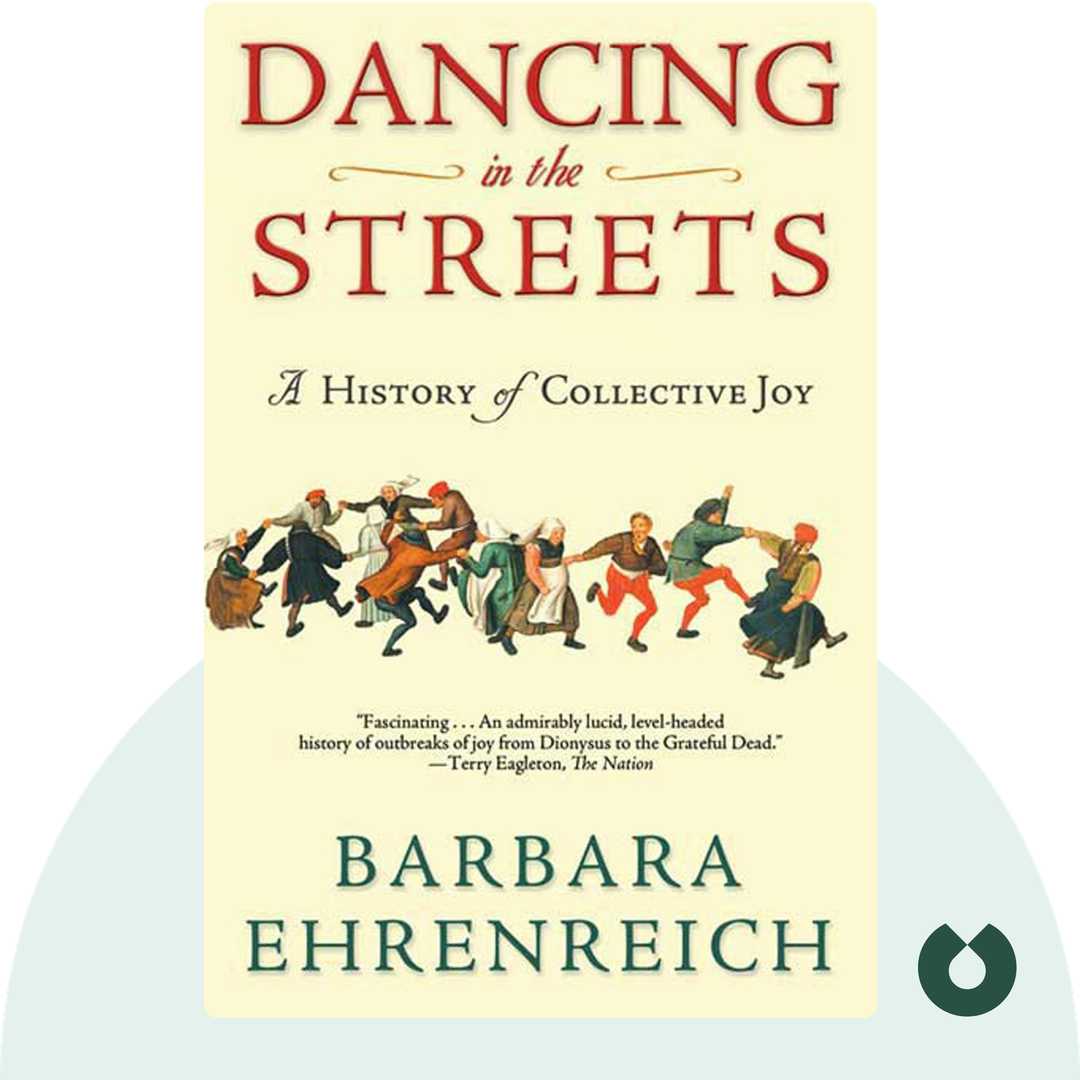
Dancing in the Streets
Start ListeningDownload Try free on iPhoneScan to start in 5 seconds
Categories:
If You're Curious About These Questions...
You should listen to this audiobook
- Did you know that the human urge to dance and celebrate in large groups is actually a biological necessity hardwired into our evolution?
- Have you ever wondered why early Christianity was once considered a "danced religion" and what caused those joyful traditions to disappear?
- What if the secret to reclaiming our sense of community lies in the ancient, often suppressed history of the carnival and collective joy?
Listen to Dancing in the Streets — Free Audiobook
Loading player...
Key Takeaways from Dancing in the Streets
- Discover why collective dance was a crucial survival tool for prehistoric humans. Moving to a rhythm produced biological pleasure that promoted essential community bonding and allowed early societies to thrive.
- Understand the concept of 'collective effervescence' and why communal joy remains vastly understudied compared to psychological depression. You will learn why shared rituals of transcendence deserve far more of our attention.
- Learn how the Christian church transitioned from hosting ecstatic, noisy rituals to strictly suppressing public dance. Church leaders restricted collective movement to maintain absolute authority over how individuals connected with the divine.
- Find out how the religious prohibition of movement sparked uncontrollable 'dance manias' across Europe. This dramatic communal backlash eventually forced the church to establish Carnival as a regulated compromise for public revelry.
- Explore how the ruling classes' withdrawal from public festivals into exclusive leisure activities coincided with a historic epidemic of melancholy. You will discover the powerful link between the loss of collective ecstatic experiences and societal depression.
Learning Tools
Reinforce what you learned from Dancing in the Streets
Mind Map
Dancing in the Streets
Core Concept+
Evolutionary & Ancient Roots+
Christian Suppression+
Carnival & Dance Manias+
The Rise of Melancholy+
Fascist Spectacles+
Rock and Roll Rebellion+
Conclusion+
Quiz — Test Your Understanding
Question 1 of 7
What term did French sociologist Émile Durkheim coin to describe the powerful, communal energy that arises during shared rituals like dance?
Question 2 of 7
According to the text, what evolutionary advantage did early human societies gain from participating in communal dance?
Question 3 of 7
How did the official Christian church eventually attempt to manage the uncontrollable 'dance manias' that swept across Europe?
Question 4 of 7
Scholar Lionel Trilling links the rise of the 'English Malady' (melancholy) in the seventeenth century to which major societal shift?
Question 5 of 7
Why does the author argue that fascist rallies in Nazi Germany and Mussolini's Italy were NOT genuine examples of collective ecstasy?
Question 6 of 7
According to the text, what was a primary reason why adolescent females were particularly drawn to the frenzied crowds at early rock and roll concerts?
Question 7 of 7
What is the overarching irony regarding the forces of Protestantism and capitalism mentioned in the text?
Dancing in the Streets — Full Chapter Overview
- 1Recommendation
- 2Dancing was once vital to human survival
- 3Christianity shaped Western views of dance
- 4Carnival both celebrated and controlled collective dance
- 5Dancing declined in the age of melancholy
- 6Fascist regimes co-opted the aesthetics of collective ecstasy
- 7Rock and roll rebellion revived ecstatic dance rituals
- 8Final summary
Dancing in the Streets Summary & Overview
Dancing in the Streets (2008) explores the deep-rooted origins of communal celebration in human biology and culture, highlighting universal elements like carnival, music-making, and dance. It reveals how such practices were integral to Western traditions – from the ancient Greek worship of Dionysus to medieval Christianity as a “danced religion”.
Who Should Listen to Dancing in the Streets?
- Cultural historians interested in the social and cultural evolution of civilizations
- Social activists keen to reclaim our legacy of community and collective joy
- Artists and performers delving into the cultural contexts of their creative practice
Books Similar to Dancing in the Streets
Readers who enjoyed this also liked these titles.