If You're Curious About These Questions...
You should listen to this audiobook
- Did you know that for most of human history, happiness was considered a rare stroke of luck from the gods rather than something you could actually pursue?
- Have you ever wondered how the Enlightenment transformed happiness from a distant reward in the afterlife into an earthly right we now feel pressured to achieve?
- Are you curious about how our modern obsession with 'feeling good' is actually a radical departure from how humans defined a successful life for thousands of years?
Listen to Happiness — Free Audiobook
Loading player...
Key Takeaways from Happiness
- Discover how ancient Athenian democracy and early philosophers shifted the concept of happiness from a matter of divine fate into a goal controlled by human reason.
- Understand how the widespread despair of the Dark Ages transitioned into the Renaissance belief that individuals can actively shape their own greatness and natural joy.
- Learn how Enlightenment thinkers transformed happiness from a religious quest for Eden into a fundamental, natural human right meant to be experienced right here on Earth.
- Explore the surprisingly positive role of melancholy and 'world suffering' in the nineteenth century, revealing that sadness can serve as an essential stepping stone to joy.
- Grasp that the modern expectation of happiness is a relatively recent historical development, empowering you to fully appreciate and exercise your personal agency in pursuing it.
Learning Tools
Reinforce what you learned from Happiness
Mind Map
Happiness
Ancient Greece+
Middle Ages & Renaissance+
The Enlightenment+
Role of Sadness+
American Individualism+
Communist Perspective+
Quiz — Test Your Understanding
Question 1 of 7
How did the democratization of Athens in the fifth century BCE change the public's perception of happiness?
Question 2 of 7
How did Aristotle's view of happiness differ from that of his predecessors, Socrates and Plato?
Question 3 of 7
According to Renaissance philosopher Giovanni Pico della Mirandola, how could humans attain happiness?
Question 4 of 7
During the Enlightenment, how did the conception of happiness shift?
Question 5 of 7
By the latter half of the nineteenth century, how were sadness and suffering viewed in relation to happiness?
Question 6 of 7
What was an unexpected consequence of the American Declaration of Independence including the right to the "pursuit of happiness"?
Question 7 of 7
According to communist thinkers like Friedrich Engels, what was the primary obstacle to true human happiness?
Happiness — Full Chapter Overview
- 1Recommendation
- 2Socrates, Plato and Aristotle had different ideas about happiness.
- 3During the Renaissance, happiness became something individuals could attain.
- 4By the late eighteenth century, happiness was widely seen as a human right.
- 5Sadness is acceptable – it can also lead to happiness.
- 6In the early United States, people were expected to create their own happiness.
- 7Communists believed happiness would come from restoring a sense of community.
- 8Final summary
Happiness Summary & Overview
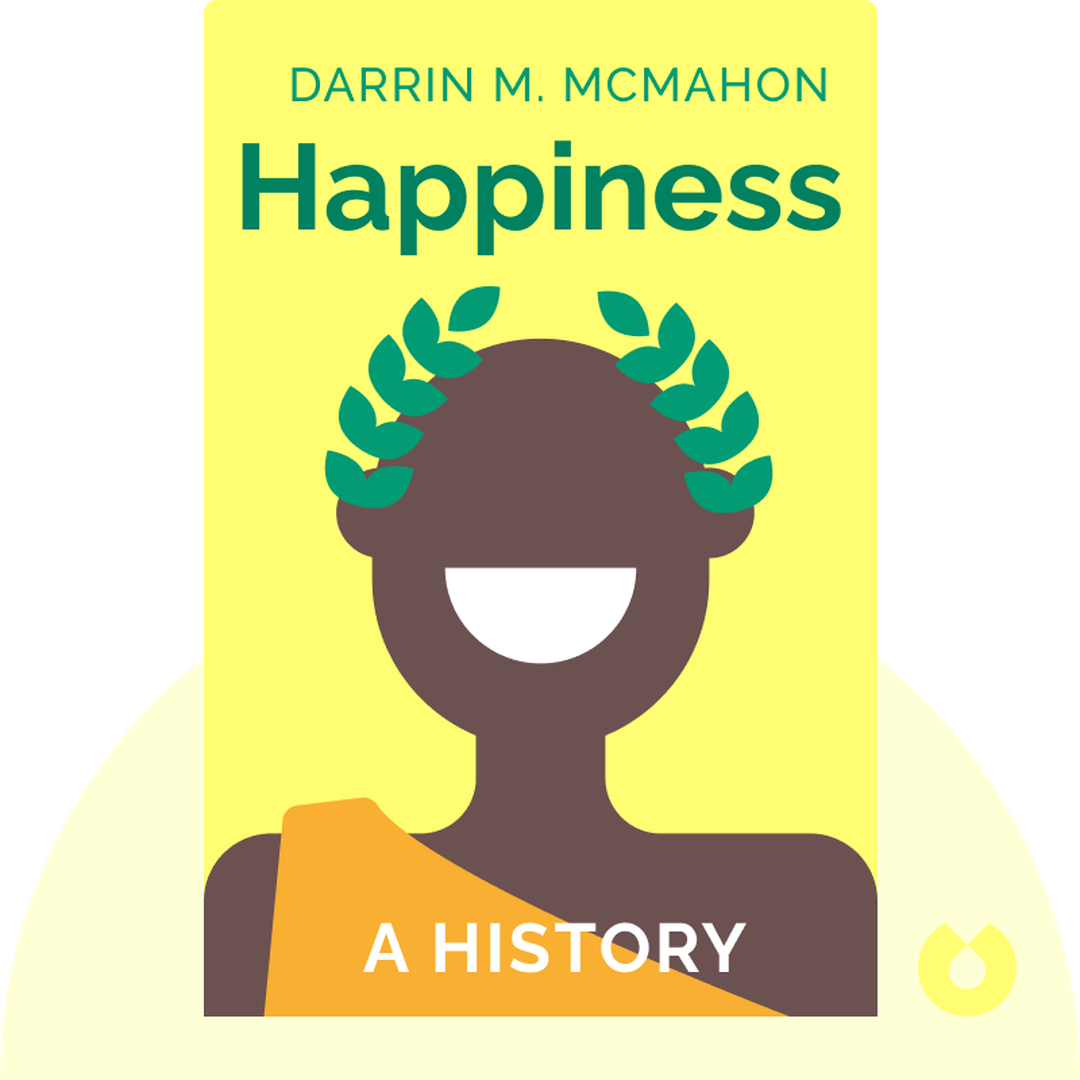
In Happiness: A History (2006), we’re taken on a journey through history. From Ancient Greece, through the Dark Ages and up into the modern era, this journey uncovers how our conception of happiness has changed and evolved over time.
Who Should Listen to Happiness?
- History students
- Philosophy students
- Anyone interested in the cultural history of happiness
Books Similar to Happiness
Readers who enjoyed this also liked these titles.