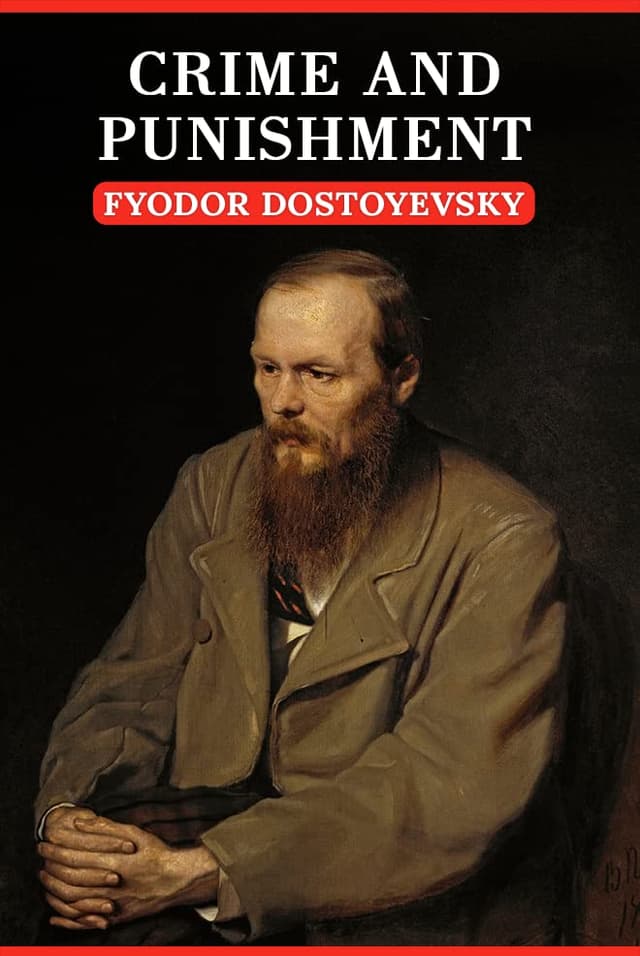
Written between 1865 and 1866, primarily in Saint Petersburg, Russia, Fyodor Dostoevsky penned his masterpiece during a period of immense personal and national turmoil. Mid-nineteenth-century Russia was undergoing seismic societal shifts following Tsar Alexander II’s emancipation of the serfs in 1861. Saint Petersburg had become a crucible of rapid urbanization, rampant poverty, and intellectual upheaval. Among the educated youth, radical Western philosophies such as utilitarianism, rational egoism, and nihilism were gaining fervent traction. Dostoevsky, having recently returned from a decade of exile and hard labor in Siberia for his own earlier radical associations, viewed these emerging, atheistic ideologies with deep suspicion and alarm.
When the novel was serialized in *The Russian Messenger* in 1866, it immediately ignited fierce debate. Its significance lay in its direct, unflinching critique of the era's radical intelligentsia. By embodying these dangerous ideas in the protagonist, Raskolnikov—a destitute former student who rationalizes murder for a "higher good"—Dostoevsky illustrated the devastating moral and psychological consequences of unchecked intellectual arrogance. Consequently, the novel was highly controversial; progressive critics accused Dostoevsky of viciously caricaturing the youth movement, while conservative and moderate readers lauded its profound moral vision and terrifyingly accurate depiction of a fractured society.
Beyond its immediate political context, the novel's lasting impact on literature and society is immeasurable. Dostoevsky revolutionized the literary landscape by pioneering the psychological novel, utilizing internal monologues and feverish dream sequences to map the chaotic landscape of the human mind. His exploration of alienation, guilt, and the search for redemption laid the foundational groundwork for twentieth-century existentialism and psychoanalysis. Thinkers from Friedrich Nietzsche to Sigmund Freud cited Dostoevsky as a primary influence, ensuring that his work remains a timeless exploration of morality, justice, and the darkest corners of the human condition.