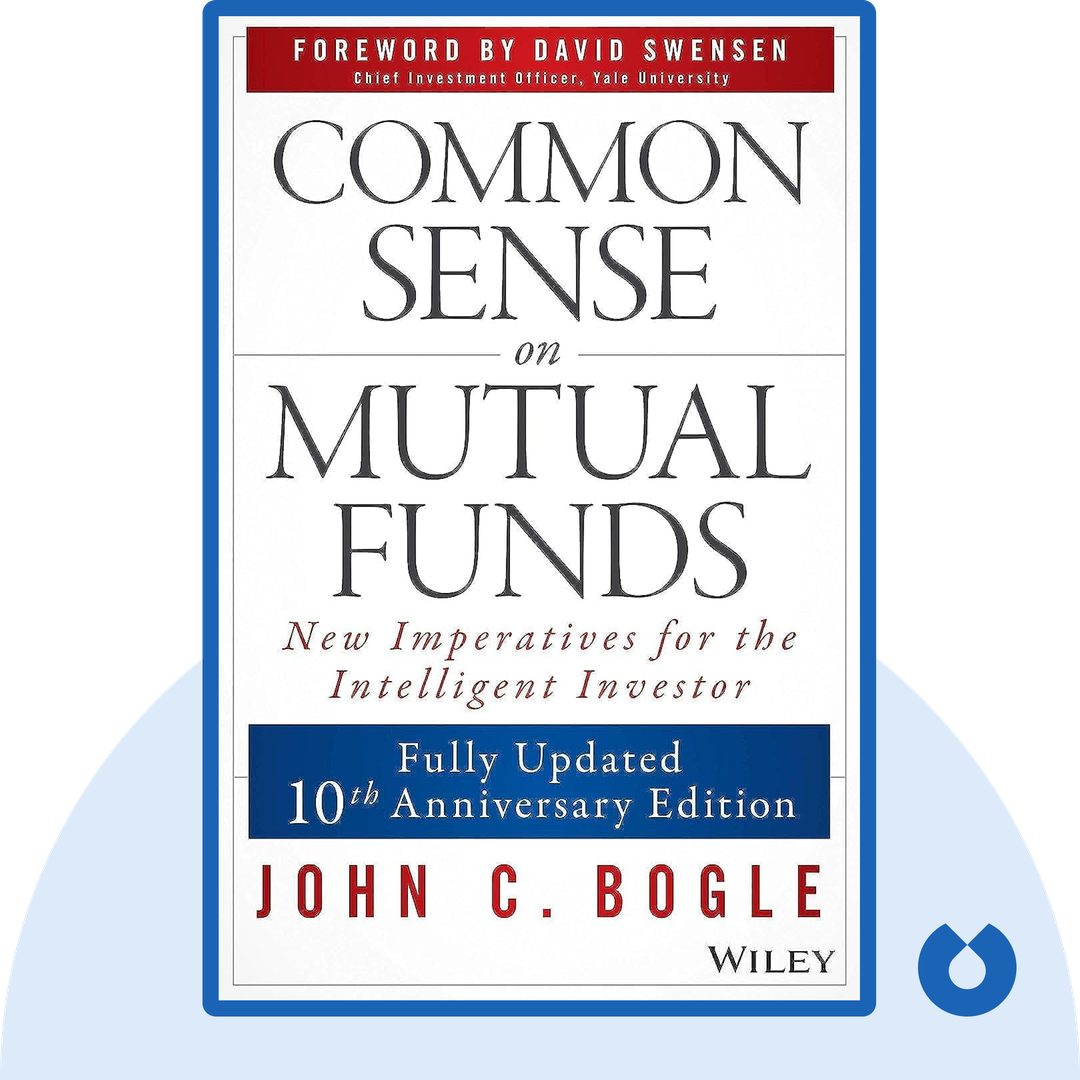
Common Sense on Mutual Funds
Start ListeningDownload Try free on iPhoneScan to start in 5 seconds
Categories:
If You're Curious About These Questions...
You should listen to this audiobook
- Did you know that the hidden costs of your investments might be quietly draining a massive portion of your future wealth without you even noticing?
- Have you ever wondered why most professional money managers fail to beat the market, and how you can actually outperform them with a much simpler strategy?
- What's the secret to building a robust, diversified portfolio that thrives over decades while requiring almost no daily maintenance?
Listen to Common Sense on Mutual Funds — Free Audiobook
Loading player...
Key Takeaways from Common Sense on Mutual Funds
- Discover why low-cost index funds consistently outperform actively managed funds and how keeping your strategy simple builds lasting wealth.
- Learn how to properly balance your portfolio using a simple rule of thumb, such as keeping your bond allocation percentage roughly equal to your age.
- Understand why attempting to time the market is a losing game, and how staying patiently invested through fluctuations yields far better long-term results.
- Find out how hidden fees from excessive trading and high turnover rates silently eat away at your returns, proving that most active management is a waste of money.
- Recognize why today's top-performing mutual funds rarely stay on top, as massive fund sizes destroy agility and returns inevitably revert to the mean.
Learning Tools
Reinforce what you learned from Common Sense on Mutual Funds
Mind Map
Common Sense on Mutual Funds
Core Philosophy+
The Flawed Mutual Fund Industry+
The Pitfalls of Active Management+
Investment Traps to Avoid+
The Winning Strategy+
Quiz — Test Your Understanding
Question 1 of 7
What does the text suggest is the most effective and reliable strategy for long-term wealth building?
Question 2 of 7
According to the text, what is a simple rule of thumb for determining the balance between stocks and bonds in your portfolio?
Question 3 of 7
Why does the text advise investors to be cautious about international mutual funds?
Question 4 of 7
What structural challenge do highly successful mutual funds often face as their assets grow massively in size, as illustrated by the Fidelity Magellan Fund?
Question 5 of 7
How does high portfolio turnover (frequent buying and selling of stocks) negatively impact mutual fund investors?
Question 6 of 7
What is identified as the primary structural flaw in the mutual fund industry that leads to excessive fees and conflicts of interest?
Question 7 of 7
What radical, entrepreneurial decision did Vanguard make in 1977 that benefited its investors?
Common Sense on Mutual Funds — Full Chapter Overview
- 1Recommendation
- 2Long-term investing is like tending a garden: patience brings the best results
- 3Most investment options waste your money
- 4Long-term investment performance can be predictable with the right strategy
- 5Hidden mutual fund costs are eating into your returns
- 6Strong businesses and smart investing are grounded in principles, not profits
- 7Final summary
Common Sense on Mutual Funds Summary & Overview
Common Sense on Mutual Funds (1999) explores the principles of sound investing, emphasizing the benefits of low-cost, long-term strategies over speculative approaches. It advocates for index funds as the most efficient way to achieve market returns while minimizing fees and risks. With a focus on simplicity and discipline, it provides insights into building a diversified portfolio that stands the test of time.
Who Should Listen to Common Sense on Mutual Funds?
- Cost-conscious investors seeking lower fees and higher returns
- Long-term planners aiming for steady wealth accumulation
- Those interested in a simple, proven approach to investing
Books Similar to Common Sense on Mutual Funds
Readers who enjoyed this also liked these titles.