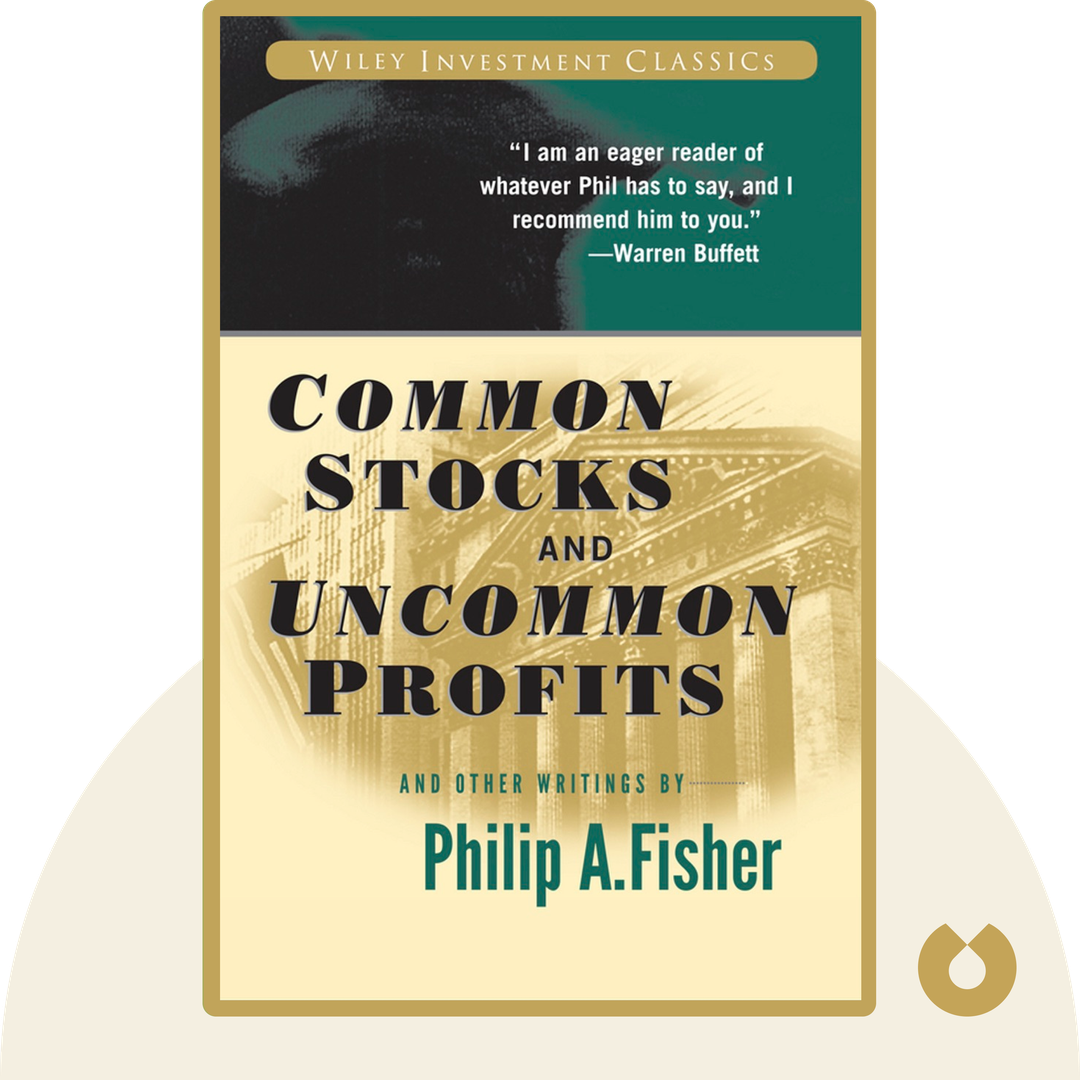
Common Stocks and Uncommon Profits and Other Writings
Start ListeningDownload Try free on iPhoneScan to start in 5 seconds
Categories:
If You're Curious About These Questions...
You should listen to this audiobook
- Have you ever wondered why the most successful investors look beyond the balance sheet to find companies destined for explosive growth?
- What if you could master the 'scuttlebutt' technique to gain an unfair advantage by uncovering information that isn't available in any public report?
- Are you curious about the specific 15-point checklist that separates mediocre companies from the 'uncommon' stocks that build generational wealth?
Listen to Common Stocks and Uncommon Profits and Other Writings — Cinematic Audio Edition
Loading player...
Key Takeaways from Common Stocks and Uncommon Profits and Other Writings
- Discover why smart investors ignore quick profits and instead focus on undervalued companies with long-term growth potential, continuous research and development, and strong employee relations.
- Learn how to employ the 'scuttlebutt method' to uncover a company's true value by interviewing its vendors, customers, competitors, and former employees rather than relying on biased traders.
- Understand how to capitalize on the stock market's irrationality by purchasing shares during temporary price dips caused by easily solvable problems or unexpected research expenses.
- Find out how to identify resilient companies that can sustain high sales volumes and adapt their technical skills to entirely new markets when their current product lines flatline.
- Master your investor mindset by rejecting the herd mentality, conquering your doubts, and having the confidence to buy promising stocks even when the rest of the financial community is selling.
Learning Tools
Reinforce what you learned from Common Stocks and Uncommon Profits and Other Writings
Mind Map
Common Stocks and Uncommon Profits and Other Writings
Core Philosophy+
The Scuttlebutt Method+
Buying & Selling Rules+
Conservative Strategy+
People & Management+
Valuation Metrics+
Quiz — Test Your Understanding
Question 1 of 10
What is the primary focus of a smart investment strategy according to the text?
Question 2 of 10
What does the 'scuttlebutt method' of researching a potential investment entail?
Question 3 of 10
How should an investor view a temporary drop in a promising company's stock price caused by an unexpected, but beneficial, research expense?
Question 4 of 10
According to the author, which of the following is considered one of the few valid reasons to sell a stock?
Question 5 of 10
What type of company should a conservative investor look for, according to the text?
Question 6 of 10
Why is a company's policy of rarely promoting from within considered a 'red flag' for investors?
Question 7 of 10
How can a business best ensure long-term profits and protect its market position against competitors?
Question 8 of 10
How is a company's price-earnings ratio calculated?
Question 9 of 10
What lesson is illustrated by the anecdote of the acquaintance who offered $35 per share for a stock listed at 35 1/2?
Question 10 of 10
What unconventional source does the author suggest using to gather information about a company?
Common Stocks and Uncommon Profits and Other Writings — Full Chapter Overview
- 1Recommendation
- 2Smart investing focuses on companies with long-term growth potential.
- 3Do your homework: research a potential company from every angle before investing.
- 4Look for dips in a stock’s price so you can buy cheaply and benefit as the company grows.
- 5Trust your choices, resist doubt, and don’t follow the investor herd.
- 6Conservative investors should look for solid, well-organized companies with growth potential.
- 7Valued employees are central to stable, growth-oriented companies and strong investments.
- 8Conservative investors seek companies that can stay profitable over the long term.
- 9Calculate a company’s price-earnings ratio to see whether you’re paying the “real price.”
- 10Final summary
Common Stocks and Uncommon Profits and Other Writings Summary & Overview
Common Stocks and Uncommon Profits gives you all the information you need to make smart investments, regardless of your investment style. Whether you’re looking for huge profits or simply to maintain existing funds, this book shows you the path to success.
Who Should Listen to Common Stocks and Uncommon Profits and Other Writings?
- Investment advisors and financial consultants
- Students of finance or economics
- Stock market investors who want to improve their investment strategy
Books Similar to Common Stocks and Uncommon Profits and Other Writings
Readers who enjoyed this also liked these titles.