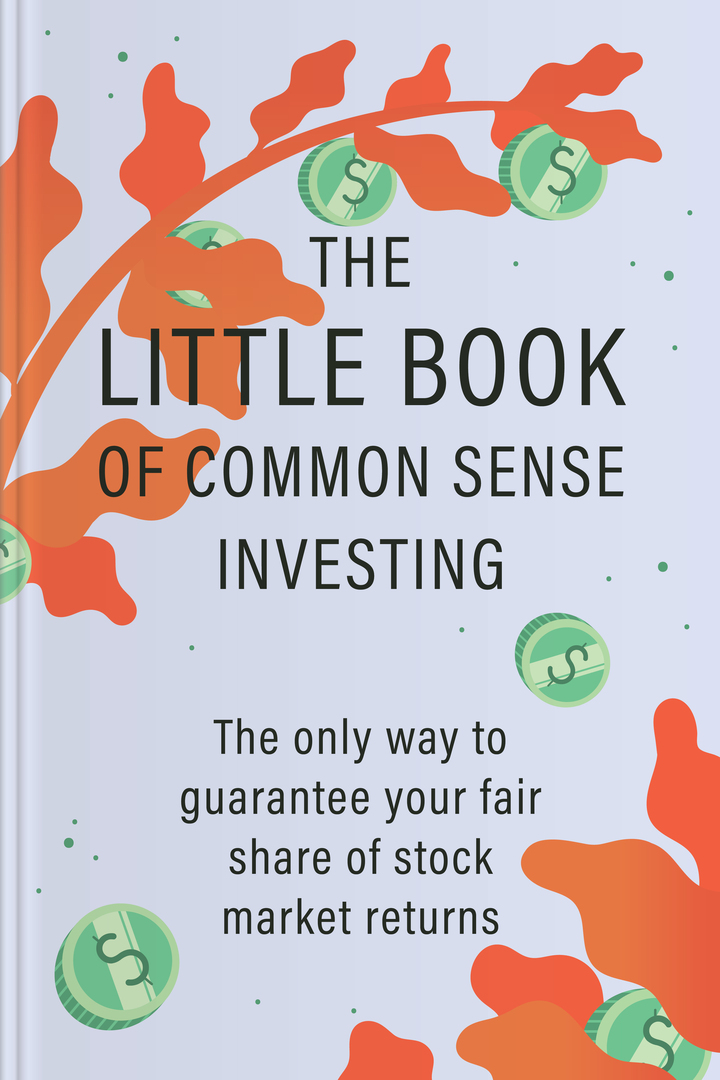
The Little Book of Common Sense Investing
If You're Curious About These Questions...
You should listen to this audiobook
- Did you know that the very fees and taxes you pay for 'expert' advice could be quietly stripping away more than half of your potential investment returns?
- Have you ever wondered why trying to beat the market is often a losing game, and what the simple alternative is that the pros don't want you to focus on?
- What if the secret to building lasting wealth isn't about finding the next 'hot' stock, but about doing almost nothing at all?
Listen to The Little Book of Common Sense Investing — Free Audiobook
Key Takeaways from The Little Book of Common Sense Investing
- Learn how to capture reliable growth by owning the entire stock market through a broad, low-cost index fund rather than trying to pick individual winning stocks.
- Discover why hidden 'leaks' like frequent trading costs, management fees, and taxes drastically reduce your wealth, and how passive investing helps you keep more of your returns.
- Understand the difference between unpredictable short-term speculation and the reliable, long-term reality of underlying business earnings and dividend growth.
- Master the emotional discipline required to ignore market swings driven by crowd panic or optimism, allowing you to stay focused on the true value of the businesses you own.
- Find out how letting time and compounding do their quiet work through a steady, buy-and-hold strategy transforms investing from a stressful guessing game into a predictable path to financial progress.
Learning Tools
Reinforce what you learned from The Little Book of Common Sense Investing
Mind Map
Quiz — Test Your Understanding
The Little Book of Common Sense Investing — Full Chapter Overview
- 1Recommendation
- 2Owning the Haystack, Not Hunting the Needle
- 3Let the Market Work, Stop Leaking Returns
- 4Staying Calm While Markets Swing
- 5The Quiet Drain of Fees and Friction
- 6Taxes, Turnover, and Keeping More of What You Earn
- 7The Mirage of “Past Performance”
- 8Advice, Incentives, and the Price of Help
- 9When “Low-Cost” Really Means Low-Cost
- 10Bonds, ETFs, and the Temptation to Overtrade
- 11A Simple Strategy You Can Live With
The Little Book of Common Sense Investing Summary & Overview
This narration explores a calm, practical approach to investing inspired by John C. Bogle’s index-fund philosophy. Rather than treating the market like a casino where constant action is rewarded, Bogle encourages investors to step back, reduce unnecessary costs, and focus on long-term ownership of businesses through broadly diversified index funds.
Across these chapters, the focus stays on what tends to be within an investor’s control—costs, taxes, turnover, and emotional decision-making. You’ll also hear why many active strategies fall short after fees, why “hot” performance rarely lasts, and how a simple plan can feel almost too easy—yet still be powerful when paired with patience and consistency.
Who Should Listen to The Little Book of Common Sense Investing?
- Anyone who feels overwhelmed by stock picking, market news, or the pressure to time buys and sells—and wants a steadier, simpler long-term plan.
- Investors who suspect fees, taxes, and frequent trading are quietly eroding returns, and want to understand how low-cost index funds may help.
- People looking for a supportive, realistic mindset around investing—one that reduces emotional decisions and emphasizes discipline over excitement.
Books Similar to The Little Book of Common Sense Investing
Readers who enjoyed this also liked these titles.