If You're Curious About These Questions...
You should listen to this audiobook
- Have you ever wondered if your constant digital connection is quietly erasing your individuality and turning us all into one giant hive mind?
- Did you know that our daily internet habits are fundamentally reshaping our intellect and making deep concentration nearly impossible?
- Are you curious about how stepping away from your smartphone could be the secret to reclaiming your own thoughts and emotions?
Listen to Changing the Subject — Free Audiobook
Loading player...
Key Takeaways from Changing the Subject
- Discover why relying on convenient digital tools like GPS and streaming algorithms robs you of the deep gratification that comes from actively earning your own knowledge.
- Understand how constant digital connectivity hinders self-reflection and trains you to use your smartphone as an escape hatch instead of confronting your true emotions.
- Learn how the internet's distraction-heavy environment diminishes your ability to focus, replacing deep, meaningful reading with superficial skimming.
- Find out how digital interruptions physically alter your neuronal functions, and why outsourcing your mental efforts to technology can cause vital parts of your brain to stagnate.
- Recognize why relying on quick searches through platforms like Wikipedia or YouTube strips information of its context, preventing you from developing well-informed, comprehensive knowledge.
Learning Tools
Reinforce what you learned from Changing the Subject
Mind Map
Changing the Subject
The Cost of Convenience+
Erosion of Internality+
Cognitive Decline+
The Death of Context+
Power of Printed Novels+
Quiz — Test Your Understanding
Question 1 of 6
Why does the author argue that tools like GPS and music streaming services can make life less gratifying?
Question 2 of 6
According to the book, what is the primary consequence of constantly using smartphones to escape feelings of boredom or loneliness?
Question 3 of 6
What does the 2006 study of cab drivers' brains illustrate about our digital habits?
Question 4 of 6
How does the author view Google's universal library project?
Question 5 of 6
Why is reading a physical novel considered superior to reading on a digital device, according to the text?
Question 6 of 6
What is the overarching solution the author proposes to combat the negative effects of the digital world?
Changing the Subject — Full Chapter Overview
- 1Recommendation
- 2Easy access to information makes our experiences less satisfying and our lives less meaningful.
- 3The digital world makes us less self-reliant and prevents us from facing our feelings.
- 4Our digital obsession is harming the way we process information.
- 5When we use the internet for knowledge, we lose information’s context and meaning.
- 6Reading novels can help us reflect on our place in the world and spark our imagination.
- 7Final summary
Changing the Subject Summary & Overview
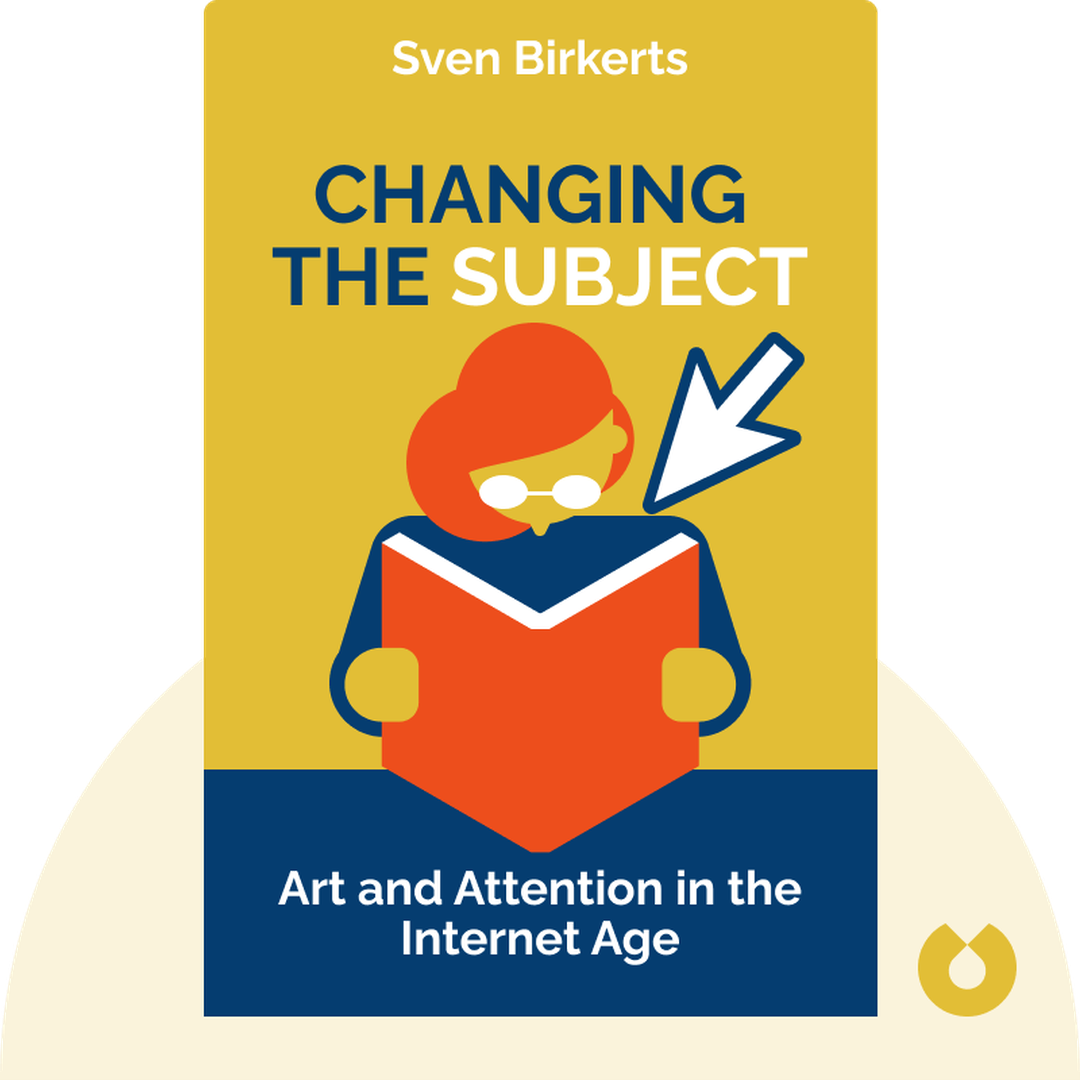
Changing the Subject (2015) takes a critical and concerned look at how the internet is affecting our lives. In these blinks, you’ll find out how our constant connection to the digital world is causing us to lose our individuality, our attention span and our intellect. Are we headed for one giant hive mind, or can we put down our phones for a moment and reconnect with our own emotions?
Who Should Listen to Changing the Subject?
- Tech junkies addicted to their smartphones
- Readers who are easily distracted
- Luddites who oppose the internet revolution
Books Similar to Changing the Subject
Readers who enjoyed this also liked these titles.