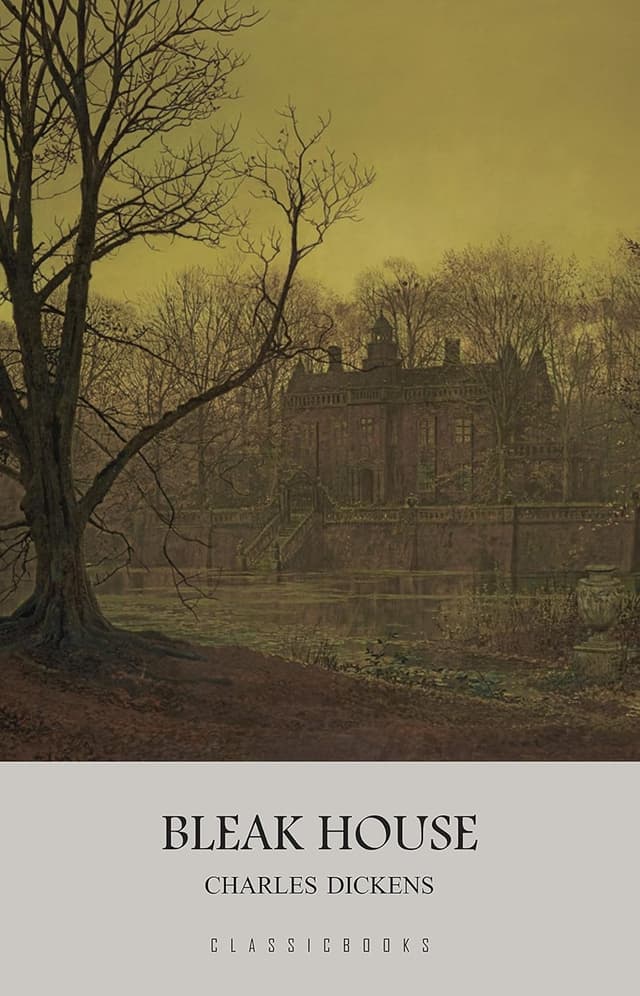
Charles Dickens wrote *Bleak House* in England, publishing the monumental work in twenty monthly serial installments between March 1852 and September 1853. Set against the grim backdrop of Victorian London during the Industrial Revolution, the novel emerged during a period of profound social anxiety. England was grappling with severe urban poverty, horrific sanitation that fueled deadly cholera epidemics, and deeply entrenched institutional dysfunction. Dickens channeled his observations of these societal failures into the novel, focusing his ire on the labyrinthine Court of Chancery, an archaic legal institution notorious for trapping estates in decades of ruinous, bureaucratic litigation.
Upon publication, the novel was both highly significant and controversial due to its scathing, unapologetic indictment of the British legal system. Many legal professionals and conservative critics accused Dickens of exaggerating the court's incompetence to sensationalize his plot. However, Dickens fiercely defended his work in the novel's preface, pointing to real-life cases where legal costs had entirely consumed contested estates. By intertwining the fates of the aristocratic elite with the poorest slum dwellers, Dickens boldly highlighted the inescapable interconnectedness of society, arguing that institutional neglect at the top inevitably poisons the entire nation.
The lasting impact of *Bleak House* on both society and literature remains monumental. Socially, the novel fueled a growing public outrage that contributed to the eventual reform of the English legal system, culminating in the Judicature Acts of the 1870s. Literarily, the book is celebrated for its structural brilliance, seamlessly weaving a groundbreaking dual-narrative technique that alternates between a cynical, omniscient third-person narrator and the subjective, empathetic first-person voice of Esther Summerson. Furthermore, through the character of Inspector Bucket, Dickens helped pioneer the modern detective genre, solidifying *Bleak House* as a masterful, genre-defining pillar of classic literature.