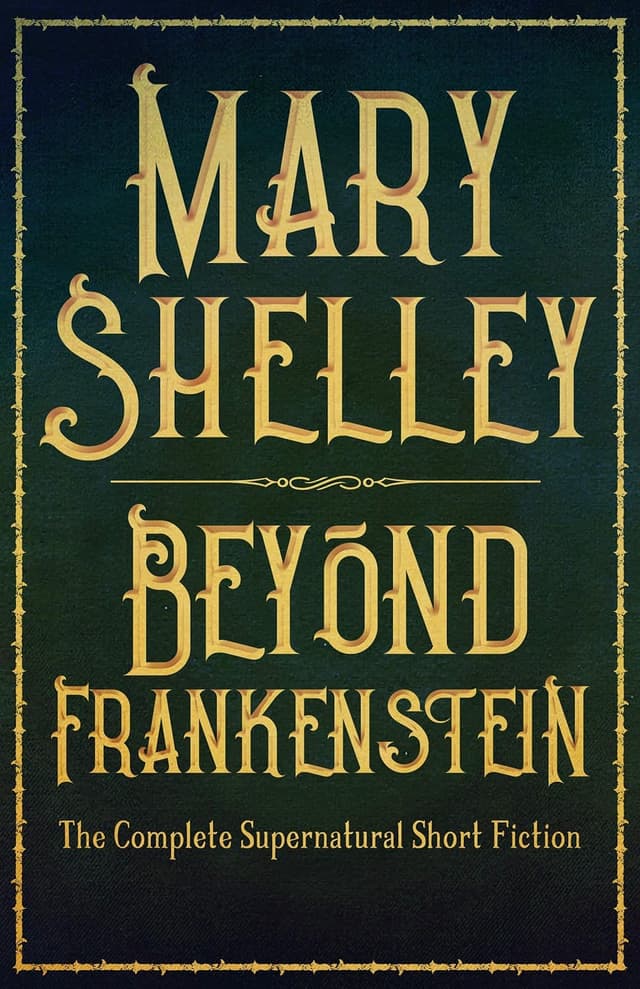
Beyond Frankenstein (Full Version) audiobook cover - Step past Frankenstein into Mary Shelley’s darker afterthoughts, where a youthful man drinks half an alchemist’s elixir and must endure the slow, bewildering cruelty of unending years, love’s corrosion, and the terrible loneliness of outliving everyone.

Beyond Frankenstein (Full Version)

Step past Frankenstein into Mary Shelley’s darker afterthoughts, where a youthful man drinks half an alchemist’s elixir and must endure the slow, bewildering cruelty of unending years, love’s corrosion, and the terrible loneliness of outliving everyone.

Mary Shelley

4.7 / 5(3042 ratings)
Categories:

Listen to Beyond Frankenstein (Full Version)

Loading player...

Historical Background

*Beyond Frankenstein* collects Mary Shelley's lesser-known works alongside her masterpiece, offering readers a broader view of her literary imagination. Written during the early nineteenth century—an era of revolutionary scientific discovery, Romantic idealism, and social upheaval following the Napoleonic Wars—these works reflect Shelley's enduring fascination with themes of creation, isolation, and the boundaries of human ambition. The collection demonstrates how Shelley continued to explore the moral and philosophical questions first raised in *Frankenstein*, examining humanity's relationship with nature, technology, and the consequences of overreaching ambition.

Shelley wrote during a period when scientific advances—particularly in galvanism and anatomy—captured the public imagination and raised profound ethical questions. Her works engage with these anxieties while also reflecting the personal tragedies that marked her life, including the deaths of her mother, her children, and her husband Percy Bysshe Shelley. This biographical context enriches her exploration of grief, mortality, and the human desire to transcend death.

The collection's lasting significance lies in its revelation of Shelley's range as a writer beyond her most famous creation. By presenting her shorter fiction and other works alongside *Frankenstein*, readers gain insight into the development of her ideas and her contributions to the Gothic and science fiction genres. These writings continue to resonate as prescient meditations on the ethical implications of scientific progress.

Study Questions

  1. How does Mary Shelley expand upon the Promethean theme of reckless creation throughout her collected works, and what do these writings reveal about the ethical responsibilities we hold toward our own technological and scientific advancements?

  2. Shelley's works frequently explore the theme of isolation—both physical and emotional. How do her protagonists' experiences of alienation reflect the Romantic era's tension between individual genius and social belonging?

  3. Consider the role of nature in Shelley's writings. How does she use natural landscapes and phenomena to comment on human ambition, and what does this suggest about the relationship between humanity and the natural world?

What Critics and Readers Say

Beyond Frankenstein collects the supernatural and speculative short fiction of Mary Wollstonecraft Shelley, showcasing her range beyond her most famous work, Frankenstein. While Frankenstein remains her best-known novel, critics and readers recognize that Shelley's other stories also contribute to early Gothic and speculative traditions, exploring themes of mortality, the uncanny, and the limits of human understanding.

On Goodreads, Beyond Frankenstein is generally received as an intriguing but uneven collection (average ratings around ~3.7/5), with readers appreciating the historical value and Shelley's evocative language, but noting that not all stories achieve the same impact as her best-known work. Reviews emphasize that the book gives fans of classic Gothic literature more material from a key figure in the genre, even if some pieces are less polished than the canonical Frankenstein.

While there is less formal academic critique of this specific collection, scholarly interest in Mary Wollstonecraft Shelley's lesser-known writings often situates them within broader discussions of women's contributions to early science fiction and horror. Scholars note that these stories reflect Shelley's ongoing engagement with supernatural ideas and her experimental approach to genre beyond conventional realist narratives.

Sources:

• Goodreads – reader reviews for Beyond Frankenstein collection and community ratings

• Scholarly context on Mary Shelley's wider writing and genre contributions

Beyond Frankenstein (Full Version) Chapter Overview

About Beyond Frankenstein (Full Version)

Beyond Frankenstein gathers Mary Shelley’s lesser-known but hauntingly potent tales that extend the moral and imaginative terrain opened by her most famous novel. Here, the pursuit of forbidden knowledge does not merely animate bodies—it distorts time itself, warps intimacy, and exposes the fragile bargains by which human beings endure loss, desire, and regret.

The featured stories probe immortality and reanimation not as triumphant miracles but as existential punishments: a life lengthened beyond its natural span becomes a lens on jealousy, social suspicion, and the quiet devastation of watching love and community erode. Shelley’s clear, urgent prose turns speculative premises into psychological realism, asking what remains of identity when consequence outlasts intention. Together these works confirm her place as a major Romantic-era visionary whose gothic imagination is always in service of ethical inquiry and human feeling.

Who Should Listen to Beyond Frankenstein (Full Version)

  • Listeners who love Shelley’s Frankenstein and want her other classic explorations of science, fate, and moral consequence
  • Fans of Gothic and Romantic literature drawn to atmospheric storytelling, yearning, and philosophical unease
  • Readers interested in early speculative fiction where immortality and “reanimation” become psychological and ethical tests

About Mary Shelley

Mary Wollstonecraft Shelley (1797–1851) was an English novelist of the Romantic period and the author of Frankenstein (1818), a foundational work of modern science fiction. The daughter of political philosopher William Godwin and feminist pioneer Mary Wollstonecraft, she moved in a circle that included Percy Bysshe Shelley, whom she married. Across novels, tales, and travel writing—such as The Last Man and numerous short stories—she examined ambition, loss, responsibility, and the costs of transgressive knowledge. Her work endures for its emotional intelligence, moral seriousness, and imaginative power.